
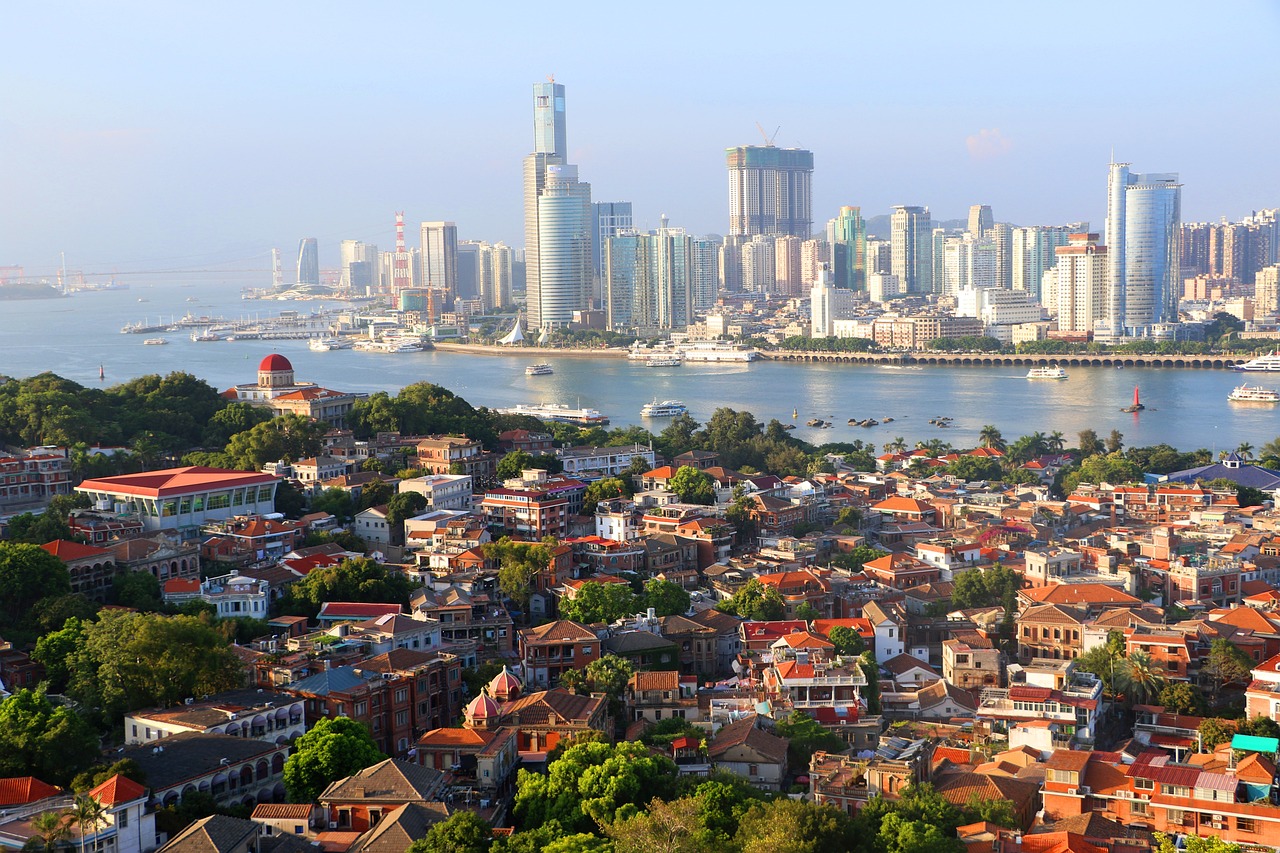
Xiamen, located in Fujian Province on China’s southeastern coast, features a subtropical monsoon climate with a year-round average temperature of approximately 20.6°C. The city experiences distinct wet and dry seasons that significantly impact travel planning. From May to September, the wet season brings substantial rainfall, with precipitation exceeding 100mm monthly during the monsoon (May-June) and typhoon seasons (July-September). In fact, this five-month period accounts for over 50% of the city’s total annual rainfall of approximately 1,315mm. Conversely, the dry season from October to March offers minimal rainfall and clear skies ideal for tourism. Particularly pleasant conditions exist from October to November (fall) and December to February (winter), with temperatures ranging from 20-28°C and 10-18°C respectively, creating optimal travel conditions.
Seasonal Weather Breakdown
Spring (March-May)
Spring in Xiamen brings mild and comfortable weather with average temperatures between 18-25°C. As the season progresses from March through May, temperatures gradually rise while humidity levels increase from 75% to 84%. Monthly rainfall accumulates between 110-170mm, signaling the onset of the wet season beginning in April and transitioning to the monsoon season by May. While spring remains excellent for outdoor activities, early spring (March through early April) is particularly ideal before increased precipitation and humidity become prominent in late April.
Summer (June-September)
Summer represents Xiamen’s hottest and most humid season, with average temperatures reaching 27-32°C. June marks the beginning of monsoon season with rainfall reaching 200mm, while July and August experience typhoon season with precipitation of 130mm and 205mm respectively. The extremely high humidity makes the perceived temperature feel significantly higher than actual readings, and typhoon activity frequently causes flight cancellations and transportation disruptions. While summer proves unsuitable for most travelers, hotel and flight rates do increase during July-August when Chinese families take their summer vacation break.
Autumn (September-November)
Autumn stands as the absolute best time to visit Xiamen, with average temperatures between 18-28°C that remain exceptionally comfortable. Though September still carries some summer weather effects, conditions improve significantly from October through November as monthly rainfall dramatically decreases to just 30-45mm. Low humidity levels and gentle breezes create optimal conditions for walking tours, outdoor activities, and cultural heritage exploration. One important caveat: the National Day holidays (October 1-6) attract enormous tourist crowds that drive accommodation prices up 2-3 times normal rates, making early September or late October onward a smarter choice.
Winter (December-February)
Winter offers mild conditions with average temperatures between 13-20°C and minimal rainfall of 28-85mm monthly, making it the city’s low season. Substantially cheaper airfare and hotel rates combined with fewer tourists appeal to travelers seeking peaceful, leisurely visits. Early December mornings and evenings can feel slightly chilly, so lightweight jackets are advisable. However, the Chinese New Year (Spring Festival) period from late January through early February brings a surge of domestic travelers and price increases, making late December or mid-February the better budget options.
When to Visit Xiamen: A Practical Breakdown
Best Weather Period (Optimal Travel Time)
Autumn (September-November) offers Xiamen’s finest weather conditions, especially October and November. Average temperatures hover comfortably between 18-28°C while monthly rainfall drops to just 30-45mm—the year’s lowest. Humidity remains low and breezes are pleasant, making all outdoor activities—leisurely walks along coastal paths, Gulangyu Island exploration, and cycling tours—genuinely enjoyable. September also marks the beginning of the fishing season, bringing fresh seafood to local restaurants and offering spectacularly clear skies perfect for photography.
Spring (March-May) also delivers excellent weather with average temperatures between 18-25°C. March and April showcase Gulangyu Island’s blooming pink bougainvillea flowers and the Wuyuan Botanical Garden bursting with colorful blossoms, transforming the entire city into a living garden. Tourist numbers remain manageable during these months, allowing leisurely exploration of major attractions and better photo opportunities. However, late April marks the rainy season’s onset with increasing precipitation and humidity, making early spring (March through early April) the superior choice.
Peak Tourist Season (High Prices & Crowds)
Peak season spans March-May and October-November, when temperatures hover around 20°C with low rainfall and humidity. Tourist attractions like Gulangyu Island, Xiamen University, and coastal promenades reach maximum capacity, while surrounding cafés and markets bustle with activity. The National Day holidays (October 1-6) represent the absolute peak, with accommodation rates soaring 2-3 times above normal prices and significant queues at major attractions. Additionally, June-August’s summer vacation period sees family travel surge, elevating airfare and hotel costs substantially.
Best Value Travel Periods (Budget-Friendly)
May, June, and early September offer the best budget opportunities. Average hotel rates in May reach just $64 per night—the year’s lowest—while June averages $107. Early September sits between the summer peak and autumn high season, featuring notably reduced airfare and accommodation costs. The trade-off: May-June brings wet season weather with frequent rain and high humidity, plus potential typhoon risk.
Mid-April, mid-August through early September provide secondary budget opportunities as shoulder seasons between peak and off-peak periods offer middle-ground pricing while travel remains feasible.
Low Season (Off-Season, Minimal Tourists)
Winter (December-February) constitutes the true off-season with mild temperatures of 13-20°C and scant rainfall (28-85mm monthly), delivering pleasant conditions at budget prices. Hotel rates average $89-115 per night versus $150+ during peak season, while tourist numbers remain sparse. Early December can feel slightly chilly mornings and evenings, requiring lightweight layers.
One exception: the Chinese New Year (Spring Festival) holidays from late January through early February reverse this pattern as domestic tourists surge and prices return to normal levels. For genuine off-season savings, target late December or mid-February onward. Note that December itself averages $167 per night—the year’s highest rate—making early January or post-Valentine’s Day the smartest budget window.
Monthly Weather & Recommended Clothing
January
Average temperatures range from 10-18°C with lows occasionally dipping to 5°C, marking winter’s arrival. Monthly rainfall totals just 35mm with humidity at 71%, and daylight averaging 4.5 hours of sunshine. Chinese New Year holidays may increase tourist crowds and accommodation costs.
Recommended clothing: Lightweight outer jackets, sweaters, long pants, and thermal underlayers. Prepare thin scarves and gloves for chilly mornings and evenings.
February
Average temperatures mirror January at 10-18°C, though precipitation increases to 85mm with 12 rainy days. Humidity rises to 74% while sunshine drops to just 3 hours daily. Days can warm to 26°C despite chilly mornings and evenings.
Recommended clothing: Lightweight jackets, sweaters, windbreakers, and umbrellas are essential. Choose well-ventilated garments to address humidity.
March
Temperatures climb to 12-20°C while monthly rainfall reaches 110mm, initiating the wet season. Humidity rises to 75% with 15 rainy days bringing overcast skies. Gulangyu Island’s flowers begin blooming despite unpredictable cool winds.
Recommended clothing: Thin sweaters, long sleeves, and windbreakers are necessary. Prepare layered clothing for temperature fluctuations and carry an umbrella.
April
Comfortable temperatures between 16-25°C pair with 145mm monthly rainfall. Humidity reaches 76% with 15 rainy days as monsoon season intensifies. Thunderstorms and temperature irregularities require vigilance.
Recommended clothing: Thin long-sleeves, lightweight sweaters, trousers, and breathable outer layers are ideal. Umbrellas and waterproof bags are absolutely essential.
May
Temperatures warm to 20-28°C with 170mm monthly rainfall bringing very humid conditions. Humidity climbs to 79% with rain occurring almost every other day (15 rainy days). Early typhoon risk remains minimal despite wet season conditions.
Recommended clothing: Lightweight, breathable garments, sleeveless or short-sleeve options, thin long pants, and light inners are suitable. Umbrellas are mandatory; insect repellent is advisable given humidity.
June
Extremely hot conditions prevail with temperatures reaching 24-31°C and monthly rainfall peaking at 200mm—the year’s highest. Humidity hits maximum levels at 81%, and discomfort indices surge with rain on approximately 15 days. Monsoon season peaks with frequent severe thunderstorms and lightning.
Recommended clothing: Ultra-lightweight, highly breathable garments, short sleeves, shorts, and sports sandals are necessary. Waterproof umbrellas, sunscreen, and insect repellent are absolutely critical.
July
Hottest conditions reach 25-33°C—the year’s peak—while monthly rainfall drops to 130mm as typhoon season begins. Humidity remains at 77% with 7.5 hours of daily sunshine. Typhoon frequency necessitates frequent weather checks, as flights and maritime transport frequently suspend operations.
Recommended clothing: Ultra-lightweight, highly breathable options, short sleeves, shorts, and beach wear are essential. Strong sunscreen, hats, and sunglasses are non-negotiable protective items.
August
Temperature extremes continue at 25-33°C with monthly rainfall surging to 205mm—the second-highest of the year. Humidity peaks at 78% with 11 rainy days, while typhoon activity intensifies significantly. Daily sunshine averages 7 hours despite dramatic weather swings.
Recommended clothing: Ultra-lightweight, breathable garments, short sleeves, shorts, and beach wear are required. Waterproof umbrellas, sunscreen, sunglasses, and insect repellent are absolutely essential.
September
End-of-summer warmth continues at 24-31°C while monthly rainfall decreases to 150mm—improving weather trends. Humidity drops to 72% with only 9 rainy days as conditions notably improve. Typhoon risk persists but diminishes gradually, with 6 hours of daily sunshine.
Recommended clothing: Short sleeves, lightweight and breathable garments, thin long pants work well. Since fresh seafood becomes abundant, casual comfortable wear suits the season.
October
Ideal conditions deliver temperatures of 20-28°C with only 45mm monthly rainfall producing abundant clear days. Humidity drops significantly to 65% with just 3 rainy days, offering autumn’s finest weather. National Day holidays (October 1-6) cause massive tourist surges and price spikes.
Recommended clothing: Thin short-sleeves, lightweight outer jackets, long pants, sunglasses, and sunscreen are appropriate. Minimal rain makes umbrellas unnecessary.
November
Pleasantly cool temperatures range from 17-25°C with minimal precipitation of just 30mm—the dry season’s perfection. Humidity registers at a comfortable 67% with only 4 rainy days, delivering 5.5 hours of daily sunshine. Strengthening winds arrive as late autumn progresses.
Recommended clothing: Thin short or long sleeves, lightweight cardigans or light jackets, and long pants are suitable. Sunscreen and sunglasses remain useful; umbrellas are unnecessary.
December
Winter temperatures descend to 12-20°C while precipitation remains minimal at 30mm. Humidity stays low at 68% with only 5 rainy days and 5.5 hours of daily sunshine. Mornings and evenings grow noticeably chilly despite warm daytime hours.
Recommended clothing: Lightweight jackets, sweaters, thin scarves, and long pants are essential. Thicker outer coats and gloves are worthwhile for beach strolls.
Monthly Weather Data Table
| Month | Avg. High (°C) | Avg. Low (°C) | Avg. Sea Temp (°C) | Rainfall (mm) | Humidity (%) | Sunrise | Sunset |
|---|---|---|---|---|---|---|---|
| January | 17.8 | 10 | 17 | 35 | 71 | 06:52 | 17:31 |
| February | 18.2 | 10.4 | 17 | 85 | 74 | 06:30 | 17:55 |
| March | 20.4 | 12.3 | 18.5 | 110 | 75 | 06:08 | 18:20 |
| April | 24.7 | 16.4 | 21 | 145 | 76 | 05:38 | 18:42 |
| May | 28 | 20.4 | 24 | 170 | 79 | 05:15 | 19:02 |
| June | 30.8 | 23.9 | 26.5 | 200 | 81 | 05:05 | 19:15 |
| July | 33.2 | 25.4 | 28 | 130 | 77 | 05:15 | 19:08 |
| August | 32.9 | 25.1 | 28 | 205 | 78 | 05:32 | 18:48 |
| September | 31.5 | 23.8 | 27.5 | 150 | 72 | 05:52 | 18:16 |
| October | 28.3 | 20.5 | 25.5 | 45 | 65 | 06:13 | 17:40 |
| November | 24.6 | 16.6 | 22.5 | 30 | 67 | 06:35 | 17:10 |
| December | 20 | 12 | 19 | 30 | 68 | 06:56 | 17:01 |
Data Notes: Climate averages derived from 30-year records (1991-2020). Sea temperatures reflect monthly means. Sunrise/sunset times represent mid-month values.
Quick Decision Guide
Best Overall Time: October-November (unbeatable weather, fewer crowds than October 1-6)
Budget Conscious: May or early September (lowest prices, weather trade-offs)
Flower Blooms: March-April (city-wide blossoms, mild weather)
Beach Swimming: June-September (warm ocean, 27-28°C minimum)
Peaceful Exploration: January-February (low tourism, cool weather)
Avoid: June-August (heat, humidity, typhoons, but highest summer family tourism)