
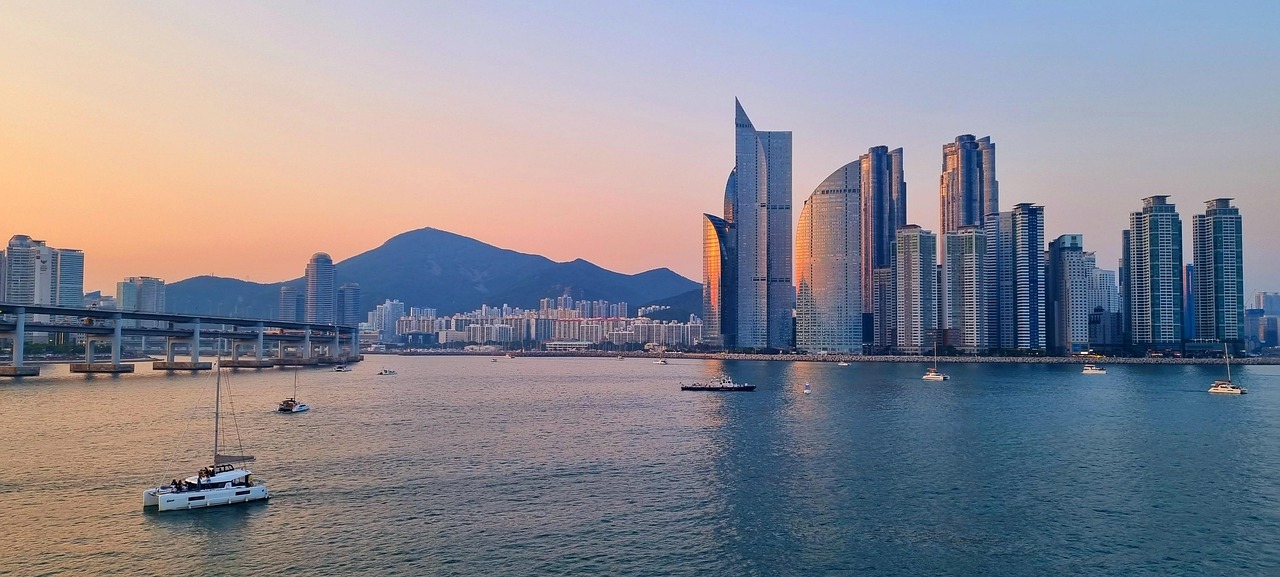
Busan, located at the southernmost tip of South Korea, is a maritime climate city characterized by cool summers and mild winters. The annual average temperature hovers around 12–14°C, with January averaging 3.6°C and August averaging 24°C—resulting in relatively smaller seasonal temperature fluctuations compared to inland regions. Most notably, Busan experiences fewer days with sub-zero nighttime temperatures than any Korean city except Jeju Island, making it renowned for having one of Korea’s most pleasant winters.
Busan’s Weather by Season
Spring (March–May)
Busan’s spring begins with crisp weather in early March and blossoms into mild, warm conditions by April when cherry blossoms peak. Unlike other regions, spring in Busan brings frequent rainfall, resulting in shorter daylight hours and strong winds that lower the perceived temperature. By May, the daily temperature range narrows and clear skies become more common, making it an ideal season for outdoor activities.
Summer (June–August)
The monsoon season (jangma) begins in mid-June, and July–August brings intense heat, humidity levels of 70–85%, and frequent tropical nights. While the coastal city remains cooler than Seoul, the high humidity makes the perceived temperature feel even hotter. Recent years have seen an increasing number of heat wave days due to climate change. In August 2024, average temperatures exceeded 29°C, making summers increasingly uncomfortable compared to previous decades.
Autumn (September–November)
Summer heat persists through early September, but by mid-September, cool autumn breezes arrive. Clear skies, longer daylight hours, and lower humidity create ideal walking and sightseeing conditions. October offers prime autumn weather, and mild temperatures extend through November with minimal rainfall—establishing autumn as Busan’s golden tourist season.
Winter (December–February)
Busan’s winter is exceptionally mild, second only to Jeju Island, with very few days reaching sub-zero nighttime temperatures. While dry and clear weather predominates, strong winds create a lower perceived temperature, though daily temperature swings remain moderate. With average winter temperatures around 3.8°C and more days above freezing than below, Busan’s winters remain relatively comfortable.
Best Times to Visit Busan
Peak Season: Spring (April–May) & Autumn (September–October)
Spring (April–May)
Busan’s spring offers average temperatures of 18–22°C, creating ideal conditions for outdoor exploration. Early April brings the Oncheoncheon Cherry Blossom Festival with stunning canola flowers creating a vibrant landscape. Monthly rainfall averages 7–9 days, and lower humidity ensures pleasant perceived temperatures. By May, reduced daily temperature fluctuations and increased clear skies make strolling the Haeundae and Gwangan beaches, visiting outdoor cafés, and enjoying seaside parks highly appealing.
Autumn (September–October)
Autumn is widely regarded as Busan’s golden season for tourism. From mid-September, cool breezes sweep in, humidity plummets, and extended daylight hours provide perfect conditions for photography. The Busan Fireworks Festival (late October) at Gwangan Beach and the Busan International Film Festival (same month) are marquee events attracting global visitors. Hotel rates remain 30–40% cheaper than summer peaks while weather remains delightfully mild, delivering exceptional value.
High Season: Summer (June–August)
Summer (June–August)
Summer is Busan’s peak tourism season, with July–August luxury hotels around Haeundae often fully booked. Temperatures range from 26–30°C with humidity of 70–85%, and while muggy, the coastal setting keeps conditions cooler than Seoul. Major beaches including Haeundae, Gwangan, and Songjeong host sand festivals (July) and marine festivals (August), with ample opportunities for water sports. However, the monsoon season (early June) and heavy downpours (July–August) create tropical nights with minimal temperature variation, and increasing heat waves—driven by climate change—demand caution.
Low Season: Winter (December–February)
Winter (December–February)
Winter is Busan’s off-season, with January–February being the quietest period. Despite average winter temperatures of 3.8°C rivaling Jeju’s mildness, strong winds lower the perceived temperature significantly. The trade-off is substantial: fewer crowds and rock-bottom accommodation rates maximize cost efficiency. The Oncheoncheon and Igataе Camellia Festivals run December–February, New Year’s sunrise viewing occurs at Songjeong on January 1st, and winter light festivals illuminate Haeundae, Gwangbok-ro, and Seomyeon districts, creating magical nightscapes.
Busan’s Monthly Weather & Recommended Attire
January
January in Busan is mid-winter, with average temperatures around 3–5°C—somewhat milder than inland cities but feeling deceptively cold due to sea breezes. Clear, dry days dominate, but ocean winds and low perceived temperatures mean outdoor activities chill the body quickly.
What to Pack: Long padded jackets, thick coats, knit sweaters, and fleece-lined base layers (layered). Add scarves, gloves, hats, thick socks, and hand warmers to comfortably enjoy night views and seaside walks.
February
February is slightly milder than January but still averages around 5°C, with winter’s chill persisting. Strong winds are common, making perceived temperatures lower than actual readings, especially along the coast.
What to Pack: Thick padded or wool coats, layered with sweaters, thermal underwear, and fleece-lined pants. Complete with scarves, beanies, ear warmers, and insulated boots to maintain body temperature during outdoor-heavy itineraries.
March
March averages 4–13°C with subtle spring hints during the day, but mornings and evenings remain crisp like early winter. Coastal breezes create noticeable temperature variation, making layering critical.
What to Pack: Thin sweaters or long-sleeve shirts with light jackets, windbreakers, or trench coats for layering. Scarves or light scarves ease temperature regulation across the day’s wide swings.
April
April averages 9–19°C with spring-like conditions, though sporadic spring rain and winds keep many days cooler than expected. Daytime warmth can vanish quickly as evening approaches, making layering essential.
What to Pack: Thin sweaters, shirts, or blouses with cardigans or light jackets and trench coats. Since flower viewing and seaside strolls are popular, bring comfortable sneakers, a compact umbrella, and sunscreen.
May
May averages 14–23°C, approaching early summer warmth, with many days feeling hot enough for short sleeves. However, seaside and evening breezes can be cool, so account for daily temperature variation.
What to Pack: Short-sleeve shirts or thin long sleeves paired with jeans or cotton pants; keep a light cardigan or shirt for layering. Sunglasses, hats, and sunscreen become essential due to intensifying sun.
June
June averages 18–25°C and marks the onset of early summer. Monsoon rains begin mid-month, creating humid, muggy conditions, though evening sea breezes provide relief.
What to Pack: Short-sleeve shirts, linen shirts, and shorts—prioritizing breathable fabrics. Pair with waterproof sandals or flip-flops, a compact umbrella, and a lightweight water-resistant jacket for monsoon preparedness.
July
July averages 23–29°C with about 18 rainy days—extremely hot, humid, and prone to monsoon showers and heavy downpours. Tropical nights are frequent, creating an uncomfortable sticky sensation throughout the day.
What to Pack: Lightweight, breathable fabrics—short sleeves, sleeveless tops, linen dresses, and shorts. Bring a compact umbrella, water-resistant jacket, waterproof shoes, sunscreen (SPF 50+), hats, and sunglasses for rain and intense sun protection.
August
August mirrors July with temperatures of 24–31°C—the peak of summer heat with intense sun and extreme humidity. Beach-centered activities dominate, so prepare for significant energy depletion under daytime heat.
What to Pack: Lightweight, breathable short-sleeve shirts, sleeveless tops, linen blouses, light dresses, and shorts or linen pants. Bring swimwear, rash guards, beach towels, hats, sunglasses, SPF 50+ sunscreen, a portable fan, and a water bottle for effective summer beach planning.
September
September averages 20–27°C, with lingering late-summer heat in early month that gradually transitions to crisp early autumn by mid-month. Early September can bring typhoons or heavy rain, requiring weather vigilance.
What to Pack: Mix short and thin long sleeves; pair with jeans or cotton pants and lightweight sneakers. Drape light cardigans or windbreakers for evening beach walks and outdoor concerts.
October
October averages 13–22°C, offering clear, dry weather and widely acclaimed as Busan’s optimal travel month. Daytime warmth contrasts with cool evenings, creating significant perceived temperature shifts.
What to Pack: Long-sleeve shirts, blouses, or thin sweaters with jeans or slacks and light jackets or trench coats—classic autumn styling. If attending evening fireworks or film festivals, bring a lap blanket or thin scarf for added warmth.
November
November averages 7–16°C, transitioning from late autumn into early winter. Early mornings and evenings turn crisp; windy conditions can feel decidedly wintry.
What to Pack: Thick sweaters or sweatshirts layered with coats, thick jackets, or padded vests. Add scarves, thin gloves, and beanies to comfortably enjoy coastal and observation deck breezes during outdoor activities.
December
December averages 0–8°C as official winter arrives, with strong sea breezes significantly lowering perceived temperature. Clear, dry days offer decent daylight, but coastal areas and elevated spots feel bitterly cold.
What to Pack: Long padded jackets, thick wool coats, sweaters, thermal shirts, and fleece-lined pants for layered warmth. Complete with scarves, gloves, hats, thick socks, hand warmers, and moisturizer and lip balm to protect skin and stay warm while viewing Christmas and New Year’s nightscapes.