
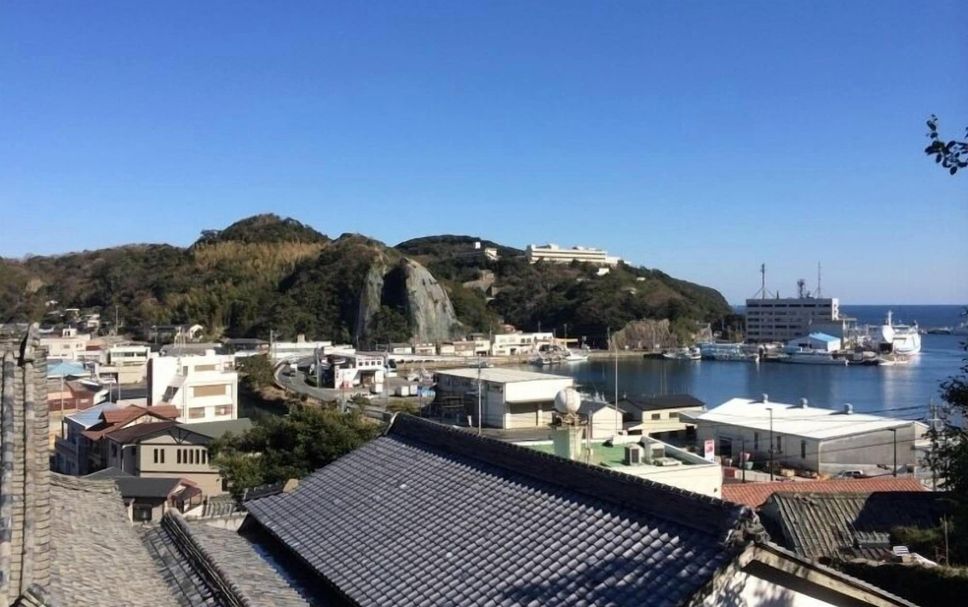
Tsushima is a maritime climate island influenced by the Tsushima Warm Current, with an annual average temperature of around 16°C and approximately 2,300mm of rainfall per year, making it a relatively mild yet rainy destination. Spring (March–May) and autumn (October–November) offer pleasant, comfortable conditions ideal for travel, while summer brings heavy rain from the monsoon season and typhoons, and winter feels bitterly cold due to continental winds — though snowfall remains rare thanks to the warming ocean current.
Seasonal Weather in Tsushima
Spring (March – May)
Spring is one of the most beautiful times to visit Tsushima. Temperatures range from a comfortable 8°C to 18°C, and while March can still feel chilly, warmth sets in steadily through April and May. Cherry blossoms and a variety of native wildflowers bloom across the island, creating stunning scenery, and monthly rainfall stays relatively low at around 150mm. Evenings can still be cool, so a light outer layer is recommended. Occasional yellow dust (Asian haze) and fluctuating warm-cold spells may also occur.
Summer (June – August)
Summer is Tsushima’s hottest and most humid season. Average temperatures hover between 25°C and 28°C, with midday highs often exceeding 30°C. June marks the peak of the rainy season (tsuyu), with the highest monthly rainfall probability of 36% and precipitation reaching 200–370mm — making a raincoat or compact umbrella absolutely essential. From July onwards, the rainy season winds down and sunny days increase, though typhoon risks remain. With up to 13–14 hours of daily sunlight, it’s an ideal time for water sports and snorkelling.
Autumn (September – November)
Autumn, along with spring, is the best time to visit Tsushima. September remains warm at 24°C–25°C, but temperatures drop to a cool and refreshing 19°C–21°C from October onward. Rainfall probability decreases to around 20%, and clear days are plentiful — perfect for hiking, autumn foliage, and outdoor activities. However, typhoon warnings may still apply through September, so always check the weather forecast before heading out.
Winter (December – February)
Although strong northwest continental winds make the cold feel particularly biting in winter, the Tsushima Warm Current keeps actual temperatures relatively mild at 2°C–12°C. Snowfall is rare and monthly precipitation stays low at just 60–90mm, making it the driest time of year. Heavy coats and windproof outerwear are essential. For those seeking peaceful nature escapes or a relaxing hot spring (onsen) experience, winter offers a quietly charming getaway.
Best Time to Visit Tsushima
The best times to visit Tsushima are spring (April–May) and autumn (October–November), when mild temperatures and mostly clear skies make it ideal for hiking, nature exploration, and sightseeing at historical sites. Spring brings cherry blossoms and wildflowers that paint the entire island in colour, while autumn transforms the landscape with vivid red and orange foliage.
Summer (June–August) is great for ocean activities like snorkelling and kayaking, but heavy monsoon rains, high humidity, and typhoon risks mean you’ll need a raincoat and should monitor weather updates closely. June and July carry the highest rainfall probability of the year, so build flexibility into your outdoor plans.
Winter (December–February) is the low season, with far fewer tourists. While the wind chill can be harsh, it rarely drops below freezing, and snow accumulation is uncommon. It’s a wonderful season for those who want to enjoy a quiet hot spring retreat or explore Tsushima’s untouched natural landscapes in solitude.
Monthly Weather & What to Wear
January
January is Tsushima’s coldest month, with average highs of 9°C and lows of around 2.5°C. Strong northwest winds make it feel even colder, though precipitation probability is the lowest of the year at around 15%, meaning relatively clear skies.
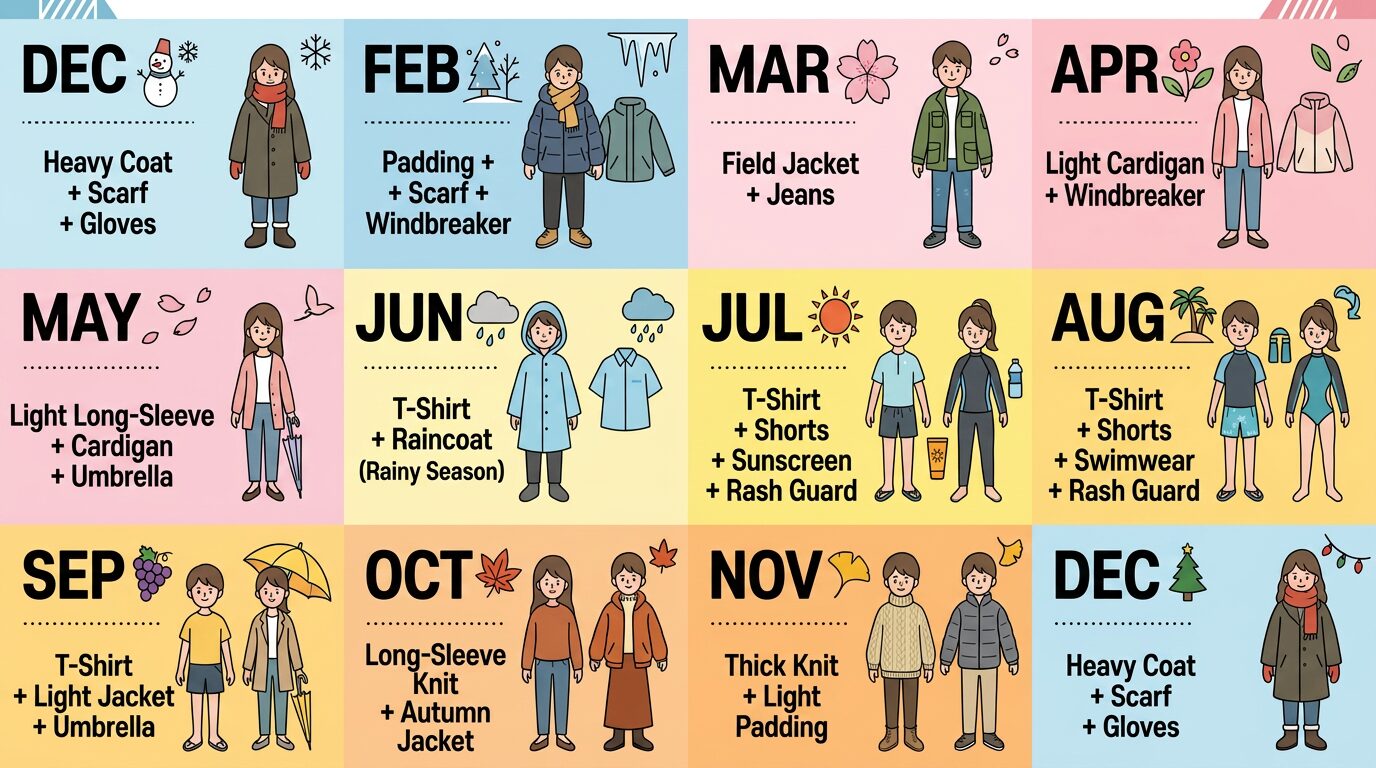
What to wear: Thermal base layer or fleece-lined inner + lightweight down jacket + heavy coat or puffer jacket. Scarf, gloves, and hat are essential. Opt for a windproof outer layer.
February
February remains cold and windy, with highs of 9–10°C and lows of 6–7°C. Expect a 20% chance of rain and consistently chilly winds.
What to wear: Heattech base layer + knit sweater + lightweight padded jacket. Fleece-lined jeans or thermal trousers. A short windproof jacket or military-style field jacket works well.
March
Temperatures gradually rise in March, with highs of 12–13°C and lows of 7–9°C. Spring begins but remains cool, with occasional yellow dust and strong spring winds. Rain probability is around 20–25%.
What to wear: Hoodie or thin sweatshirt + field jacket or spring bomber. Jeans recommended. Layering is key — always carry a jacket for mornings and evenings.
April
April is warm and comfortable, with highs of 16°C and lows of 13°C, and cherry blossoms reach full bloom. Daylight extends to about 13 hours, with a 29% chance of rain. Temperature swings between morning and evening can still be significant.
What to wear: Long-sleeve shirt or light knit + thin cardigan or windbreaker. Layering is essential for outdoor spots like Miuda Beach or Eboshidake Viewpoint.
May
May is the most comfortable month for travel, with highs of 19–22°C and lows of 14°C. Lush greenery makes the island especially scenic. Monthly rainfall reaches around 241mm but tends to fall in short showers rather than prolonged downpours.
What to wear: Short-sleeve or thin long-sleeve shirt + light cardigan or windbreaker. Comfortable trainers a must for hiking. Carry a compact umbrella or foldable rain poncho.
June
June marks the start of the rainy season, with the highest rainfall probability of the year at 36% and monthly precipitation of 300–370mm. Average temperatures rise to 22–24°C, and high humidity makes it feel even hotter.
What to wear: T-shirt + thin linen shirt. A poncho-style raincoat is strongly recommended over an umbrella. Waterproof shoes or sandals advised. Choose moisture-wicking, quick-dry fabrics.
July
The rainy season wraps up in mid-to-late July, giving way to hot, humid midsummer weather. Highs reach 26–28°C, and rain probability stays at around 32%. Typhoon risk begins to increase.
What to wear: T-shirt + shorts. A lightweight long-sleeve rash guard for UV protection. Sunscreen, hat, and sunglasses are a must. Keep a raincoat or umbrella on hand.
August
August is the hottest month, with highs of 28–30°C and overnight lows above 25°C — tropical nights are common. It’s peak season for snorkelling, kayaking, and ocean sports. Rain probability hovers around 30%.
What to wear: T-shirt + shorts + swimwear. Rash guard essential for water activities. Bring a light long-sleeve layer for strong indoor air conditioning. Sunscreen, hat, and sunglasses are non-negotiable.
September
September remains hot and humid with highs of 25–27°C, and it’s the month most affected by typhoons. Rain probability of 25–30% means frequent showers, so always check forecasts before planning outdoor activities.
What to wear: T-shirt + light outer layer. Raincoat or umbrella essential. As the month progresses, mornings and evenings cool down — add a thin cardigan toward the end of the month.
October
Temperatures drop quickly in October to highs of 21°C and lows of 15°C — cool, crisp, and refreshing. Clear days are frequent with only a 20% rain chance. Autumn foliage begins to appear, making it prime hiking season.
What to wear: Light knit or long-sleeve shirt + casual jacket or autumn bomber. Jeans pair perfectly. Comfortable trainers are a must for outdoor exploration.
November
November feels noticeably chilly, with highs of 15–17°C and lows of 10°C, and autumn foliage reaches its peak. Rain probability stays around 20%, but winds begin to pick up again.
What to wear: Sweatshirt or thick knit + lightweight padded jacket or heavy blazer. A windproof outer layer is recommended. Add a scarf for early mornings and evenings.
December
December brings full winter conditions — highs of 12°C, lows of 8°C — with a low rainfall probability of 19% and about 9.9 hours of daily sunshine. Continental winds strengthen sharply, and while snowfall is rare, the wind chill is significant.
What to wear: Thermal inner + thick knit + heavy coat or puffer jacket. Scarf and gloves are essential. A windproof outer layer is a must to guard against the strong gusts.
Monthly Climate Data for Tsushima
| Month | Avg High (°C) | Avg Low (°C) | Rainfall (mm) | Humidity (%) |
| January | 9.2 | 2.5 | 80.1 | 61 |
| February | 10.5 | 3.2 | 94.7 | 62 |
| March | 13.6 | 6.3 | 172.3 | 65 |
| April | 18.1 | 10.3 | 218.4 | 68 |
| May | 22.2 | 14.4 | 241.2 | 72 |
| June | 24.7 | 18.5 | 294.4 | 82 |
| July | 28.3 | 23.1 | 370.5 | 83 |
| August | 30.0 | 24.2 | 326.4 | 81 |
| September | 26.5 | 20.6 | 235.5 | 78 |
| October | 22.3 | 15.3 | 120.8 | 70 |
| November | 17.1 | 9.6 | 100.6 | 68 |
| December | 11.6 | 4.3 | 68.0 | 63 |
| Annual Avg | 19.5 | 12.7 | 2,302.6 | 71 |