
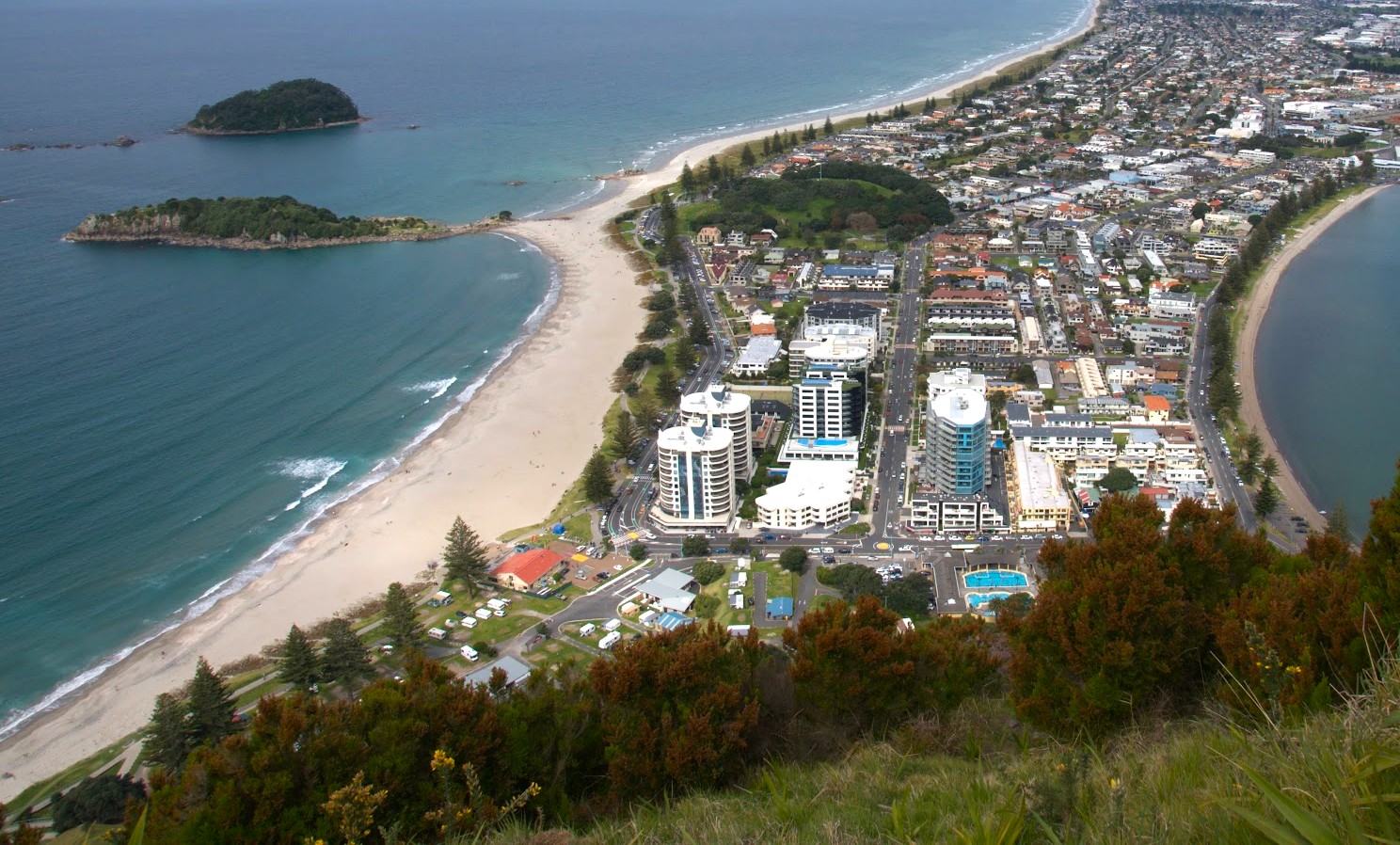
Nestled in the Bay of Plenty on New Zealand’s North Island, Tauranga enjoys a warm oceanic climate that keeps the city mild and pleasant throughout the year. Summers are warm and dry, while winters are rainy but rarely dip below freezing — making it a fantastic destination in any season. Renowned as one of New Zealand’s sunniest cities, Tauranga offers more sunshine hours annually than almost anywhere else in the country.
Spring (September – November)
Spring breathes new life into Tauranga as temperatures gradually climb to a comfortable 15–20°C. Wildflowers bloom, green shoots emerge, and the scenery becomes truly stunning — though strong winds and significant daily temperature swings keep things unpredictable. September is one of the wettest months of the year, with a daily rain probability of 37%, so a waterproof jacket or rain poncho is essential. As the sun grows stronger, don’t forget to pack a hat and sunglasses to protect against the increasingly intense UV rays.
✔ Recommended Clothing: Light puffer jacket or waterproof coat + layering + umbrella
Summer (December – February)
Tauranga’s summer is the crown jewel of the year — warm, dry, and gloriously sunny with average temperatures ranging from 20°C to 28°C. With over 14 hours of daylight, there is plenty of time to hike Mount Maunganui, swim at the beach, catch waves surfing, or join a dolphin-watching cruise. Rainfall is at its lowest during this season, meaning clear skies and sunshine are the norm. However, New Zealand’s UV index is notoriously high, so SPF 50+ sunscreen and sunglasses are non-negotiable daily essentials.
✔ Recommended Clothing: T-shirts, shorts, swimwear, hat, and sunscreen
Autumn (March – May)
Autumn offers a gentle transition from the warmth of summer, with stable and comfortable temperatures hovering between 15°C and 20°C. March is statistically the driest month of the year, with a rain probability of just 19% — ideal for those seeking a relaxed and crowd-free travel experience. From April, sea temperatures drop, winds pick up, and the wet season begins to set in, with May bringing more overcast skies and frequent rain showers. Even on clear days, UV rays remain strong, so keep the sunscreen in your bag year-round.
✔ Recommended Clothing: Light long sleeves & cardigan (March); waterproof jacket & light puffer (April–May) + umbrella
Winter (June – August)
Tauranga’s winter is surprisingly mild for its latitude — average temperatures range from 5°C to 16°C, and snowfall is virtually unheard of in this coastal city. That said, it is the rainiest season of the year: June alone receives around 110mm of rainfall, and strong winds can make the temperature feel noticeably colder than the thermometer suggests. Overcast skies account for roughly 41% of days, and daylight hours are at their shortest — but that simply opens the door to unique experiences like glowworm kayak tours and Rotorua Redwood Forest adventures. Layering is your best friend in winter; pack pieces that can be easily added or removed throughout the day.
✔ Recommended Clothing: Coat or light puffer, thick knit sweater, windproof & waterproof jacket + umbrella
Monthly Weather & Packing Guide
| Month | Weather Highlights | Recommended Clothing |
|---|---|---|
| January | 16–23°C, 14.5 hrs sunshine, 22% daily rain chance | T-shirts, shorts, sunglasses, hat, sunscreen |
| February | Hottest month, up to 28°C, dry & pleasant | T-shirts, shorts, swimwear, hat, sunscreen |
| March | Autumn begins, 15–20°C, driest month (19% rain) | Light long sleeves, cardigan, sunglasses |
| April | ~16°C, stronger winds, wet season begins | Cardigan/sweatshirt, waterproof windbreaker, umbrella |
| May | Late autumn, ~15°C, frequent clouds & rain | Light puffer/thick knit, waterproof jacket, umbrella |
| June | Winter begins, 5–15°C, 41% overcast, 110mm rain | Coat/thick knit, windproof & waterproof jacket, umbrella |
| July | Coldest month, 8–13°C, shortest days (9.6 hrs sun) | Light puffer/coat, thick sweater, waterproof umbrella |
| August | Late winter, 8–16°C, unpredictable changeable weather | Puffer/coat, waterproof jacket layering |
| September | Spring begins, highest rain chance (37%), windy | Light puffer/jacket, rain poncho, windbreaker |
| October | ~20°C returns, more sunny days, UV strengthens | Light long sleeves, cardigan, windbreaker, sunscreen |
| November | Late spring, ~22°C, stable & comfortable | Light long sleeves, cardigan, hat, sunscreen |
| December | Summer begins, 22°C, longest days (14.8 hrs sun) | T-shirts, shorts, swimwear, light cardigan for evenings |
Best Time to Visit Tauranga
Peak Season — December to February (Summer)
With average temperatures of 20–27°C, abundant sunshine, and minimal rainfall, summer ticks every box for an outdoor adventure. From beach days and surfing to dolphin cruises and coastal hikes, Tauranga shines brightest during these months.
Second Best — March to April (Early Autumn)
The warmth of summer lingers while the crowds begin to thin, creating the perfect conditions for a relaxed and unhurried trip. With daytime temperatures of 18–22°C, activities like kayaking and zip-lining remain enjoyable well into the autumn months.
Off-Season — June to August (Winter)
Frequent rain and strong winds can limit outdoor marine activities, but Tauranga’s winter has its own magic. Glowworm kayak tours, Rotorua Redwood Forest walks, and geothermal hot springs offer unforgettable experiences regardless of the weather.
Spring Highlight — September to November
Spring coincides with kiwifruit harvest season, making farm tours a unique and memorable addition to any itinerary. The landscape blooms with colour and vitality — just make sure to pack a rain jacket for those unpredictable spring showers.
Tauranga Weather FAQ
Q. What are the hottest and coldest months?
February is the hottest month, with average highs of 24°C and occasional peaks near 28°C. July is the coldest, with average lows around 8°C — but temperatures rarely fall below freezing, making Tauranga mild year-round.
Q. When does it rain the most?
June is the wettest month, receiving around 110mm of rainfall, with the winter months of June to August seeing the heaviest precipitation. In contrast, January and February are the driest months, with the most consistently sunny skies.
Q. Does it snow in Tauranga?
Snowfall is extremely rare in Tauranga. Winter temperatures typically stay well above freezing, and the city’s coastal location keeps conditions mild — expect rain and wind rather than frost or snow.
Q. Is UV radiation a concern?
Absolutely. New Zealand’s thinner ozone layer means UV radiation is significantly stronger than in many other countries. Even on cloudy days — and especially in spring and summer — SPF 50+ sunscreen, sunglasses, and a wide-brimmed hat are strongly recommended.
Q. Can the weather change suddenly?
Yes — New Zealand is famous for experiencing “four seasons in one day,” and Tauranga is no exception. A rainy morning can quickly give way to a sunny afternoon, so always carry an umbrella and a light windbreaker no matter the season.