
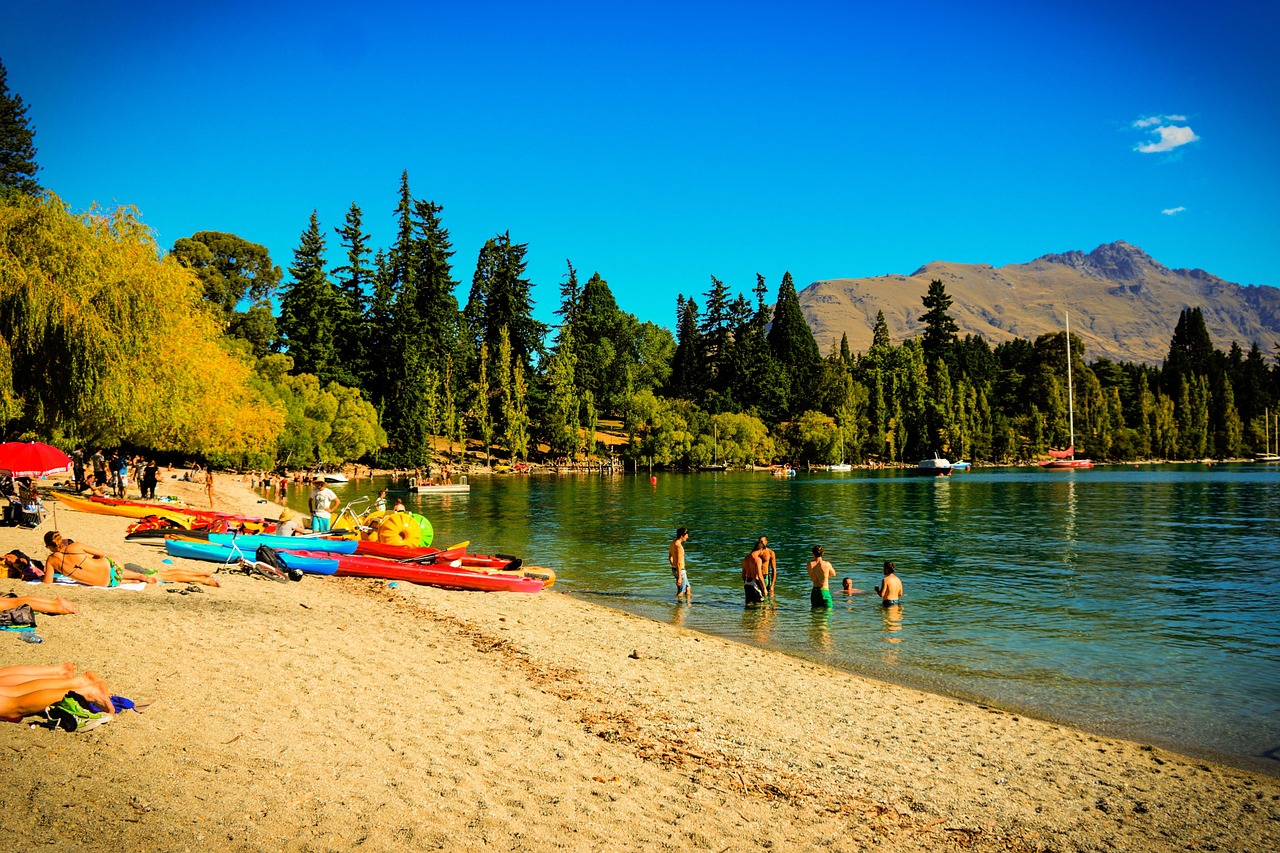
Queenstown, located in the Southern Hemisphere, experiences seasons opposite to Nothern Hemisphere. Summer (December-February) brings pleasant weather with average temperatures around 22°C, while winter (June-August) is cold, ranging from -2°C to 8°C. Due to its mountainous location, Queenstown’s climate changes rapidly and unpredictably—you can experience all four seasons in a single day, making it essential to prepare clothing for multiple seasons. The region receives over 900mm of annual precipitation and enjoys approximately 1,921 hours of sunshine year-round, making it ideal for both tourism and sports activities throughout the year.
Queenstown’s Seasonal Weather
Summer (December-February)
Queenstown’s summer spans from December to February, with average highs of 22°C and lows of 9°C. The warm, clear weather sees midday temperatures reaching 20-30°C, while daylight extends from around 5 AM sunrise to 10 PM sunset, offering extended daylight hours for activities. This peak season features abundant water sports and outdoor activities, including jet boating, valley trekking, and bungee jumping, making advance bookings essential. Due to intense sunlight and warm temperatures, packing sunscreen, hats, sunglasses, and light clothing is crucial for your visit.
Autumn (March-May)
Autumn runs from March to May, offering pleasant daytime temperatures around 20°C, though nights cool considerably. During this period, surrounding forests and vineyards transform into stunning golden and red hues, providing ideal conditions for landscape photography and wine tours. As May progresses, frost begins to appear and weather becomes less stable, allowing visitors to enjoy nature’s beauty in a quieter atmosphere away from summer crowds. The renowned Pinot Noir wine tasting tours of Central Otago are particularly popular during this season.
Winter (June-August)
Winter sees daytime temperatures drop to 5-10°C, with nighttime lows falling below -5°C. Nearby peaks, The Remarkables and Coronet Peak, become snow-covered, transforming into world-class skiing and snowboarding destinations. Non-skiers can also enjoy the winter wonderland experience at cozy cafés, spas, and shops while taking in the magical snow-covered scenery. Comprehensive winter gear preparations—including waterproof jackets, boots, hats, and gloves—are essential, with 1-2 significant snowfalls occurring during June through August.
Spring (September-November)
Spring extends from September to November, with early-season cold gradually warming to 8-15°C by late spring. As snow melts, previously inaccessible trails open for mountain biking, lake kayaking, and early summer hiking activities. This season offers an ideal balance between quieter conditions and pleasant weather before the summer peak, providing excellent opportunities for nature exploration. Mountain weather remains unpredictable, requiring layered clothing and waterproof gear preparations.
Best Times to Visit Queenstown
Summer (December-February) – Prime Season for Outdoor Enthusiasts
Summer represents Queenstown’s peak season, with warm temperatures ranging from 20-30°C and abundant sunshine. The extended daylight of over 17 hours daily allows you to maximize activities throughout the day. However, as the busiest period, accommodation and activity prices reach their highest levels, making advance bookings essential.
Autumn (March-May) – Balancing Natural Beauty and Value
Many local experts consider autumn the most desirable season, combining pleasant daytime temperatures of 10-20°C with breathtaking golden and crimson landscapes perfect for photography. Early autumn (March) remains warm with excellent daylight hours for hiking and outdoor activities, while late autumn brings quieter, more serene conditions as crowds thin. This shoulder season offers significantly more affordable accommodation and activity rates compared to summer.
Winter (June-August) – A Skier’s Paradise
Winter temperatures drop to -4°C to 8°C, with surrounding mountains blanketed in snow, creating world-class skiing and snowboarding opportunities. While ski season begins in June, August and September provide optimal conditions, and even non-skiers can enjoy cozy cafés and spas admiring the snowy landscape.
Spring (September-November) – Best Value for Diverse Activities
Classified as a shoulder season, spring offers accommodation and activity prices among the year’s lowest, with temperatures rising from 8-22°C. Opportunities abound for mountain biking, lake kayaking, and early summer hiking. Visiting just before the summer rush means fewer crowds while maintaining pleasant weather and flexible scheduling.
Monthly Weather and Recommended Clothing
January
January features average highs of 22°C and lows of 9°C with light precipitation (approximately 67mm). With over 16 hours of daily sunshine, it’s an optimal time for outdoor activities. While humidity sits around 59%, intense sunlight makes UV protection essential.
Recommended clothing: T-shirts, shorts, swimwear, light cardigans or shirts (1-2), sunglasses, hat, and sunscreen. Pack a light jacket for evening temperature drops.
February
February mirrors January’s warmth with highs of 22°C and lows of 9°C, receiving minimal rainfall (approximately 63mm). Humidity reaches 63%, and approximately 15 hours of daily sunshine ensure excellent activity conditions throughout this final summer month.
Recommended clothing: T-shirts, shorts, light outerwear, sunglasses, hat, and sunscreen. Add a light sweater or cardigan for evening activities.
March
Early autumn brings highs of 19°C and lows of 7°C with minimal precipitation (approximately 40mm). Humidity remains comfortable at 68%, and approximately 14 hours of sunshine provides ample daylight. As temperatures fluctuate seasonally, prepare for morning and evening cooling.
Recommended clothing: T-shirts, light cardigans or shirts, long pants, light jackets, sunglasses, and a warm jacket for evening activities.
April
April temperatures drop noticeably to highs of 16°C and lows of 4°C, with increasing rainfall (approximately 61mm). Humidity rises to 72%, with approximately 12 hours of daylight. Forests and vineyards display their most stunning golden and red colors for photography. Layering becomes essential due to rapid temperature changes.
Recommended clothing: Long-sleeve shirts, sweaters, thin jackets, long pants, warm outerwear, scarves, gloves, and waterproof jackets or umbrellas.
May
Late autumn temperatures drop further to highs of 12°C and lows of 2°C, marking the month with the year’s highest rainfall (approximately 89mm). Humidity climbs to 79%, daylight reduces to approximately 11 hours, and frost begins appearing. Weather becomes highly variable as the transition to winter begins.
Recommended clothing: Waterproof winter jackets, sweaters, long pants, waterproof boots, hats, gloves, scarves, and sunglasses for sunny periods.
June
Winter begins with highs of 9°C and lows below 0°C (approximately 54mm rainfall). High humidity at 81% and reduced daylight to approximately 9 hours accompany the start of ski season. Significant snowfall occurs in mountainous areas.
Recommended clothing: Waterproof winter jackets, thick sweaters, waterproof snow pants, waterproof boots, thick gloves, hats, scarves, earmuffs, and thermal base layers.
July
July is the year’s coldest month with highs of 9°C and lows below 0°C (approximately 65mm rainfall). High humidity at 79% and short daylight (approximately 10 hours) combine with active snowfall. Peak ski and snowboard season provides excellent snow conditions.
Recommended clothing: High-quality waterproof winter jackets, thick winter sweaters, waterproof snow pants, waterproof winter boots, thermal gloves, beanies, scarves, earmuffs, and hand warmers.
August
Late winter brings gradually warming temperatures—highs of 11°C and lows of 1°C—with decreasing rainfall (approximately 39mm). Humidity stands at 75%, daylight extends to approximately 11 hours, and conditions remain excellent for skiing with hints of early summer weather approaching.
Recommended clothing: Waterproof winter jackets, thick sweaters, waterproof snow pants, waterproof boots, gloves, and hats. Layer clothing for daytime temperature fluctuations and pack sunglasses.
September
Early spring brings warming trends—highs of 13°C and lows of 2°C—with moderate rainfall (approximately 62mm). Humidity drops to 69%, while daylight increases to approximately 13 hours. Weather remains unpredictable, requiring layered clothing despite warming trends.
Recommended clothing: Thin waterproof jackets, sweaters, long pants, waterproof boots, warm outerwear (1-2 pieces), sunglasses, hat, and umbrellas or waterproof jackets.
October
Mid-spring offers improving conditions with highs of 16°C and lows of 4°C, with decreasing rainfall (approximately 48mm). Humidity sits at a comfortable 65%, approximately 14 hours of daylight appear, and wildflowers begin blooming. Mornings and evenings remain cool, requiring continued layering.
Recommended clothing: T-shirts or long-sleeve shirts, light cardigans or jackets, long pants, light outerwear, warm sweaters for morning and evening, sunglasses, and hats.
November
Late spring warmth brings highs of 18°C and lows of 6°C with moderate rainfall (approximately 56mm). Humidity remains comfortable at 63%, approximately 15 hours of daylight extend activity hours, and weather stabilizes considerably. Temperature differences between day and night diminish noticeably.
Recommended clothing: T-shirts, light cardigans or jackets, shorts or long pants, light evening jackets, sunglasses, hats, and sunscreen.
December
December marks summer’s beginning with warm temperatures—highs of 21°C and lows of 8°C—and minimal rainfall (approximately 47mm). Humidity sits at a pleasant 61%, while approximately 16 hours of daily sunshine provide extended activity time. Weather becomes generally stable as summer approaches.
Recommended clothing: T-shirts, shorts, swimwear, light cardigans or shirts (1-2), sunglasses, hat, sunscreen, and light jackets for temperature fluctuations.
Monthly Temperature and Precipitation Table
| Month | High (°C) | Low (°C) | Rainfall (mm) | Snowfall (mm) | Humidity (%) | Sunrise | Sunset | Daylight Hours |
| January | 22 | 9 | 71.6 | 0 | 59 | 6:25 AM | 9:25 PM | 15h 11m |
| February | 22 | 9 | 51 | 0 | 63 | 6:35 AM | 9:09 PM | 14h 2m |
| March | 19 | 7 | 49.3 | 0 | 68 | 6:45 AM | 8:53 PM | 12h 31m |
| April | 16 | 4 | 57.5 | 0~1 | 72 | 6:58 AM | 8:35 PM | 10h 55m |
| May | 12 | 2 | 75.1 | 2~3 | 79 | 7:15 AM | 8:19 PM | 9h 32m |
| June | 9 | 0 | 62.2 | 10~15 | 81 | 7:30 AM | 8:15 PM | 8h 49m |
| July | 9 | 0 | 55.8 | 51 | 79 | 7:28 AM | 8:25 PM | 9h 8m |
| August | 11 | 1 | 52.8 | 20~25 | 75 | 7:15 AM | 8:42 PM | 10h 20m |
| September | 13 | 2 | 62.3 | 5~10 | 69 | 6:55 AM | 8:58 PM | 11h 54m |
| October | 16 | 4 | 62.4 | 1~2 | 65 | 6:35 AM | 9:14 PM | 13h 30m |
| November | 18 | 6 | 60.7 | 0 | 63 | 6:15 AM | 9:29 PM | 14h 52m |
| December | 21 | 8 | 60.3 | 0 | 61 | 6:10 AM | 9:35 PM | 15h 33m |