
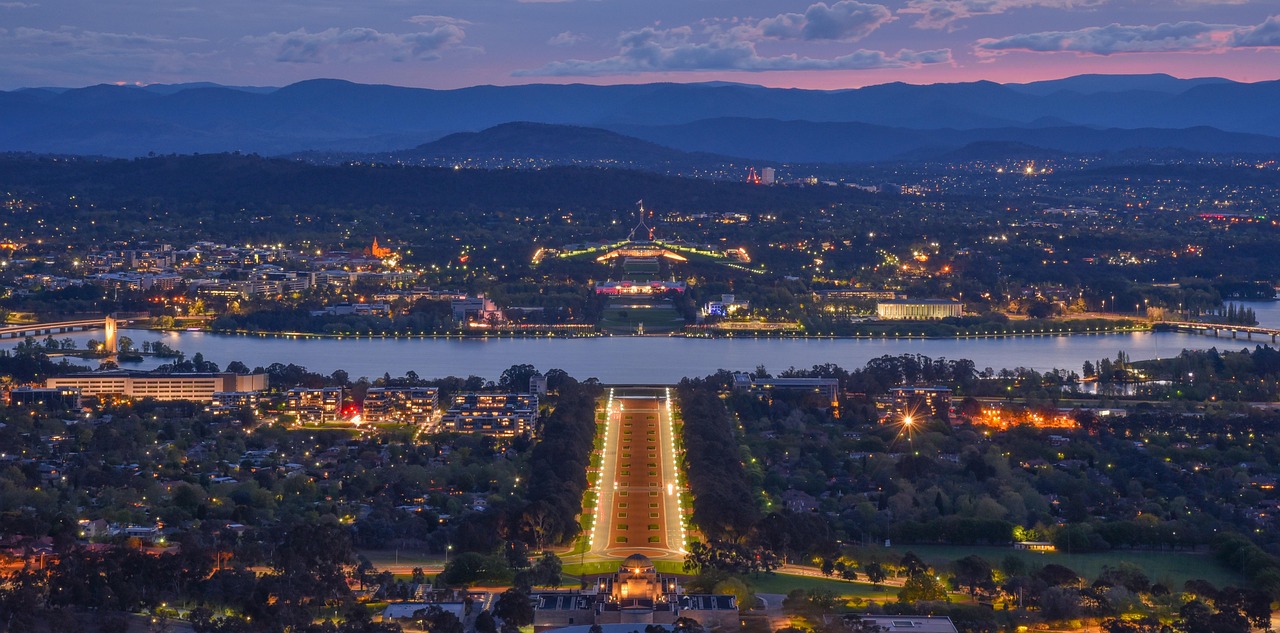
Canberra has a continental climate with warm, dry summers and cool winters, with four distinct seasons. Note that as Australia is in the Southern Hemisphere, the seasons are the opposite of those in the Northern Hemisphere — summer runs December through February, and winter runs June through August. Summer averages 12–27°C with low humidity, while winter temperatures can drop below freezing at night, occasionally bringing frost and fog. Autumn (March–May) is widely considered the most beautiful season, with the city’s parks and gardens ablaze in red and gold foliage. Spring (September–November) is the peak tourist season, celebrated by the world-famous Floriade flower festival. Annual rainfall averages around 629mm, with October and November being the wettest months.
Seasonal Weather Overview
Spring (September – November)
Spring mornings in Canberra are crisp and fresh, while afternoons are bright and sunny. Average temperatures range from 6 to 19°C. In early September, mornings can still dip to around 3°C, but by October and November daytime highs climb to a comfortable 22°C. The highlight of the season is Floriade, Australia’s largest flower festival, held at Commonwealth Park from mid-September to mid-October, when over one million blooms transform the city into a sea of colour. November is the wettest month of the year with around 64–67mm of rainfall, bringing occasional showers, though totals remain modest compared to other Australian cities. Layering is essential given the large temperature swings between morning and afternoon.
Summer (December – February)
Canberra’s summer is warm, dry, and mostly sunny. Average temperatures range from 12 to 27°C, with January being the hottest month, occasionally peaking above 28°C. Very low humidity means the heat feels far more bearable than in humid coastal cities — stepping into the shade offers instant relief. However, occasional heatwaves can push temperatures above 35°C. Evenings cool down to a pleasant 10–13°C, making outdoor dining and evening activities enjoyable. Lake Burley Griffin is the perfect setting for kayaking, paddleboarding, and other water sports during this season.
Autumn (March – May)
Autumn is widely regarded as Canberra’s most beautiful season. Temperatures range from 7 to 20°C, starting with warm 24°C days in March before dipping to lows of around 3°C by late May. The city’s parks, tree-lined boulevards, and gardens turn vivid shades of red, orange, and gold. Commonwealth Park and Otway Road are among the most celebrated spots for autumn foliage. With monthly rainfall of just 44–51mm and plenty of clear, sunny days, this is an ideal time for outdoor sightseeing and photography. Visitor numbers are lower than in spring, making it a quieter and more affordable time to travel.
Winter (June – August)
Canberra has the coldest winters of any major Australian city. Average temperatures sit between 1 and 12°C, with July being the coldest month — overnight lows can dip to just below 0°C, bringing frost and morning fog. Snow falls in the city centre on rare occasions, but just two hours’ drive away, the Australian Alps receive heavy snowfall, with ski resorts at Perisher and Thredbo running at full capacity throughout the season. Winter in Canberra is actually quite dry and sunny, with monthly rainfall of only 40–48mm and beautifully clear blue skies. Daylight hours shorten to around five hours, so early planning for sightseeing is recommended.
Best Time to Visit
Peak Season: Spring (September – November)
Spring is the undisputed best time to visit Canberra. With average temperatures of 6–19°C, days are sunny and comfortable for outdoor exploration. The centrepiece of the season is Floriade at Commonwealth Park — Australia’s largest flower festival, attracting over 500,000 visitors annually with more than one million blooms on display. Accommodation fills up fast and prices rise significantly during the festival period, so booking at least one to two months in advance is strongly recommended.
Second Best: Autumn (March – May)
Autumn rivals spring as Canberra’s golden travel season. With average temperatures of 7–20°C, mild sunny days, and low rainfall, it is ideal for outdoor sightseeing. The city’s spectacular autumn foliage makes it a paradise for photographers and nature lovers. Visitor numbers are lower than in spring, accommodation is more affordable, and the overall pace of the city is pleasantly relaxed. April in particular strikes the best balance of comfortable weather and stunning scenery — a light jacket is usually all you need.
Summer (December – February): Best for Active Travellers
Summer is warm with average highs of 27–28°C and very low humidity, making outdoor activities feel comfortable. The shores of Lake Burley Griffin come alive with water sports, outdoor festivals, and events over the Christmas and New Year period. Be prepared for the occasional heatwave above 35°C, and note that accommodation rates are higher during the school holiday period.
Winter (June – August): Best for Ski Trips & Budget Travel
While winter in Canberra’s city centre brings cold mornings with frost and fog, it is a fantastic base for ski trips to nearby Thredbo and Perisher. City accommodation and attraction entry fees are at their lowest of the year, making it great value for travellers focused on museums, galleries, and indoor cultural experiences. Clear, crisp winter days with brilliant blue skies can be surprisingly enjoyable for sightseeing with the right clothing.
Monthly Weather & What to Wear
January — Peak Summer
The hottest month of the year, with average highs of 28–29°C. Low humidity keeps the heat manageable, and shade feels noticeably cool. Nights drop to a comfortable 13–14°C. Occasional heatwaves can push temperatures above 35°C. With around 9 hours of daily sunshine, this is prime time for outdoor activities.
What to wear: T-shirt + shorts + sunglasses + sunscreen (essential). Add a light cardigan for evenings.
February — Late Summer
Very similar to January, with average highs of 27°C and lows of 13°C. Monthly rainfall of around 56mm means brief showers are possible, but most days remain sunny and clear. Temperatures begin easing off toward the end of the month.
What to wear: T-shirt + shorts + sunglasses + sunscreen. Carry a compact umbrella for unexpected showers.
March — Early Autumn
Autumn begins with pleasantly warm days at 24–25°C and cool nights around 10–11°C. Foliage starts to change colour in the city’s parks and gardens. The large temperature gap between day and night means layering is important.
What to wear: T-shirt or light long-sleeve + thin jacket or cardigan. Add a light coat for evenings.
April — Peak Autumn
Foliage is at its most spectacular this month, with daytime highs of around 20°C and lows of 6–7°C. Clear, sunny days are frequent, making this one of the best months for city walks and outdoor sightseeing. Rainfall is modest at around 46mm.
What to wear: Light long-sleeve + cardigan or lightweight jacket + comfortable walking shoes. A warmer jacket is essential for evenings.
May — Late Autumn
Temperatures drop noticeably, with highs of 15–16°C and lows of around 3°C. Mornings and evenings begin to feel wintry, and gusty winds are more common. May is actually the driest month of the year, with only around 44mm of rainfall.
What to wear: Long-sleeve top + thick knit or sweater + light coat. Add a scarf for mornings and evenings.
June — Early Winter
Winter arrives, with daytime highs of around 12°C and lows dropping to 1°C. Sub-zero nights with frost begin to occur, and foggy mornings are common. Skies are often brilliantly clear once the fog lifts, with only around 40mm of rainfall.
What to wear: Thermal base layer + thick knit + coat or short puffer jacket + scarf + gloves. Non-slip footwear recommended for frosty mornings.
July — Peak Winter
The coldest month, with highs of just 11°C and overnight lows just below 0°C. Frost and fog are common. Nearby ski resorts are in full swing, and snow occasionally falls in the city centre. Despite the cold, July skies are often strikingly clear and blue.
What to wear: Thermal base layer + thick sweater + wool coat or long down jacket + scarf + gloves + insulated boots. Three-layer dressing is recommended.
August — Late Winter
Similar to July but with daytime highs edging up to 13°C — the first hints of spring are in the air. Midday sun can feel surprisingly warm, while mornings and evenings remain very cold. Rainfall picks up slightly to around 46mm.
What to wear: Daytime — light long-sleeve + jacket. Mornings and evenings — heavy coat + scarf + gloves. Layering is essential for the big temperature swings.
September — Early Spring & Floriade
Spring arrives with morning temperatures of around 3°C warming to pleasant afternoon highs of 16°C. Floriade kicks off from mid-September, drawing crowds to Commonwealth Park. Afternoons can feel warm enough for short sleeves, while nights are still quite cold.
What to wear: Daytime — T-shirt or light long-sleeve. Mornings and evenings — light puffer or heavy jacket + scarf. Layering is a must.
October — Spring Peak
Floriade reaches its peak and the city is at its most vibrant. Daytime highs reach a comfortable 19–20°C. October is the wettest month, with around 62mm of rainfall and frequent afternoon showers, so an umbrella is non-negotiable. Weather can change quickly, so be prepared for warm sunny spells and cool showers in the same day.
What to wear: Light long-sleeve + thin cardigan or jacket + compact umbrella (essential). Add a heavier jacket for evenings.
November — Late Spring
Warm and mostly sunny, with highs of 22–23°C. November has the highest monthly rainfall of the year at around 64mm, with short but heavy showers and the occasional afternoon thunderstorm. The weather transitions between warm spring days and early summer warmth.
What to wear: T-shirt or light long-sleeve + thin cardigan. A compact umbrella is essential. Bring a light jacket for evenings.
December — Early Summer
Summer begins in earnest, with daytime highs reaching 26°C. The city buzzes with Christmas and New Year festivities, outdoor concerts, and events. Evenings are pleasantly cool at 11–12°C. Rainfall is around 54mm with occasional brief showers.
What to wear: T-shirt + shorts + sunscreen + sunglasses. Add a light cardigan or long-sleeve for evenings. Carry an umbrella for afternoon showers.
Monthly Climate at a Glance
| Month | Avg High | Avg Low | Rainfall | Conditions | Key Clothing |
| January | 28°C | 13°C | 59mm | Peak summer, dry | T-shirt, shorts, sunscreen |
| February | 27°C | 13°C | 56mm | Late summer, sunny | T-shirt, shorts, umbrella |
| March | 25°C | 11°C | 51mm | Early autumn, foliage begins | Light long-sleeve + jacket |
| April | 20°C | 7°C | 46mm | Peak foliage, pleasant | Long-sleeve + cardigan |
| May | 16°C | 3°C | 44mm | Late autumn, cool | Sweater + coat |
| June | 12°C | 1°C | 40mm | Early winter, frost | Coat + scarf + gloves |
| July | 11°C | -0.1°C | 41mm | Peak winter, ski season | Long down coat, full layers |
| August | 13°C | 1°C | 46mm | Late winter, big temp swings | Layered outfit + jacket |
| September | 16°C | 3°C | 52mm | Spring + Floriade begins | Layers, puffer for mornings |
| October | 19°C | 6°C | 62mm | Spring peak, showers | Light jacket + umbrella |
| November | 23°C | 9°C | 64mm | Late spring, thunderstorms | Light cardigan + umbrella |
| December | 26°C | 11°C | 54mm | Early summer, festive | T-shirt, shorts, sunscreen |