
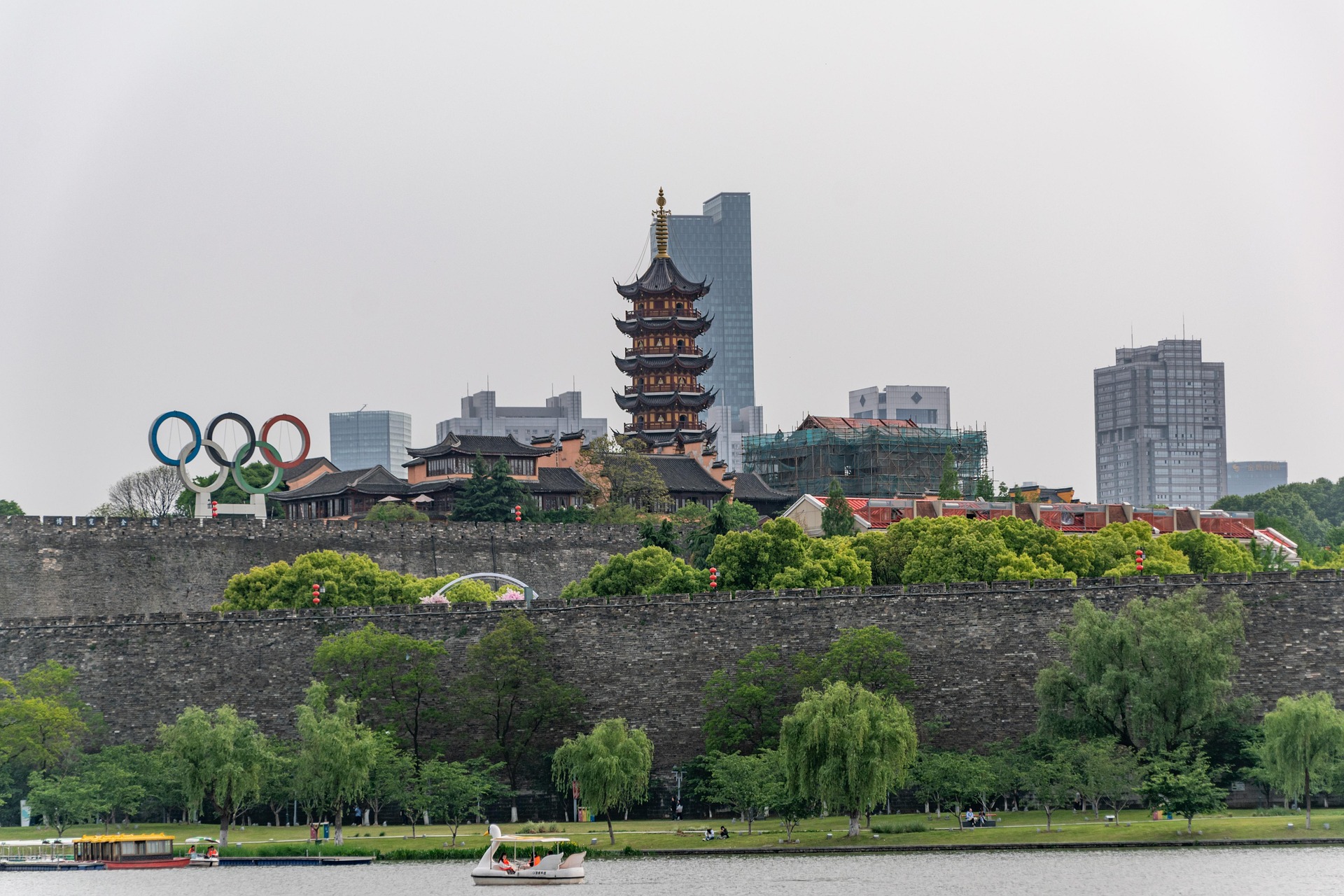
Nanjing is characterized by a humid subtropical climate influenced by the East Asian monsoon, featuring four distinct seasons with hot, humid summers and cold winters. The annual average temperature is 16°C, with July being the hottest month (average 32°C, highs exceeding 40°C) and January the coldest (average 7°C, lows below freezing). Annual precipitation reaches approximately 979–1,144 mm, making it a humid region.
Nanjing’s Seasonal Weather
Spring (March–May)
Spring is a season of warming temperatures with gradually increasing humidity and significant temperature fluctuations. The average temperature is 19.7°C, with daytime highs reaching 20–21°C, though evening temperatures can drop to 10°C. By May, hot summer-like weather with temperatures exceeding 30°C becomes common, and precipitation increases to 90 mm. It is advisable to pack light sweaters, coats, and long-sleeved shirts, with layers to cope with unpredictable weather changes.
Summer (June–September)
Nanjing, along with Wuhan and Chongqing, is known as one of “China’s Three Furnaces” due to its extremely hot and humid summers. Precipitation is significant, with 165 mm in June and 215 mm in July, while July’s average temperature is 28.6°C with highs exceeding 40°C. Humidity reaches 75–78%, creating discomfort, and tropical nights are frequent. Summer clothing, an umbrella, and sunscreen are essential; hiking and outdoor activities should be avoided.
Autumn (October–November)
Autumn is the most pleasant season in Nanjing, with cool, dry weather and precipitation below 60 mm. The average temperature gradually decreases from 17.8°C in October to 11.3°C in November, with sharp temperature variations between morning and evening. From late October to early November, fragrant osmanthus flowers bloom throughout the city, marking the best time to visit. A shirt, light sweater, or lightweight coat is sufficient, and the tree-lined promenades with fall foliage are ideal for exploration.
Winter (December–February)
Winter is a cold season with high humidity. January’s average temperature is 3°C, with nighttime temperatures dropping to an average of -1.3°C, and occasional snow. Precipitation is modest (30 mm in December, 45 mm in January, 55 mm in February), but humidity remains high at 70–72%, resulting in damp cold. Thermal underwear, cotton-padded coats, thick jeans, and warm accessories are necessary. Outdoor activities should be completed before 5 PM, as darkness falls early.
Best Times to Visit Nanjing
Late Autumn (Late October – Early November) – Best Time to Visit
The best time to visit Nanjing is late autumn, from late October to early November, when pleasant temperatures between 15–25°C, golden foliage of Plane trees, red maple on Qiluo Mountain, and the sweet fragrance of osmanthus flowers create perfect travel conditions. This period is optimized for outdoor activities, photography, and exploration of historical sites, making it the perfect travel season.
Summer (June–September) – Season to Avoid
Summer should be avoided due to temperatures exceeding 32°C and humidity of 75–80%, making outdoor activities nearly impossible. Tropical nights and concentrated rainfall (215 mm in July) create significant discomfort. Only limited activities such as indoor attractions or evening river cruises are feasible, making summer unsuitable for travelers wishing to explore natural landscapes and historical sites.
Nanjing’s Monthly Weather and Recommended Clothing
January
January is Nanjing’s coldest month, with an average temperature of 3°C (high 7.4°C, low -1.3°C) and nighttime temperatures dropping to an average of -7°C. Precipitation is modest at 45 mm, but humidity is high at 72%, creating damp cold conditions.
Recommended clothing: Thermal underwear, thick cotton-padded coat, winter hat, gloves, scarf, and thick jeans or thermal pants are essential.
February
February remains cold, with an average temperature of 5.5°C (high 10°C, low 0.9°C), slightly warmer than January. Precipitation is 55 mm with high humidity of 70%, maintaining damp winter conditions.
Recommended clothing: Thick sweater, thermal underwear, warm coat, and winter accessories (hat, gloves, scarf) are necessary. It is wise to pack additional thin layers for temperature fluctuations.
March
March marks the transition to spring, with temperatures rising and average temperature of 9.9°C (high 15°C, low 4.9°C). Temperature variations are significant, precipitation increases to 80 mm, and humidity rises to 68%.
Recommended clothing: Long-sleeved shirts, light sweater, and lightweight coat are suitable. Layering is recommended due to approximately 10°C temperature differences between day and night. A portable umbrella is essential due to increased rainfall.
April
April brings pleasant spring weather with an average temperature of 15.9°C (high 21.3°C, low 10.5°C), and is the prime time for viewing cherry blossoms. Precipitation is 80 mm with relatively pleasant humidity at 67%.
Recommended clothing: Long-sleeved shirt, light sweater, or sports jacket is sufficient. A lightweight jacket for temperature variations is advisable. For cherry blossom photography, wear comfortable shoes and pack light; sunscreen and sunglasses are recommended.
May
May marks the transition to early summer with an average temperature of 21.4°C (high 26.6°C, low 16.2°C), bringing warm to occasionally hot weather. Precipitation increases to 90 mm, and humidity rises to 68% as the humid summer climate approaches.
Recommended clothing: Short-sleeved shirts, thin short-sleeved sweaters, or lightweight pants and knee-length skirts are appropriate. Pack a light jacket for unexpected weather changes. Sunscreen, sunglasses, and an umbrella are essential, and breathable, comfortable shoes are recommended.
June
June marks the transition to early summer with extremely hot and humid conditions, an average temperature of 25°C (high 29.2°C, low 20.8°C), and humidity reaching 75%. Precipitation is heavy at 165 mm during the rainy season, with frequent overcast conditions and reduced sunshine hours.
Recommended clothing: Short-sleeved t-shirts, shorts, and lightweight dresses made of breathable fabrics are essential. A thin cardigan is advisable to counter indoor air conditioning. Sunscreen, hat, and umbrella are must-haves.
July
July is Nanjing’s hottest month, with an average temperature of 28.6°C (high 32.5°C, low 24.7°C) and extreme highs exceeding 40°C. Precipitation reaches 215 mm, the annual maximum, and humidity stands at 77%, creating extremely uncomfortable conditions.
Recommended clothing: Thin, breathable short-sleeved t-shirts, shorts, skirts, and sandals are essential. Pack a thin cardigan against indoor air conditioning. Sunscreen (SPF 50+), hat, sunglasses, umbrella, portable fan, and cooling beverages are must-haves. Outdoor activities should be avoided; if necessary, plan for early morning (before 11 AM) or evening (after 5 PM).
August
August remains extremely hot, similar to July, with an average temperature of 28.2°C (high 32.1°C, low 24.2°C), and temperatures approaching 40°C. Precipitation is still substantial at 145 mm, and humidity is the second highest at 78%, creating very uncomfortable conditions.
Recommended clothing: Pack the same type of thin, breathable clothing as July. Sunscreen, hat, sunglasses, and umbrella are essential. It is advisable to use laundry services at accommodations. Minimize outdoor activities and instead opt for evening activities such as lotus viewing or night river cruises.
September
September marks the transition from summer to autumn, with average temperature of 23.7°C (high 27.9°C, low 19.5°C), gradually shifting from warmth to coolness. Precipitation decreases to 75 mm, and humidity drops to 75%, showing improvement.
Recommended clothing: Short-sleeved shirts, thin long-sleeved shirts, lightweight pants, or light sweaters are suitable. A light jacket is advisable for early morning and evening temperature changes. Sunscreen and umbrella are still necessary. Outdoor activities become increasingly pleasant, making it a good time to explore historical sites.
October
October is the height of autumn, with an average temperature of 17.8°C (high 22.8°C, low 12.9°C), offering pleasant weather and the best travel season. Precipitation is low at 60 mm, and humidity drops to 72%, creating very comfortable conditions.
Recommended clothing: Long-sleeved shirts, light sweaters, cardigans, or lightweight jackets are appropriate. Although daytime temperatures are pleasant, there is a temperature difference of over 10°C between morning and evening, so a coat is essential. Pack comfortable shoes, a light camera, and a guidebook to fully enjoy exploring historical sites and photography.
November
November marks late autumn, with an average temperature of 11.3°C (high 16.5°C, low 6.2°C), and gradually decreasing morning and evening temperatures. Precipitation is low at 55 mm, humidity remains pleasant at 72%, and fall foliage reaches its peak while osmanthus fragrance fills the city.
Recommended clothing: Long-sleeved shirts, light sweaters, light down jackets, or coats are necessary. Transition to winter clothing toward late November. This is the optimal time to enjoy fallen leaves in promenades, photograph autumn foliage on Qiluo Mountain, and visit French Plane tree streets throughout the city, with outdoor activities remaining very pleasant.
December
December marks the transition to winter with rapidly falling temperatures, an average temperature of 5.2°C (high 10°C, low 0.4°C), and nighttime temperatures dropping to an average of -6°C. Precipitation is very low at 30 mm, but humidity remains high at 70%, creating damp cold conditions with occasional snow.
Recommended clothing: Thick sweater, warm coat, thermal underwear, winter hat, gloves, scarf, thick jeans, and winter boots are essential. Daytime hours are shortest (approximately 10 hours), so start activities early and complete them before 5 PM. With luck, you may enjoy snow-covered historical sites.
Nanjing’s Monthly Temperature and Precipitation
| Month | Average
High (°C) |
Average
Low (°C) |
Precipitation
(mm) |
Relative
Humidity (%) |
Sunrise | Sunset |
| January | 7.4 | -1.3 | 45 | 72 | 06:05 | 17:20 |
| February | 10 | 0.9 | 55 | 70 | 05:50 | 17:50 |
| March | 15 | 4.9 | 80 | 68 | 05:45 | 18:17 |
| April | 21.3 | 10.5 | 80 | 67 | 05:30 | 18:38 |
| May | 26.6 | 16.2 | 90 | 68 | 05:10 | 18:55 |
| June | 29.2 | 20.8 | 165 | 75 | 04:58 | 19:08 |
| July | 32.5 | 24.7 | 215 | 77 | 05:10 | 19:08 |
| August | 32.1 | 24.2 | 145 | 78 | 05:22 | 18:45 |
| September | 27.9 | 19.5 | 75 | 75 | 05:40 | 18:10 |
| October | 22.8 | 12.9 | 60 | 72 | 05:58 | 17:35 |
| November | 16.5 | 6.2 | 55 | 72 | 06:15 | 17:05 |
| December | 10 | 0.4 | 29.5 | 70 | 06:30 | 17:05 |