
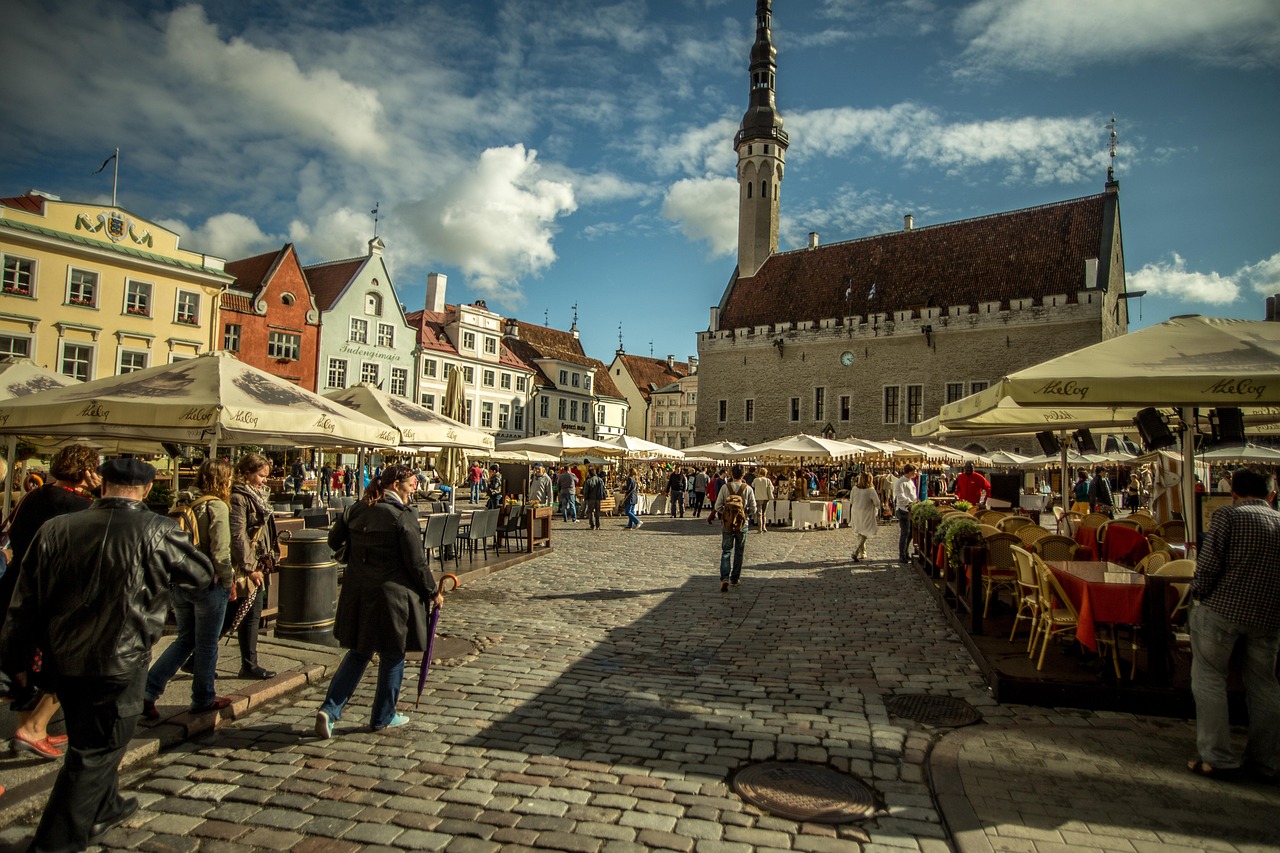
Tallinn has a cool, sub-continental climate with maritime influences — summers are short and pleasantly mild, while winters are long, cold, and snowy, with wind year-round. Temperatures vary significantly throughout the year, with July being the warmest month and January–February the coldest.
Tallinn Weather by Season
Spring (March–May)
Spring in Tallinn is a gradual transition out of winter. In March, average highs barely reach 1–4°C, and nighttime temperatures still dip below freezing with lingering snow in some areas. April brings slightly warmer conditions around 8°C, but it remains cool with frequent rain, making a waterproof jacket essential. May is the most pleasant spring month — highs climb to 14°C, rainy days drop to around 9 per month, and by late May you can enjoy some of the sunniest weather of the entire year.
Summer (June–August)
Summer is the best time to explore Tallinn. Average highs reach 21°C in June, 22°C in July, and 21°C in August — comfortably warm without being oppressive. June and July bring near-white nights, with up to 17–18 hours of daylight, meaning the sky stays bright well past 10 PM. Keep in mind that July is the rainiest month of summer, with around 16 rainy days and roughly 70mm of precipitation, so a light umbrella or rain jacket is always a good idea.
Autumn (September–November)
September is still a great time to visit, with average highs of 17°C and only about 11 rainy days. October sees a sharp drop in temperatures to around 10°C, with overcast skies jumping from 49% to 70% cloud cover — the city turns noticeably darker and wetter. By November, highs fall to just 3–5°C with up to 15 rainy days a month and strong winds that make it feel even colder, requiring a heavy coat.
Winter (December–February)
Tallinn’s winter is long, dark, and cold. December temperatures range between -5°C and 2°C, with only about 6 hours of daylight and frequent snowfall. January and February are the coldest months, with daytime highs hovering around 0°C and nights dropping to -6°C or -8°C, with wind chill making it feel even more bitter. Overcast skies dominate more than 70% of the time — but the sight of snow blanketing the medieval Old Town is one of Tallinn’s most magical and unique charms.
Best Time to Visit Tallinn
The best time to visit Tallinn is May through September, when the weather is mild and perfect for outdoor exploration. June to August in particular offers average temperatures of 17–21°C with long daylight hours thanks to the near-midnight sun, letting you roam the cobblestone streets of the Old Town well into the evening. August is especially lively, with medieval festivals and open-air events giving the city an extra dose of cultural energy.
May is a hidden gem for budget-conscious travelers — it falls just before the peak season, meaning fewer crowds and more affordable accommodation. On the other end of the spectrum, December and January may be bitterly cold and dark, but Tallinn hosts one of Europe’s most enchanting Christmas markets right in the heart of the Old Town square. The combination of snow-dusted medieval towers and glittering market lights makes a winter visit absolutely worth braving the cold.
Monthly Weather & What to Wear
January
Highs of 0°C and lows of -4°C make this the coldest and darkest month. Overcast skies dominate over 70% of the time, with mixed rain and snow on up to 15 days.
What to wear: Heavy down parka, thermal base layers, insulated hat, gloves, and waterproof winter boots are all essential.
February
Temperatures mirror January (highs 0°C, lows -4°C), but with fewer precipitation days — around 10 — making it comparatively drier.
What to wear: Same as January. Prioritize a fully waterproof, insulated winter coat and boots.
March
Highs reach 4°C, but lows still dip to -2°C with high humidity and possible lingering snow.
What to wear: Keep the heavy coat and thermal layers, but bring removable inner layers to adjust for warmer midday temperatures.
April
Highs of 8°C signal the start of spring, though it still feels cool with around 10 rainy days per month.
What to wear: A layered look works best — light puffer or thick trench coat, knit sweater underneath, and a waterproof outer layer. Don’t forget an umbrella.
May
Highs of 14°C and lows of 6°C make this the most pleasant spring month, with the fewest rainy days (around 9) and bright sunshine by late month.
What to wear: A long-sleeve shirt with a light jacket or windbreaker is usually enough. Bring a thin outer layer for cool evenings.
June
Highs of 21°C with white nights and around 11 rainy days mark the start of real summer.
What to wear: A T-shirt with a light cardigan or thin jacket works well. Pack a compact umbrella and sunscreen for long outdoor days.
July
The hottest month at 22°C, but also the rainiest (up to 16 days). Sunny spells and sudden showers can alternate within the same afternoon.
What to wear: Mix of short and long sleeves; always carry a waterproof jacket or compact umbrella.
August
Highs of 21°C with slightly fewer rainy days (around 14) and more stable weather than July.
What to wear: T-shirts and light pants are fine during the day, but bring a cardigan or light jacket for cooler evenings. Comfortable walking shoes are a must.
September
Highs of 17°C mark the beginning of autumn — mornings and evenings turn noticeably cool while midday can still feel pleasant.
What to wear: Layer up with a long-sleeve shirt, thin knit, and a windbreaker or light jacket. Waterproof sneakers and an umbrella are recommended.
October
Highs drop to 10°C and cloud cover increases dramatically, with 13 rainy days per month.
What to wear: A medium-weight coat, thick sweater, scarf, and waterproof footwear are all necessary.
November
Highs of just 5°C with strong winds and up to 15 rainy days give November an early-winter feel.
What to wear: Heavy coat, thermal layers, scarf, gloves, and warm waterproof boots.
December
Highs of 1°C and lows of -3°C, with 15 days of snow or mixed precipitation and only ~6 hours of daylight — but the Christmas market season makes this a uniquely magical time.
What to wear: Full winter gear: heavy parka, thermal base layers, insulated hat, gloves, scarf, and waterproof winter boots.
Monthly Climate Data at a Glance
| Month | Avg High | Avg Low | Precipitation | Rainy Days | Conditions |
| January | 0°C | -4°C | 40mm | 15 days | Snow/rain, overcast |
| February | 0°C | -4°C | 25mm | 10 days | Cold, relatively dry |
| March | 4°C | -2°C | 30mm | 10 days | Cool, possible snow |
| April | 8°C | 2°C | 41mm | 10 days | Cool, occasional rain |
| May | 14°C | 6°C | 38mm | 9 days | Sunny, pleasant |
| June | 21°C | 12°C | 55mm | 11 days | Mild, white nights begin |
| July | 22°C | 14°C | 70mm | 16 days | Warmest, most rain |
| August | 21°C | 14°C | 75mm | 14 days | Mild, pleasant |
| September | 17°C | 10°C | 60mm | 11 days | Early autumn, cool |
| October | 10°C | 6°C | 65mm | 13 days | Overcast, frequent rain |
| November | 5°C | 2°C | 55mm | 15 days | Cold, strong winds |
| December | 1°C | -3°C | 50mm | 15 days | Snow/rain, Christmas market |