
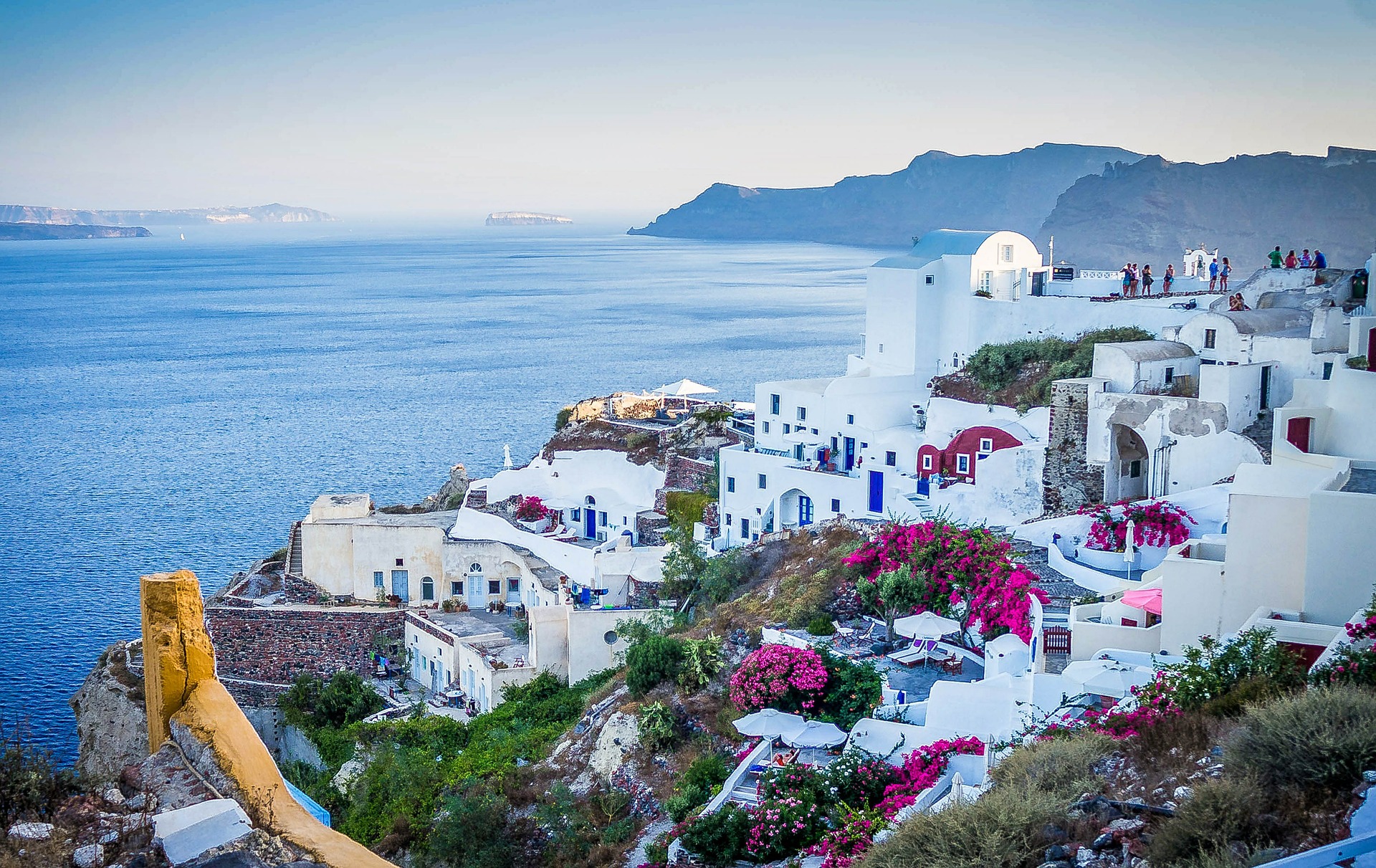
Santorini is a volcanic island in the southern Cyclades archipelago of Greece, located approximately 200 km southeast of the Greek mainland, between the islands of Ios and Anafi. Widely considered one of the most beautiful islands in the world, it draws millions of visitors every year.
Santorini is home to Akrotiri, one of the most significant archaeological sites of the ancient Minoan civilization, which collapsed in the 17th century BC. The ancient city was buried under volcanic ash and is still being excavated today. During the Latin Empire, the Venetians called the island “Santa Irini” — a name derived from Saint Irene — which eventually evolved into “Santorini.”
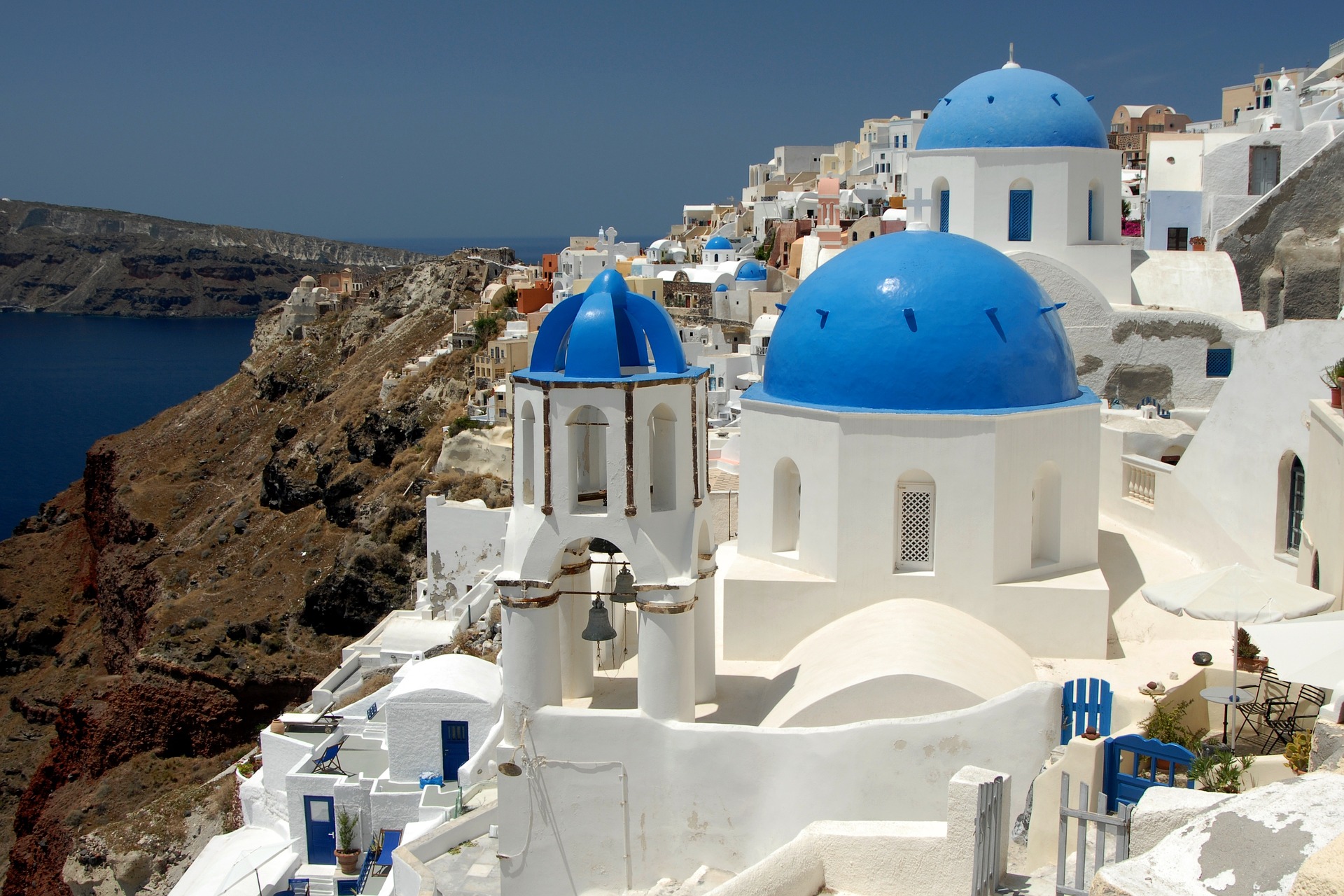
The island’s iconic whitewashed buildings with blue-domed roofs, set against the shimmering Aegean Sea, make it one of the most photographed places on Earth. The caldera-cliff villages of Fira and Oia are especially renowned for their romance, making Santorini a top honeymoon destination. Unique black-sand beaches, Red Beach, volcanic craters, ancient ruins, winery tours, caldera hikes, and yacht excursions offer something for every traveler. Evenings bring spectacular sunsets and vibrant dining scenes along the cliffsides.
Greece: Basic Travel Facts
| Capital | Athens (Athína) |
| Area | 131,957 km² |
| Official Language | Greek |
| Population | ~10.3 million |
| Time Zone | UTC+2 (Summer: UTC+3, last Sunday in March – last Sunday in October) |
| Visa | Schengen member — 90 days visa-free within any 180-day period. From October 2026, travelers must apply for ETIAS online before visiting (€20). |
Santorini: Quick Facts
- Population: ~16,000
- Area: 76.19 km²
- Nearest Airport: Santorini (Thira) International Airport (JTR)
2026 Greek Public Holidays
- Jan 1 – New Year’s Day
- Jan 6 – Epiphany
- Feb 23 – Clean Monday (Ash Wednesday equivalent)
- Mar 25 – Greek Independence Day
- April – Good Friday
- April – Easter Monday
- May 1 – Labor Day
- May 31 – Whit Monday
- Aug 15 – Assumption of Mary
- Oct 28 – Ohi Day (National Holiday)
- Dec 25–26 – Christmas Holiday
Seasonal Weather & Best Time to Visit
Santorini has a hot Mediterranean climate with essentially two seasons: a warm, dry summer from April to October, and a cool, wet winter from November to March. It tends to be slightly cooler than other Mediterranean islands.
Spring (March – May)
Spring is warm and pleasant. March averages 11°C (low) to 16°C (high) — cool in the mornings and evenings but great for daytime activities. April warms to 13–18°C with barely any rainfall. By May, temperatures reach 16–23°C, nearly summer-like. Flowers bloom across the island, and with around 11 hours of daily sunshine, outdoor activities are ideal all day.
Summer (June – August)
Summer is hot and dry. Daytime temperatures reach 25–30°C, with nights staying above 20°C. It’s the best season for beach activities and swimming. Skies are almost always clear. Sunscreen, a hat, and sunglasses are essential. The famous Meltemi wind occasionally blows in, providing some welcome relief from the heat.
Autumn (September – November)
The intense heat softens in autumn, giving way to clear and refreshing weather. Early September still feels like summer, but from October temperatures drop to 20–25°C by day and around 15°C at night. Rainfall gradually increases but remains infrequent. Sunsets are particularly stunning this season, making coastal walks and sunset viewing especially popular.
Winter (December – February)
Winters are mild but wet. Daytime temperatures hover around 10–15°C, dropping to 8–10°C at night. Overcast and rainy days become more common, and winds can be strong. A warm coat or sweater is necessary, along with an umbrella and waterproof shoes. The tourist scene is quiet, but the island has a peaceful, uncrowded charm.
Best Time to Visit
| Period | Type | Notes |
| June – September | Peak Season | Best weather; beaches and outdoor activities at their best; very crowded, highest prices |
| July – August | Absolute Peak | Most expensive; book everything in advance |
| April–May / October | Sweet Spot | Great weather, fewer crowds, affordable rates; most businesses open |
| November – March | Off-Season | Quiet and cheap; many hotels and restaurants closed; outdoor activities limited |
Getting to Santorini
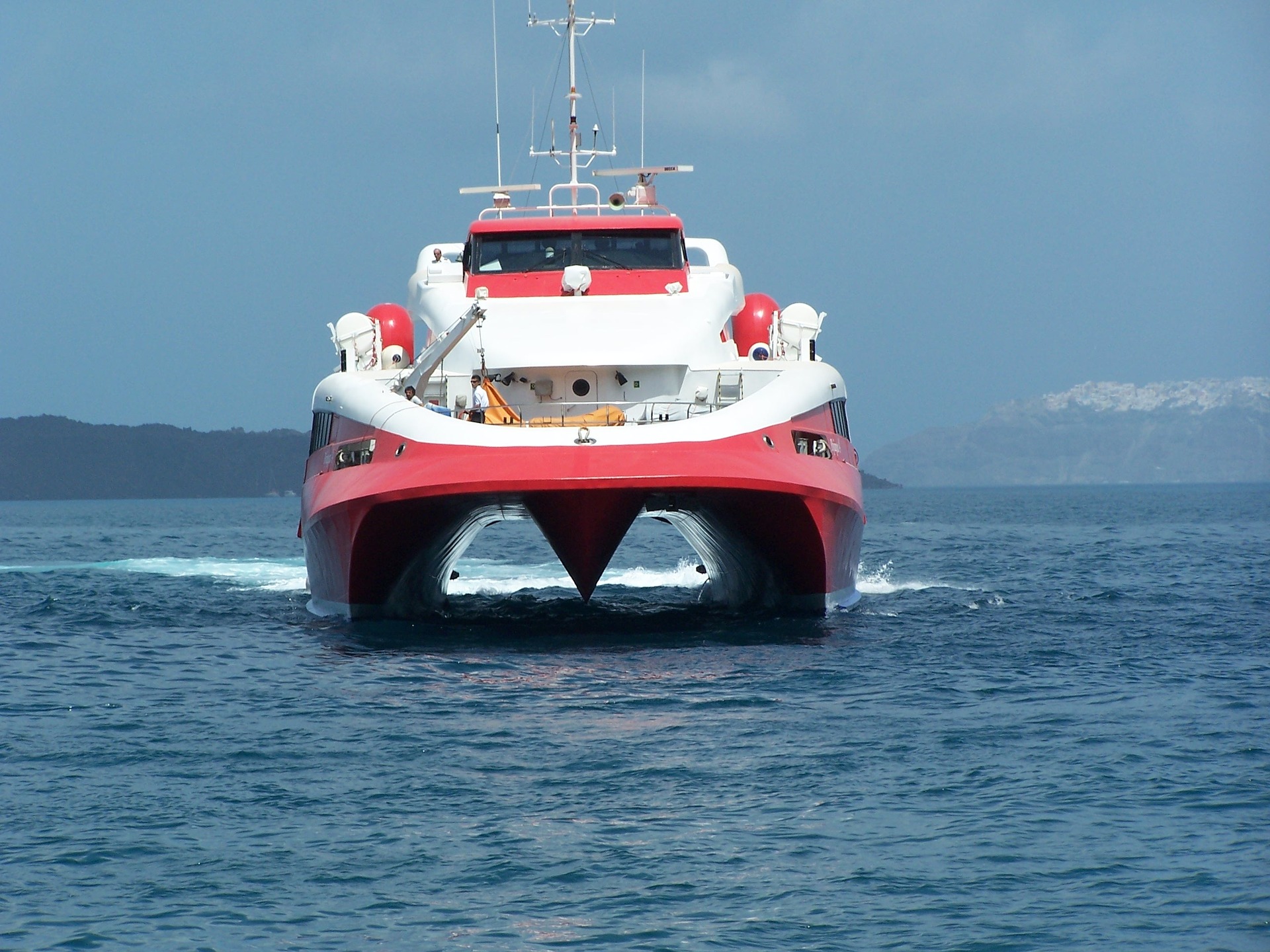
Santorini (also known as Thira by Greeks) is a stunning Aegean island located 126 nautical miles from Athens. Arriving by ferry is unforgettable — the volcanic caldera cliffs are especially breathtaking in the late afternoon light.
By Ferry
Ticket Purchase
Ferry tickets can often be purchased on the day of travel or the day before at the port. For Greek Orthodox Easter (spring) and August, when many locals travel to the islands, advance booking is strongly recommended. You can also buy tickets at travel agencies near Syntagma Square in Athens (popular agencies include Aktina Travel Group and Amphitrion Group), or ask your hotel for assistance.
Departure Ports
- Piraeus Port (south of Athens) – Most ferries depart from here; many daily sailings to Santorini
- Rafina Port (north of Athens, closer to the airport) – Fewer sailings, roughly one per day; less convenient but worth considering if arriving by air
Ferry Operators
| Operator | Journey Time | Starting Fare |
| Blue Star Ferries | ~7h 25m | From €45.50 |
| Seajets (high-speed) | ~4h 50m | From €76 |
Note: Ferry schedules can be affected by weather conditions. If you need certainty in your itinerary, flying is the safer option. More ferries operate during the high season (April–October).
By Plane
Airlines operating between Athens International Airport and Santorini (JTR) include Ryanair, Sky Express, Aegean Olympic Air, and Volotea. The flight takes approximately 45 minutes. In peak summer, around 20 daily flights operate; in winter, services are significantly reduced. Fares start from around €16 — Ryanair is typically the cheapest. Book early for the best deals.
Airport & Port Transfers
If your hotel doesn’t offer a pickup service, here are your main options:
Taxi
Taxis wait at both the airport and Athinios Port. Always agree on the fare before getting in.
| Route | Fare |
| Airport → Fira | €20–30 |
| Airport → Oia | €35–40 |
| Airport → Port | €25–35 |
| Port → Fira | €35 |
Shared Transfer
Book online for door-to-door hotel transfers. Fares: €20 per person (solo), €14 per person (2 or more).
Local Bus (KTEL)
The cheapest option, though timing can be irregular especially off-season.
| Route | Fare |
| Airport → Fira | €1.60 |
| Port → Fira | €2.30 |
Most buses go directly to Fira — if your hotel is in another village, you’ll need to transfer or take a taxi from Fira.
Car Rental
Santorini is well-suited to self-driving. Book online to pick up at the airport. Tip: Do not pick up a rental car at the port — the hairpin cliff road heading up is challenging and the port area gets chaotic when ferries arrive. Small manual cars start from around €40/day; automatic transmission models cost more and should be booked in advance (especially in July–August). Fuel costs approximately €2.10/litre.
Getting Around Santorini
The main ways to get around the island are by bus, taxi, or rental car/scooter. (Note: Scooters are not recommended due to road hazards.)
Bus (KTEL)
Santorini’s buses are modern and air-conditioned. Fira is the central hub — all routes start and end here. Travelers staying in other villages must transfer through Fira to reach other destinations. Each transfer requires a separate ticket.
Bus Fares
Most routes cost around €2 one-way. Night buses cost slightly more at €2.30–3.10.
Frequency
- Caldera villages (Fira, Firostefani, Imerovigli, Oia): every 20–30 minutes year-round
- Other villages in peak season: every 30–60 minutes
- Off-season (late November–February): frequency drops significantly; some routes run only twice a day or not at all
How to Use
Check the yellow destination sign on the lower left of the bus windscreen. Wave your hand at the bus as it approaches — buses won’t always stop automatically. Pay the driver in cash on boarding (change is given). At the airport or port, you may pay a staff member before boarding. In peak season, popular routes fill up fast — wait for the next bus if needed. Hold on tight; Santorini’s roads are winding and hilly.
Taxi
There are only 25 taxis on the island, so finding one on the street can be difficult. In villages far from Fira, call ahead to arrange a pickup for the evening:
Santorini Taxis: +30 22860 22555
Taxis do not use meters — negotiate the fare before you get in. Evening fares are higher, and fares increase again after midnight. Uber and Lyft are not available on Santorini.
Taxi Fares (from airport)
| Route | Fare |
| Airport → Oia | €35–40 |
| Airport → Fira | €20–30 |
| Airport → Port | €25–35 |
| Oia → Fira | €25–35 |
Where to Stay: Neighborhoods
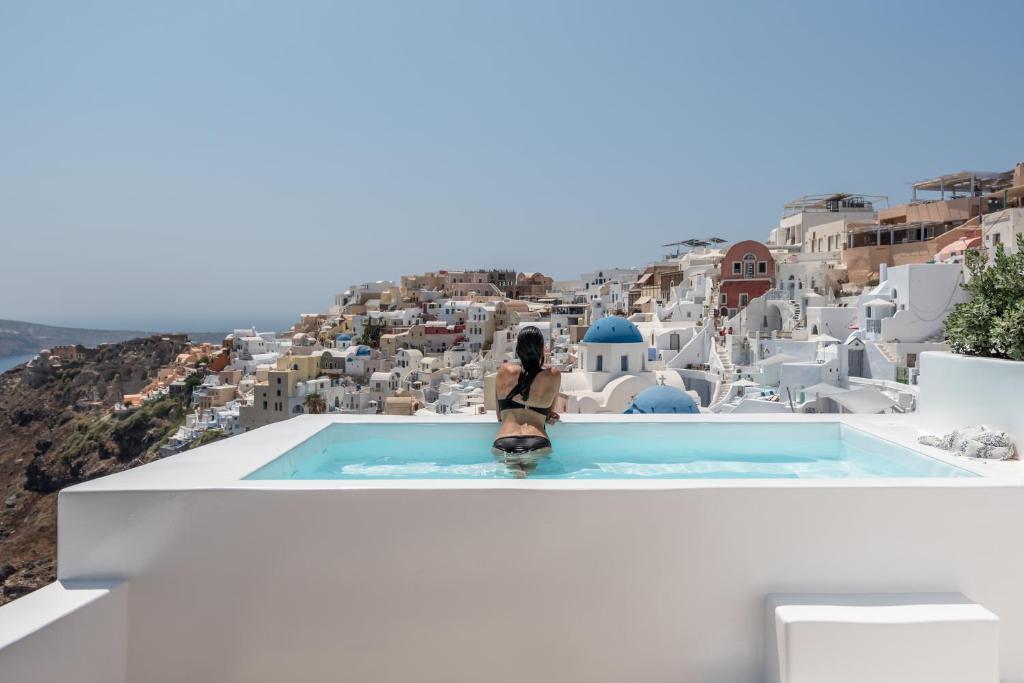
Santorini’s most spectacular hotels cling to the caldera cliffs on the island’s western side. Most five-star hotels are boutique properties — there are no large all-inclusive resorts here.
Fira
Best for: Shopping, nightlife, families, budget travelers
Fira is Santorini’s largest town and one of Greece’s most iconic viewpoints. Perched on the caldera cliffs with sweeping volcanic views, it’s home to the most restaurants, shops, and hotels on the island — and the island’s main bus hub. If you’re not renting a car, this is the most practical base. Luxury clifftop hotels coexist with affordable guesthouses popular with backpackers. The nearest beach (Kamari) is a 20-minute bus ride away.
Firostefani
Best for: Scenic views, quieter base near Fira
A 10-minute walk from Fira, Firostefani is quieter while still being close to all of Fira’s amenities. No bars or clubs, but around 10 restaurants, a bakery, and some shops.
Imerovigli
Best for: Romance, honeymoons, quieter stays
The most tranquil caldera village, set on the highest cliffs on the western coast. Its elevated position means it offers arguably the best unobstructed sunset views on the island. A 20–30-minute walk from Fira, it has fewer restaurants — but all are excellent.
Oia
Best for: Romance, luxury, scenery, families
Santorini’s most picturesque village, at the island’s northern tip — and home to its finest hotels. Oia is among the most expensive places to stay in all of Greece, but it’s absolutely unforgettable. Lively during the day (especially at sunset), quieter in the evenings. Good boutique shops, restaurants, and one outstanding bar. The south side of town faces the caldera; the north side is best for sunset views. Getting here from Fira takes time — take a taxi or bus.
Akrotiri
Best for: Beach lovers, archaeology enthusiasts
A small village on the southern peninsula, with a few restaurants, chapels, and historic ruins. It’s a 13-minute walk from the bus stop to the famous prehistoric excavation site. Home to popular beaches including Red Beach (Kokkini Ammos), White Beach, Bliada, and Caldera Beach. The lighthouse at the southwestern tip is a romantic and quieter sunset spot. Best explored by car, as attractions are spread out. About 20 minutes by bus from Fira.
Pyrgos
Best for: Authentic village feel, panoramic views, wine lovers
The highest village on the island, offering sweeping 360° views of all of Santorini. Pedestrian-only alleyways wind past restaurants, boutique shops, beautiful churches, and castle ruins. Surrounding vineyards offer tours and tastings. Popular with travelers seeking a quieter, more local experience. About 20 minutes by bus from Fira.
Kamari
Best for: Families, beach holidays
A family-friendly beach resort with a lively pedestrian beachfront promenade, plenty of good restaurants, and easy swimming. Pebble beach. About 15 minutes by bus from Fira.
Perissa
Best for: Families, value travelers, beach lovers
Perissa Beach is widely considered better than Kamari’s, though it’s further from Fira. The pedestrian promenade is lined with budget-friendly hotels, restaurants, and bars, with newer upscale options now available too. Wear aqua shoes as the entry into the sea passes over slippery rocks. The quieter Perivolos section (southern end) has upscale hotels, restaurants, and a premium beach club at Agios Georgios Beach.
Accommodation: Rates & Recommendations
Hotels are open from roughly April to October. Most close November through March. The absolute peak is July–August; June and September are also busy. Best prices are in April, May, and October.
Price Guide by Star Rating
| Type | Peak (Jul–Aug) | Low Season (Nov–Mar) |
| 2-Star Hotel | €70–90 | €22–40 |
| 3-Star Hotel | €90–112 | €25–60 |
| 4-Star Hotel | €110–140 | €32–80 |
| 5-Star Hotel | €250–320 | €120–180 |
| Hostel Dorm | €15–25 | €10–15 |
Romantic Luxury Hotels (Honeymoon)
- Alleys All-Suite Hotel & Spa
- Katikies Santorini – The Leading Hotels of the World
- Apeiron Blue Santorini
- Aspaki by Art Maisons
- Andronis Arcadia Hotel
Boutique Hotels (Couples)
- Milos Villas Hotel
- Meltemi Village Hotel
- Danae Suites Santorini
- Anassa Deluxe Suites
- Exi Sea Side Suites
Family Hotels
Budget Hotels
Hostels (Backpackers)
Top Attractions & Tours
Viewing the Caldera from the Sea
The caldera — formed when a massive volcanic eruption collapsed the island around 1600 BC — is best appreciated from the water. Arriving by ferry gives you a breathtaking introduction to the cliffs. For those short on time, a boat tour is a perfect alternative:
- Volcanic Islands Cruise (Volcano + Hot Springs + Thirassia)
- Gold Catamaran Cruise with Lunch & Open Bar
- Romantic Sunset Dinner Cruise
Book in advance during peak summer and early autumn.
Akrotiri Excavations (The “Atlantis” Ruins)
Archaeologists began excavating this site in 1967. Now one of the most important archaeological sites in the Aegean, it shows evidence of a sophisticated civilization dating to 4,000–3,000 BC — complete with multi-storey houses, paved streets, and sewage systems, with trade links to Minoan Crete, mainland Greece, Syria, and Egypt. The city was buried under volcanic ash, preserving it remarkably well.
- Opening Hours (Summer): Wednesday–Monday, 08:30–15:30; Closed Tuesdays. Check the official website for updates.
- Admission: €12
- Book an Akrotiri Bus Tour
Beach Day
Santorini’s beaches run along the eastern and southern coastlines. The famous Red Beach (Kokkini Ammos), near Akrotiri, features vivid orange-red volcanic sand and is one of the most photographed beaches in Greece. It gets crowded, and nearby hot springs add to the appeal.
- Kamari – Well-equipped with sunbeds, bars, changing rooms, and toilets; great for families
- Perivolos / Perissa – Livelier at Perivolos (music bars, young crowd); quieter at Perissa and Exo Gialos; wear aqua shoes at Perissa
- Bliada Beach – Known for its uniquely wind-sculpted volcanic rock formations
Exploring the Active Volcano (Nea Kameni)
Santorini is still volcanically active — there were three eruptions in the 20th century alone, including a major one at the nearby island of Nea Kameni in 1950. Take a caldera cruise from Fira’s old port to land on Nea Kameni, hike up to the crater (20–30 minutes), and walk around the rim. You can smell sulphur in the air and feel the volcanic heat from the ground.
Winery Tours
Santorini has some of the world’s oldest vineyards — evidence of winemaking dating back 3,700 years has been found here. Ancient grapevines, some planted over 1,200 years ago, are still cultivated using traditional methods and continue to produce wine today. Visit the Santorini Wine Museum or join a guided winery tour to visit multiple wineries in one trip.
Sunset Watching
Santorini’s sunsets are legendary. Here are the best spots:
- Oia (Oia Castle area) – The most famous sunset viewpoint on the island; gets extremely crowded — arrive early
- Fira – The short clifftop walkway near the cathedral fills with crowds at dusk; clifftop bars and restaurants offer reserved seating
- Akrotiri Lighthouse – The southwestern tip of the island; quieter and romantic; walkable
- Sunset Cruise on the Aegean – Join a sunset dinner cruise for a meal on the water as the sun dips below the horizon. Hotel pickup available; advance booking required.
Caldera Rim Hike (Fira to Oia)
One of the most rewarding walks in the Aegean. The 12 km one-way trail follows the caldera’s edge through Firostefani and Imerovigli to Oia. Allow 2.5 hours at a comfortable pace (up to 5 hours if you stop often for photos). Wear proper walking shoes — though some people do it in sandals. The hike from Fira to Oia rewards you with the best views at the finish line.
Art Galleries
- Mnemosyne Gallery (Oia) – Tucked into a cave near Oia’s famous sunset viewpoint; exhibits landscape photography, handcrafted jewelry, sculpture, and ceramics
- Art of the Loom – Set in a historic Cycladic winery building; features oil paintings, jewelry, pottery, and art glass by renowned Greek artists
Must-Try Foods
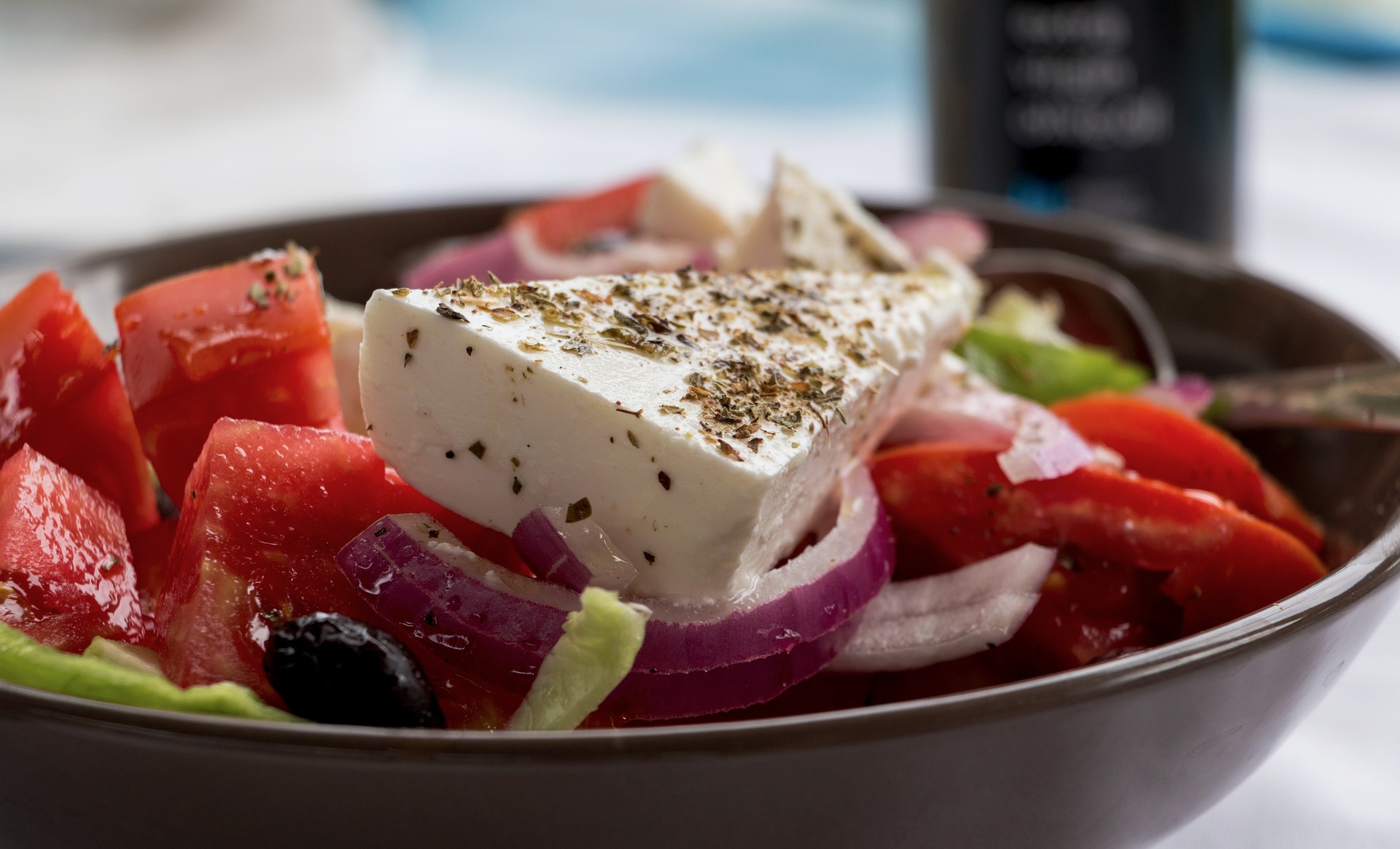
Santorini’s cuisine draws on centuries-old Cycladic tradition, shaped by the island’s volcanic soil and relative isolation. The cooking is simple but exceptional — relying on local birds, shellfish, livestock, tomatoes, capers, and unique island-grown produce. Inexpensive options exist across the island; waterfront restaurants tend to be pricier. For budget eats, gyros are available everywhere.
Saganaki
Feta cheese wrapped in crispy phyllo pastry, fried until golden, and drizzled with honey. The contrast of flaky crust, warm sticky cheese, salty feta, and sweet honey is genuinely addictive.
Fava
One of Santorini’s most iconic dishes — a smooth dip made from Santorini’s famous yellow split peas, similar in texture to hummus. Served warm with lemon, olive oil, and topped with capers or onions. A healthy, filling, and affordable starter that has been beloved for generations.
Chlorotyri
A soft, slightly tangy goat’s cheese produced in small batches by local cheesemakers. Often served alongside salads — order a “Santorini salad” (like a Greek salad but with capers added) and you’ll likely encounter it. Spread it on bread for a simple, creamy snack.
White Eggplant
Santorini’s rare white eggplant grows from the island’s volcanic soil and has a more intense, sweeter flavor than purple varieties, with fewer seeds. Many restaurants serve it in various preparations, including the popular traditional Greek smoked eggplant salad (melitzanosalata).
Apochti
A traditional Santorini cured meat — pork loin salted, marinated in vinegar, rubbed with pepper and cinnamon, rested for six hours, then air-dried. Thinly sliced and used in many dishes, it’s a classic accompaniment to fine wine and is frequently served at winery tastings.
Tomato Keftedes (Tomato Fritters)
The island’s volcanic soil and salty sea breeze produce tomatoes far more aromatic and flavorful than typical varieties. Tomato keftedes — mashed tomato mixed into a batter and fried into bite-sized fritters — are one of the island’s most beloved snacks and a staple starter in most restaurants.
Daily Budget Estimates
Solo Backpacker – ~€69/day
| Item | Cost |
| Hostel dorm bed | €25 |
| Meals (street gyros, budget taverna) | €18 |
| Transport (bus) | €9 |
| Sightseeing (Akrotiri entry) | €12 |
| Miscellaneous | €5 |
| Total | €69 |
Value Couple – ~€250/day
| Item | Cost |
| Mid-range hotel (double room) | €90 |
| Meals (local taverna, moussaka, seafood) | €58 |
| Transport (bus + occasional taxi) | €26 |
| Tours & entry fees | €56 |
| Souvenirs / shopping | €20 |
| Total | €250 |
Luxury Couple – ~€670/day
| Item | Cost |
| Luxury caldera-view resort | €400 |
| Dining (grilled octopus, wine, fine dining) | €100 |
| Transport (private taxi / rental car) | €50 |
| Premium tours (yacht, private guide) | €80 |
| High-end souvenirs / spa | €40 |
| Total | €670 |
SIM Card & Connectivity
Greece has three mobile operators: Cosmote (widest coverage, fastest speeds), Vodafone (mid-range), and Wind (most limited coverage). To purchase a local SIM, you’ll need your passport — a photo is taken on the spot. SIM cards cost around €5 but come without any included credit, which must be purchased separately.
If you’re combining Greece with travel to other European countries, consider purchasing a Europe-wide eSIM before you depart — this can be cheaper and more convenient than buying local SIMs in each country.