
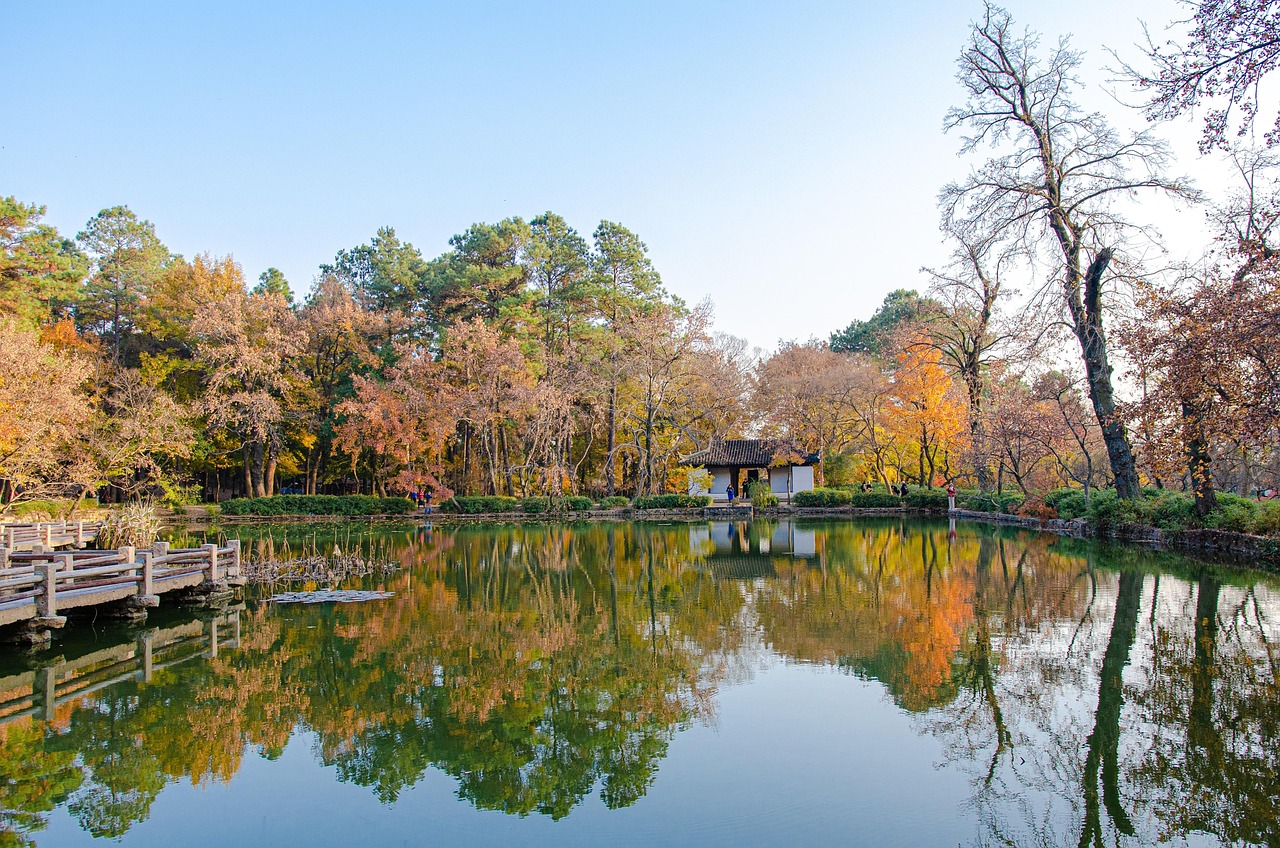
Suzhou has a subtropical monsoon climate with four distinct seasons, though spring and autumn are relatively short while summer and winter tend to linger. Summer (June–August) brings scorching heat up to 36–40°C with high humidity and heavy rainfall concentrated in June and July. Winter (December–February) sees temperatures hovering around 0°C, with many overcast days creating a damp, biting chill — though extreme freezing temperatures are rare. The best time to visit is April–May, when flowers are in full bloom, and October, when autumn foliage transforms the gardens and canals.
Suzhou by Season
Spring (March – May)
Temperatures begin to rise slowly, but March can still feel cold with lows around 2°C and lingering winter air. By April, highs reach 18–23°C, flowers bloom throughout the city, and true spring weather settles in. May brings daytime highs up to 28°C — almost summer-like — though mornings and evenings remain pleasantly cool. Since spring and autumn are short, sudden temperature swings can occur, so always carry an extra layer.
Summer (June – August)
June marks the start of Suzhou’s hot and humid summer, with daytime temperatures approaching 30°C. July is the hottest month, with highs hitting 36°C and extreme humidity making heat feel even more oppressive. Rainfall peaks in June–July coinciding with China’s plum rain season (梅雨), with a three-month average of around 177mm. Outdoor sightseeing becomes challenging, though tourist numbers remain high due to summer holiday season.
Autumn (September – November)
From September, the heat gradually fades, rainfall decreases, and comfortable autumn weather arrives. October is the most popular travel month, with pleasant highs around 20°C and cool mornings and evenings perfect for exploring gardens and canals draped in autumn foliage. Clear skies and low rainfall make it ideal for outdoor itineraries. By November, temperatures drop to 13–20°C and cloudy days increase — a light jacket becomes essential.
Winter (December – February)
December brings highs of around 10°C and lows near 1°C, marking the onset of true winter. January is the coldest month, with highs of 7–8°C and lows near 0°C — occasionally dipping to -4°C. While not an extreme freeze, the high humidity and persistent overcast skies make the cold feel sharper than the numbers suggest. Rainfall is at its annual low, making this a better time for indoor attractions like museums and silk markets.
Best Time to Visit Suzhou
The best times to visit Suzhou are spring (April–May) and autumn (September–October), when mild temperatures and clear skies make outdoor garden tours a joy. Since Suzhou’s highlights — like the Humble Administrator’s Garden — are best experienced outdoors, these seasons are highly recommended.
Spring (April–May) offers average temperatures of 10–25°C with cherry blossoms, rapeseed flowers, and low humidity, making it an ideal travel window. The Humble Administrator’s Garden hosts an azalea festival from late March to mid-April, showcasing a stunning combination of classical architecture and spring blooms. Note that early March can still feel chilly, so pack an extra layer just in case.
Autumn (September–October) is another golden season, with the summer heat gone and rainfall reduced to a comfortable minimum. October is particularly spectacular for viewing the blazing maple foliage at Tianping Mountain in Suzhou. However, the National Day Golden Week holiday (October 1–7) draws massive crowds, so book accommodation and transport several months in advance.
Summer (June–August) is not recommended for outdoor sightseeing due to the sweltering heat and high humidity, while winter (December–February) is equally unsuitable for garden tours given the damp chill and grey skies. For the best experience exploring Suzhou’s canals and classical gardens, plan your trip in April–May or September–October.
Monthly Weather & What to Wear
January
The coldest month of the year, with highs of 7–8°C and lows near 0°C, occasionally dropping to -4°C. High humidity and overcast skies make the cold feel piercing, and light sleet or rain can occur even though overall precipitation is low.
What to Wear: Heavy down jacket, thermal base layers, scarf, gloves, and a warm hat are all essential.
February
Temperatures are similar to January, with lows of 0–2°C, though warmth slowly begins to creep back toward month’s end. Thick clouds and limited sunshine keep the feels-like temperature low. As February closes, daytime highs nudge up to around 10°C and spring hints begin to appear. Note that China’s Spring Festival (Lunar New Year) often falls in February, making popular attractions especially crowded.
What to Wear: Long heavy coat, fleece-lined base layers, scarf and gloves; layering is the most effective strategy.
March
Spring begins, but early March still carries a wintry chill with lows around 2°C and daily temperature swings of over 10°C. Daytime highs climb to 10–15°C, though sudden cold snaps can occur — always check the forecast. Rainfall gradually increases and overcast, drizzly days become more frequent.
What to Wear: Light puffer or thick jacket as a base layer, sweater underneath for warmth, and carry an umbrella.
April
Full spring arrives, with highs of 18–23°C, blossoming flowers, and very comfortable sightseeing conditions. Suzhou’s classical gardens are at their most beautiful, with azaleas and other spring flowers in full bloom. Mornings and evenings can still dip below 10°C, so a light outer layer is needed. Occasional spring showers mean a compact umbrella is a smart addition to your bag.
What to Wear: Thin jacket or trench coat over long-sleeved tops; keep a cardigan handy for cooler evenings.
May
Daytime temperatures rise to 25–28°C, creating warm, sunny days reminiscent of early summer. Humidity begins to climb but hasn’t reached the uncomfortable levels of summer yet, making this excellent for outdoor sightseeing. Mornings and evenings remain pleasantly cool at 15–18°C. Sudden afternoon showers are possible, so an umbrella is a must.
What to Wear: Short-sleeved shirt or thin long-sleeved top; bring a light cardigan for evenings and always carry an umbrella.
June
Temperatures near 30°C mark the true start of Suzhou’s hot and humid summer. June–July overlaps with China’s plum rain season (梅雨), causing a sharp spike in rainfall. High humidity makes the real-feel temperature much higher than the actual reading. Sunscreen and adequate hydration are essential for any outdoor garden visits.
What to Wear: Breathable short-sleeved shirt and shorts, thin UV-protective long-sleeved layer, umbrella or rain poncho, and a hat.
July
The hottest and wettest month of the year, with highs reaching 36°C. Rain falls on roughly 51% of days, with sudden heavy downpours common. Extreme humidity pushes the heat index to its annual peak, making prolonged outdoor activities very difficult. Tropical nights keep temperatures above 25°C even after dark, making it hard to cool down.
What to Wear: Moisture-wicking short-sleeved shirt and shorts, lightweight sandals, umbrella or rain poncho, sunscreen, and UV-protective arm sleeves are all recommended.
August
Daytime temperatures remain around 33°C — just as hot and humid as July. The plum rains begin to retreat but showers are still frequent throughout the month. Tropical nights persist, with overnight lows staying above 25°C. Toward the end of August, the heat very gradually begins to ease and a hint of autumn starts to emerge.
What to Wear: Same as July — moisture-wicking shirt and shorts, sun protection essentials; bring a thin cardigan for heavily air-conditioned indoor spaces.
September
The heat retreats noticeably, with highs of 28°C and lows of 17°C creating far more comfortable conditions. Rainfall decreases and sunny days become more frequent. While afternoons can still feel warm, mornings and evenings are pleasantly cool — ideal for layering. With an average of over 12 hours of daily sunshine, September is excellent for outdoor sightseeing.
What to Wear: Short-sleeved or thin long-sleeved top during the day; bring a light jacket or cardigan for evenings.
October
The best month to visit Suzhou, with highs around 20°C and cool mornings and evenings of 10–15°C. Autumn foliage reaches its peak, making the canals and classical gardens breathtakingly scenic. Rainfall probability drops to roughly 18%, the lowest of the year, making outdoor planning easy and reliable. Book well in advance if traveling during the National Day Golden Week (October 1–7), as crowds surge dramatically.
What to Wear: Light jacket or cardigan with long trousers as a base; layer up with a lightweight windbreaker for mornings and evenings.
November
Temperatures fall quickly, with highs around 15°C and lows of 7–9°C — noticeably chilly. Overcast days increase and the weather shifts rapidly toward winter, with occasional cold snaps possible. Early November still offers late-autumn foliage, though this window closes fast.
What to Wear: Thick jacket or coat with a sweater underneath; add a scarf and light gloves as the month progresses.
December
Full winter sets in, with highs of 10°C and lows near 1°C. Damp, overcast weather makes the cold feel sharper than the numbers suggest. Precipitation probability is at its annual low (around 7%), but days are short and sunshine is scarce. Shift your itinerary toward indoor highlights — museums, the Suzhou Silk Museum, and covered market streets are great choices.
What to Wear: Heavy long coat or down jacket, thermal base layers, scarf, and gloves — full winter gear is necessary.
Monthly Climate at a Glance
| Month | Avg High | Avg Low | Rainfall (mm) | Humidity | Sunrise | Sunset |
|---|---|---|---|---|---|---|
| Jan | 8°C | 0°C | 55 | 72% | 07:03 | 17:21 |
| Feb | 10°C | 2°C | 60 | 71% | 06:40 | 17:50 |
| Mar | 15°C | 7°C | 90 | 72% | 06:06 | 18:16 |
| Apr | 21°C | 13°C | 100 | 73% | 05:27 | 18:40 |
| May | 26°C | 18°C | 115 | 69% | 04:58 | 19:03 |
| Jun | 30°C | 23°C | 190 | 80% | 04:46 | 19:18 |
| Jul | 33°C | 26°C | 195 | 77% | 04:55 | 19:14 |
| Aug | 33°C | 25°C | 165 | 77% | 05:22 | 18:51 |
| Sep | 28°C | 20°C | 105 | 76% | 05:50 | 18:13 |
| Oct | 22°C | 14°C | 65 | 73% | 06:16 | 17:36 |
| Nov | 16°C | 8°C | 55 | 74% | 06:45 | 17:09 |
| Dec | 10°C | 2°C | 45 | 73% | 07:05 | 17:01 |
Suzhou Weather FAQ
Q. When is the best time to visit Suzhou?
April–May (spring) and September–October (autumn) offer the most pleasant conditions. Mild temperatures, clear skies, and low rainfall make these ideal for exploring Suzhou’s famous classical gardens, with spring flowers and autumn foliage as seasonal highlights.
Q. How hot does Suzhou get in summer?
July is the hottest month, with daytime highs reaching 36°C and very high humidity pushing the heat index even higher. June–July also coincides with China’s plum rain season, bringing over 190mm of rainfall per month.
Q. Does Suzhou get snow in winter?
Rarely. Winter lows hover around 0°C, and temperatures rarely drop far below freezing, so snowfall is uncommon. That said, the damp, humid air makes the cold feel more intense than the thermometer suggests.
Q. Is Suzhou affected by typhoons?
While Suzhou is inland, it can be indirectly affected by typhoons during summer (July–September), sometimes bringing sudden heavy rain and strong winds. Always check weather forecasts and carry rain gear when traveling in summer.
Q. How rainy is Suzhou?
Rain is distributed fairly evenly throughout the year but peaks sharply in June–July. December is the driest month (rain probability ~7%), while June–July sees rain on more than 50% of days.
Q. When are crowds at their peak in Suzhou?
The National Day Golden Week (October 1–7) is the busiest period of the year. Spring (April–May) and October are also peak travel seasons due to favorable weather, so booking accommodation and entrance tickets well in advance is strongly recommended.