
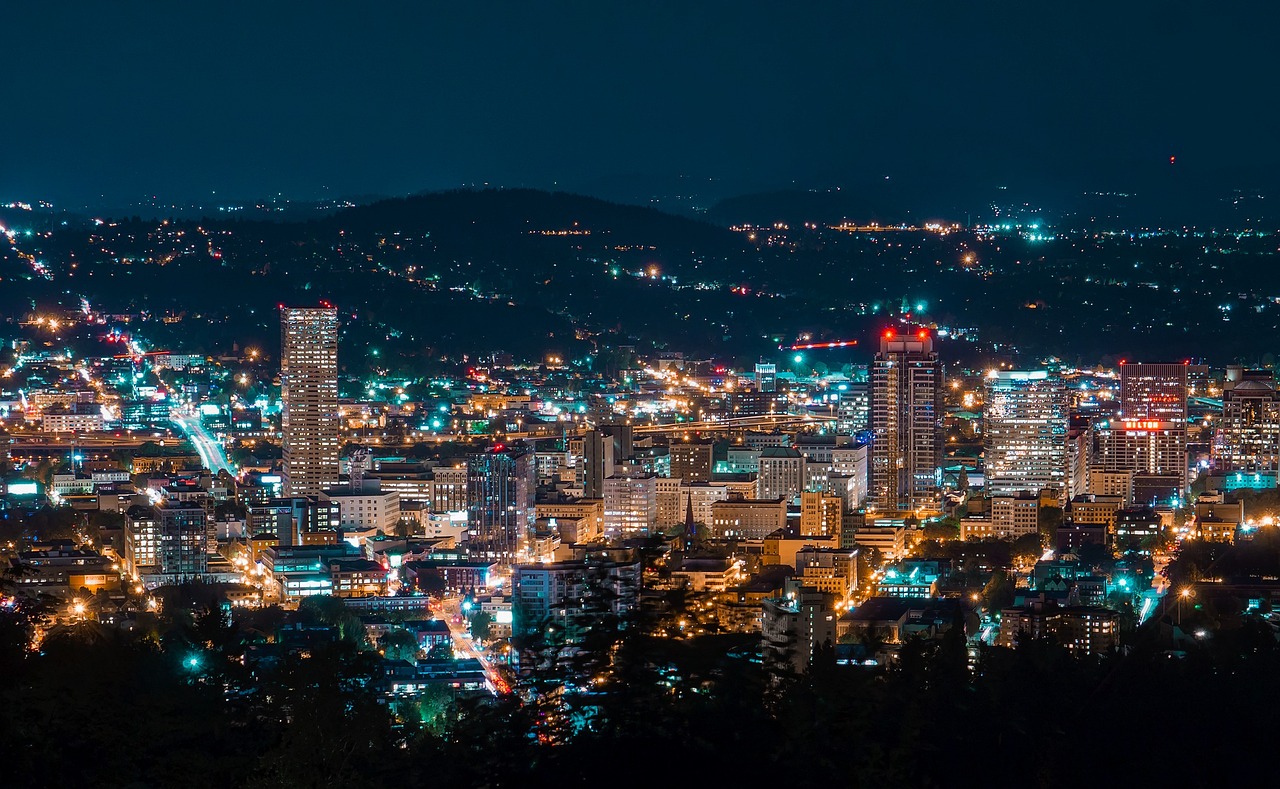
Portland, Oregon (Portland, OR) enjoys a Pacific Northwest marine west coast climate, with annual temperatures typically ranging from 2°C to 29°C (36°F–84°F) and few extreme cold snaps or heat waves. Summer (June–September) is short, warm, and dry, with highs around 25–30°C (77–86°F) and very little rain — perfect for outdoor activities. Winter (November–March), by contrast, brings temperatures of 2–10°C (36–50°F) with frequent rain and overcast skies lasting for days at a time.
Annual precipitation averages around 950mm (37 inches), higher than the US average, but it typically falls as prolonged light drizzle rather than heavy downpours. Snowfall averages just 11cm (4.3 inches) per year, making snow a rare occurrence.
Seasonal Weather in Portland
Spring (March – May)
Spring temperatures in Portland range from lows of 3–9°C (37–48°F) to highs of 7–18°C (45–64°F), warming gradually as the season progresses. March and April tend to be overcast and rainy, but by May, rainy days drop to around 13 per month and sunny spells become more frequent. The season marks a transition from wet winters to dry summers, with cool mornings giving way to mild afternoons. As daylight increases, parks and gardens burst into bloom — cherry blossoms and roses fill the city, and by May–June, the Portland International Rose Test Garden reaches its spectacular peak, earning Portland its nickname “City of Roses.”
Summer (June – September)
Summer is Portland’s clearest and driest season, with average highs of 13–27°C (55–81°F), peaking in July and August. Low humidity keeps the heat comfortable, with cool mornings and evenings around 15°C (59°F). Long daylight hours — sunrise around 5:30 AM and sunset near 9:00 PM — make it ideal for outdoor exploration. Be aware that once every few years, an unusual Heat Dome event can push temperatures above 35°C (95°F). July and August see the lowest rainfall of the year, making them the prime months for outdoor festivals, hiking, and sightseeing.
Fall (October – November)
Temperatures fall back to 7–18°C (45–64°F) in autumn, with rainfall picking up noticeably from mid-October. October averages around 13 rainy days, but highs still hover near 17°C (63°F), keeping things relatively mild. By November, thick cloud cover becomes the norm and the rainy season officially sets in. This is a beautiful time for fall foliage — Powell Butte, Mount Tabor Park, and downtown Portland all put on a brilliant display of color. Morning temperatures often feel colder than forecast, so layering is essential.
Winter (December – February)
Winter is Portland’s cloudiest and wettest season, with average temperatures ranging from 2°C lows to 10°C highs (36–50°F). From November through February, daily sunshine averages fewer than 4 hours, and monthly rainy days reach around 18. Precipitation typically falls as light, persistent drizzle or mist rather than heavy rain. Snow is rare but even a small accumulation can disrupt traffic and public transit due to limited snow-removal infrastructure — plan your schedule with extra flexibility if visiting in winter. In December, sunrise is around 7:30 AM and sunset falls near 4:45 PM, so it’s best to plan outdoor activities in the morning hours.
Best Time to Visit Portland
The ideal time to visit Portland is late June through September, though spring and early fall also offer rewarding experiences depending on your priorities.
Peak Season: Summer (Late June – September)
If your trip centers on outdoor activities and sightseeing, summer is unbeatable. Rain is nearly nonexistent, temperatures hover comfortably around 26–27°C (79–81°F), and long days give you plenty of time to explore. Early July through late August scores the highest weather ratings of the year — parks, farmers markets, al fresco dining, and hiking are all at their best. Keep an eye on forecasts, as occasional heat dome events can push temperatures beyond 35–40°C (95–104°F).
Blooms & Greenery: Spring (May – Early June)
May is when Portland shakes off the rain and transforms into a lush, flower-filled city. Cherry blossoms bloom and the roses at the International Rose Test Garden begin their stunning display. Temperatures of 15–18°C (59–64°F) make it great for walking, and flights and accommodation tend to be more affordable than in peak summer. On clear days it’s gorgeous, but always carry a light waterproof jacket — surprise showers can appear at any time.
Fall Foliage: Early Fall (October)
October is one of Portland’s most underrated months. Comfortable temperatures around 17°C (63°F) make for pleasant days, and the fall foliage — especially near Hood River — is spectacular. Summer crowds have thinned and accommodation prices stabilize, but note that rain increases after mid-October, so early-to-mid October is the sweet spot.
Off-Season: Winter (January – February)
January and February are the wettest and cloudiest months of the year, better suited to indoor attractions like Powell’s Books, cozy cafés, and craft brewery tours than outdoor sightseeing. On the plus side, flights and hotels are at their cheapest, making it a reasonable choice for budget-focused travelers.
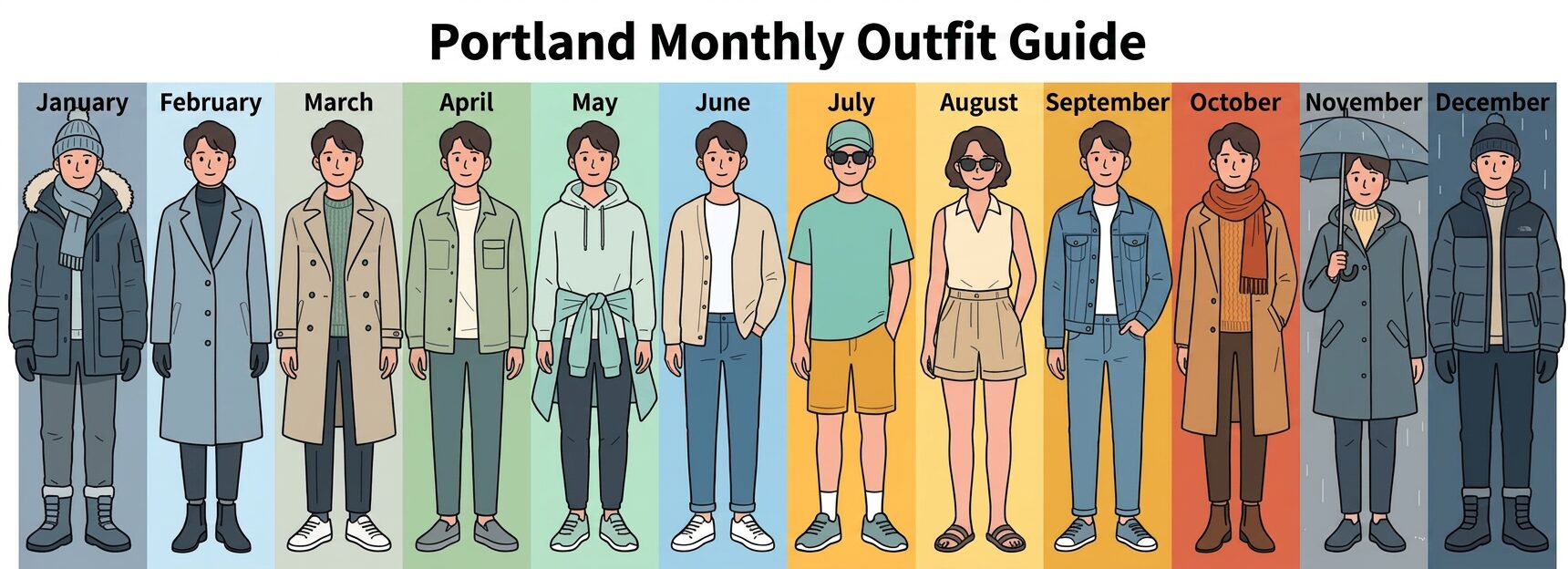
Monthly Weather & What to Wear
January
Lows: 2°C / Highs: 8°C (36–46°F). Cold and dark, with drizzle or fog nearly every day and around 18 rainy days. Snow is rare but possible.
What to wear: Waterproof down jacket or long parka, waterproof boots, thick wool socks, beanie, gloves, and a light scarf.
February
Lows: 2°C / Highs: 10°C (36–50°F). Similar to January, but days gradually lengthen. Wind chill makes it feel colder than the thermometer suggests.
What to wear: Thermal base layer with a fleece or lightweight puffer jacket and a waterproof outer shell.
March
Lows: 4°C / Highs: 13°C (39–55°F). A transitional month with large temperature swings — warm in the afternoon, near-freezing at dawn. Sudden showers are common.
What to wear: Light puffer vest or trench coat over a knit sweater; opt for a heavier coat if you run cold.
April
Lows: 6°C / Highs: 16°C (43–61°F). Spring arrives but rain remains frequent. Warm sunny days alternate with overcast, drizzly ones.
What to wear: Light knit or long-sleeve shirt layered under a lightweight waterproof jacket; waterproof sneakers recommended.
May
Lows: 9°C / Highs: 20°C (48–68°F). One of the rainiest months (rain probability ~47%), but temperatures are comfortable. The city bursts into bloom.
What to wear: T-shirt with a thin cardigan or hoodie; keep a waterproof jacket handy and wear water-resistant shoes.
June
Lows: 12°C / Highs: 23°C (54–73°F). The rainy season ends and the dry season begins. Mornings are cool, afternoons are warm and mostly sunny. Daylight extends to around 9 PM.
What to wear: T-shirt during the day; layer with a light long-sleeve shirt or windbreaker in the morning and evening.
July
Lows: 15°C / Highs: 28°C (59–82°F). The hottest and driest month. Low humidity keeps things comfortable, and shade provides instant relief.
What to wear: T-shirt, shorts, or a light summer dress; pack a thin cardigan for cool evenings.
August
Lows: 15°C / Highs: 28°C (59–82°F). Peak season alongside July. Perfect for hiking, cycling, and outdoor festivals. Heat dome events are possible.
What to wear: Breathable t-shirt, shorts, or linen clothing; sunglasses and a hat are essential.
September
Lows: 12°C / Highs: 25°C (54–77°F). Warm and largely sunny with very little rain — one of the best months to visit. Mornings and evenings cool down toward month’s end.
What to wear: T-shirt by day; add a light cardigan or jacket for morning and evening outings.
October
Lows: 7°C / Highs: 17°C (45–63°F). Autumn is in full swing. Rain increases mid-month. Dramatic temperature swings between morning and afternoon.
What to wear: Knit sweater, trench coat or waterproof jacket, scarf, and light gloves.
November
Lows: 4°C / Highs: 12°C (39–54°F). The rainy season kicks in with overcast skies and rain on most days. Days grow noticeably shorter.
What to wear: Thick waterproof outer layer, fleece inner, waterproof shoes, and a compact umbrella or hooded rain jacket.
December
Lows: 3°C / Highs: 9°C (37–48°F). One of the wettest months, with 17–20 rainy days, only ~2 hours of sun per day, and humidity around 85–95%. Rain falls as fine, persistent drizzle.
What to wear: Heavy waterproof winter jacket with a puffer or fleece lining, waterproof boots, beanie, and gloves — all essential.
Portland Weather: Key Reminders for Travelers
Persistent drizzle, not downpours.
Portland’s rain typically falls as fine, light drizzle that lasts for hours. During the rainy season (November–March), it can rain up to 17–20 days a month, so a hooded waterproof jacket is far more practical than an umbrella. Drizzle may seem mild but will soak your clothes over time — waterproof footwear is a must.
Dress in layers for big temperature swings.
Temperatures can drop 5–10°C (9–18°F) between afternoon and early morning. In spring (March–May) and fall (September–October), the difference between daytime highs and overnight lows can exceed 15°C (27°F). Always layer up, even in summer if you plan to be outside in the evening.
Watch out for summer heat domes.
Portland’s summers are generally mild, but heat dome events — rare but impactful — can send temperatures soaring above 35–40°C (95–104°F). In 2021, the city hit a record 49.6°C (121.3°F). Many buildings lack air conditioning, so confirm your accommodation has cooling before you arrive. Always check the forecast before heading out in July or August.
Snow is rare, but chaos is not.
Portland averages just 10cm (4 inches) of snow per year, but even minor snowfall can paralyze the city due to limited snow-clearing infrastructure. If visiting between December and February, factor in possible transportation delays and build extra flexibility into your itinerary.
Sun protection matters year-round.
Despite frequent winter rain, Portland has a fundamentally dry climate. In summer, UV levels are high, the air is dry, and skin can dehydrate quickly. Apply sunscreen daily, moisturize regularly, and — especially on summer hikes — stay well hydrated to avoid heat exhaustion.