
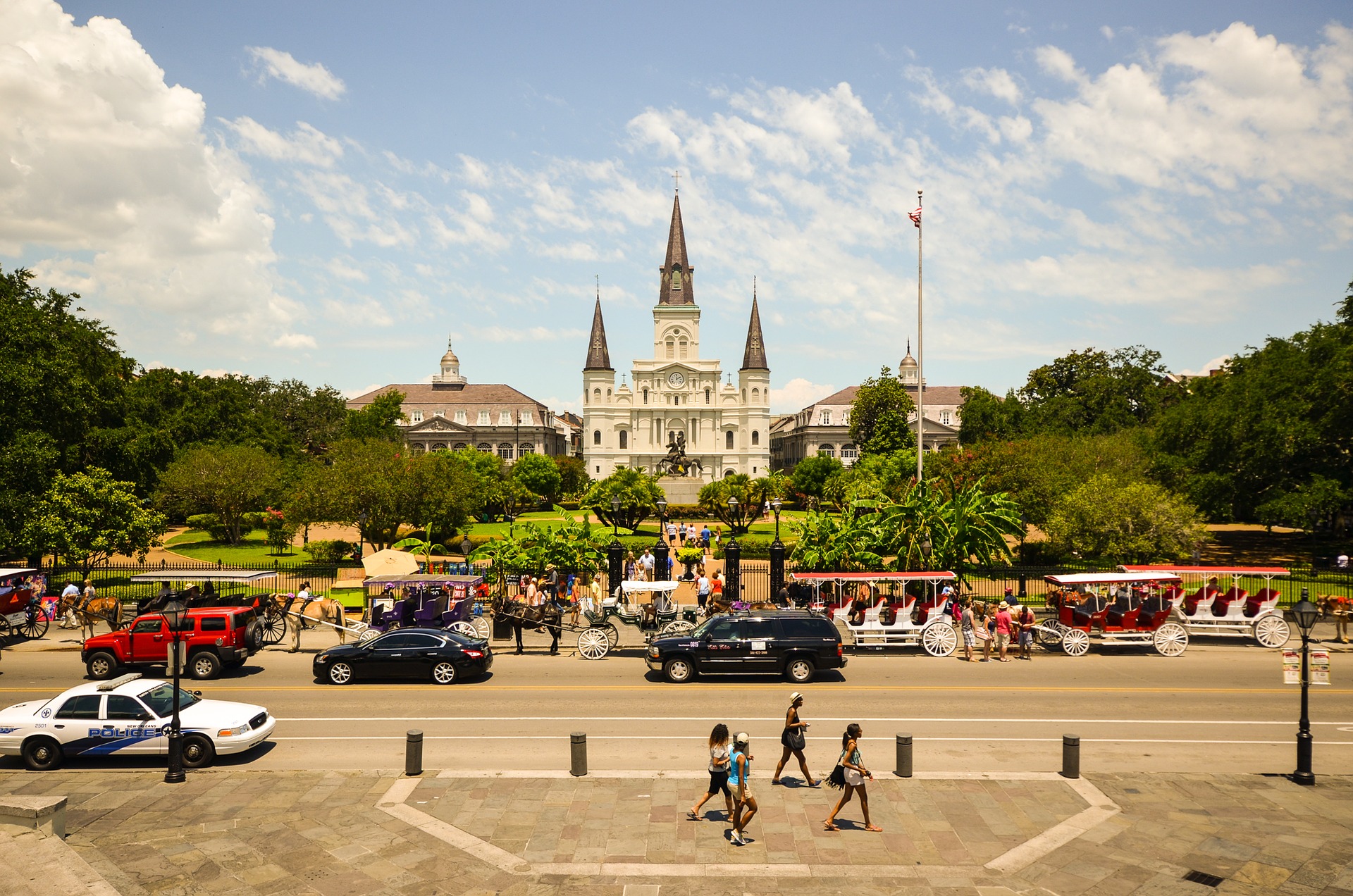
New Orleans is known for its humid subtropical climate. Summers (June to September) are intensely hot and humid, with average temperatures soaring above 33°C (91°F), making outdoor activities challenging. In contrast, winters (December to February) are mild and pleasant, with average temperatures ranging from 12°C to 18°C (54°F to 64°F) and rarely dropping below freezing—making it an excellent time to visit. However, rainfall is frequent throughout the year, and travelers should be mindful of hurricane season, which impacts the region from summer through early autumn (June to November).
Seasonal Weather in New Orleans
Spring (March – May)
Spring is widely considered the best time to visit New Orleans. Temperatures are comfortable, ranging from 22°C to 29°C (72°F to 84°F). From March onwards, the weather warms up, and the city bursts into bloom, creating perfect conditions for outdoor exploration.
Late April and early May host major outdoor events like the Jazz & Heritage Festival, bringing vibrant energy to the city. Occasional showers are possible, so packing a light umbrella or raincoat is recommended.
Summer (June – September)
Summer brings “steamy” heat, with average highs exceeding 33°C (91°F). High humidity pushes the “feels-like” temperature much higher, so it’s best to avoid prolonged outdoor exposure during midday.
Hurricane season officially begins in June, increasing the chance of tropical storms and heavy rain, so checking the weather forecast regularly is essential. Wear thin, breathable clothing and plan indoor activities like museums or café hopping to beat the heat.
Autumn (October – November)
Autumn offers a reprieve from the sweltering heat. By October, humidity drops, and rainfall decreases, making travel pleasant again. October averages around 27°C (81°F)—warm enough for short sleeves during the day—but mornings and evenings become cooler as November approaches.
In November, temperature fluctuations increase, so layering with light long-sleeve shirts and a light jacket is advisable. Since hurricane season lingers until the end of November, it’s wise to monitor weather updates before your trip.
Winter (December – February)
Winters are mild compared to many other regions, with temperatures averaging between 9°C and 19°C (48°F and 66°F). Freezing temperatures are rare, but cloudy or windy days can feel chilly, necessitating a coat or light puffer jacket.
Snow is extremely rare, though sleet can occasionally occur. The weather can be fickle, alternating between sunny, warm days and cloudy, cold ones. February brings the bustling Mardi Gras season; days are typically cool and pleasant, while nights feel like a crisp early spring.
Best Time to Visit New Orleans
The optimal time to visit is from February to May, when the weather is mild and festival season is at its peak. With temperatures between 12°C and 27°C (54°F and 81°F), it’s perfect for walking tours. February is particularly exciting due to Mardi Gras, filling the streets with parades and music. If crowds aren’t your thing, visiting in April or May for Jazz Fest offers a great mix of music and culinary delights.
Summers (June–September) can be challenging due to heat and hurricane risks, but budget travelers might appreciate the lower accommodation costs. October and November serve as a “shoulder season” with pleasant weather and unique events like Halloween.
Winters (December–January) see fewer tourists, allowing for a relaxed pace and easier restaurant reservations.
-
For Festivals: Spring (Feb–May)
-
For Value: Summer (July–Aug)
-
For Relaxation: Late Autumn or Winter
Monthly Weather & Packing Tips
January (Avg. 7°C – 18°C / 45°F – 64°F)
The coldest month, yet mild compared to northern climates. Occasional freezing days occur.
-
Wear: Light sweater or jacket for day; light puffer or thick coat for night. Bring a small umbrella.
February (Avg. 9°C – 19°C / 48°F – 66°F)
Transitional weather during Mardi Gras season.
-
Wear: Layering is key. Light long sleeves with a cardigan for the day; a warm jacket for night festivities.
March (Avg. 12°C – 23°C / 54°F – 73°F)
Spring begins; pleasant and blooming.
-
Wear: Short sleeves or thin long sleeves. Bring a windbreaker or cardigan for mornings/evenings. Comfortable walking shoes are a must.
April (Avg. 16°C – 26°C / 61°F – 79°F)
Perfect spring weather for outdoor festivals.
-
Wear: Short sleeves and shorts work, but always carry a light outer layer for strong A/C or cool nights. Sunglasses and hats are essential.
May (Avg. 20°C – 29°C / 68°F – 84°F)
Early summer heat begins; high humidity.
-
Wear: Breathable linen, short sleeves, shorts. Pack a raincoat or umbrella for sudden showers. Bring extra clothes for sweat.
June (Avg. 23°C – 32°C / 73°F – 90°F)
High heat and humidity; frequent squalls.
-
Wear: Moisture-wicking clothes, cool fabrics. Strong indoor A/C requires a light long-sleeve layer. An umbrella doubles as a parasol.
July (Avg. 24°C – 33°C / 75°F – 91°F)
The hottest, wettest month. Heat index can hit 40°C (104°F).
-
Wear: As cool and light as possible. Sunscreen, sunglasses, and hats are mandatory. Sandals or quick-drying shoes are recommended due to rain.
August (Avg. 25°C – 33°C / 77°F – 91°F)
Continuing intense heat; peak hurricane season.
-
Wear: Plenty of change of clothes for sweat. Raincoat is essential. Plan for indoor activities.
September (Avg. 22°C – 31°C / 72°F – 88°F)
Still hot and humid, cooling slightly by month’s end.
-
Wear: Summer clothes, with a light outer layer for nights. Water-resistant shoes/gear recommended due to potential storms.
October (Avg. 17°C – 27°C / 63°F – 81°F)
“Second peak season” with lower humidity and pleasant air.
-
Wear: Short sleeves by day, light jackets by night. Perfect for Halloween outdoor events.
November (Avg. 12°C – 22°C / 54°F – 72°F)
Chilly mornings and evenings; significant temperature swings.
-
Wear: Long sleeves, chinos, hoodies. A trench coat or thick jacket for nights. Scarves are useful.
December (Avg. 8°C – 18°C / 46°F – 64°F)
Mild winter, though cloudy days feel colder.
-
Wear: Knits, sweatshirts, coats. Layer with a light puffer vest if you get cold easily. Warm outerwear needed for holiday light viewing at night.