
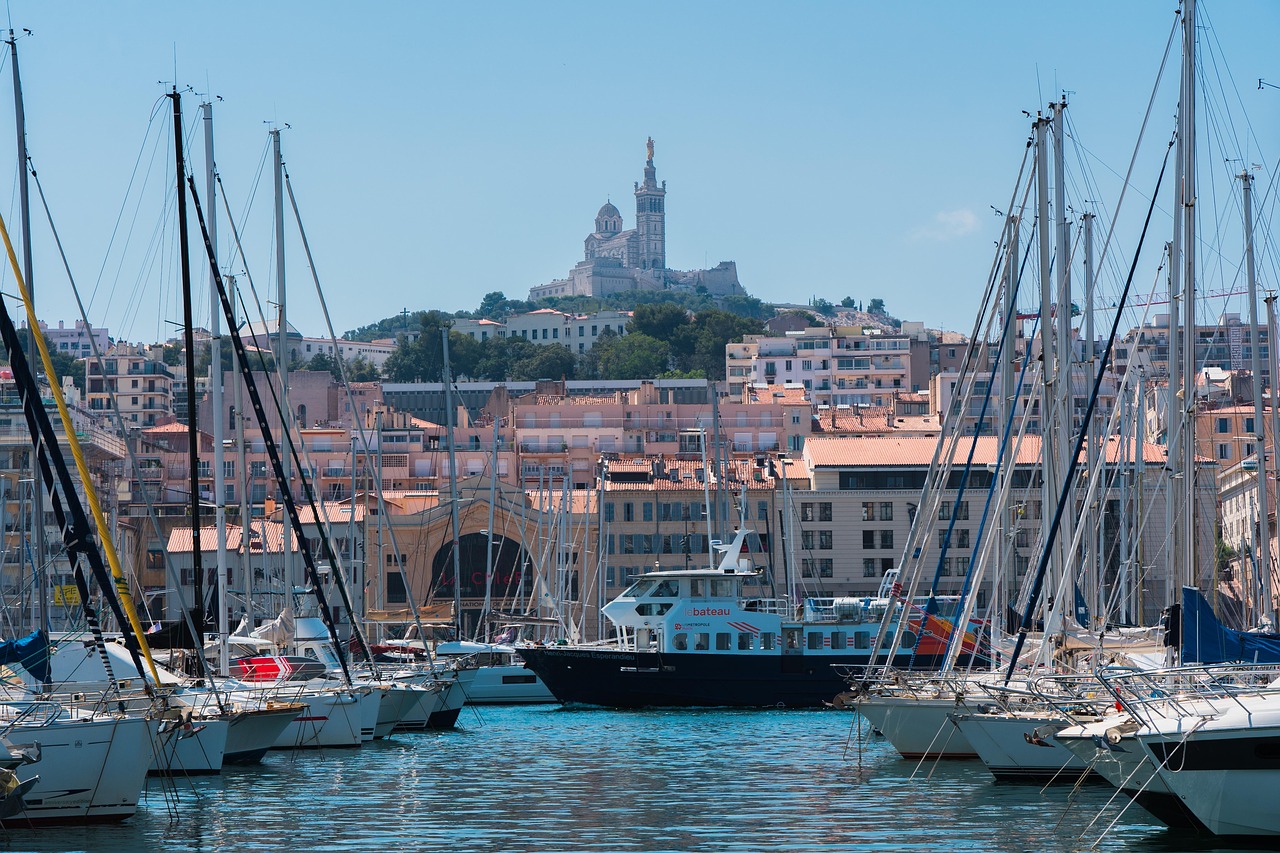
Marseille enjoys a classic Mediterranean climate with hot, dry summers and mild, somewhat humid winters. It is one of the sunniest cities in France, but even with clear skies, the chilly “Mistral” wind from the northwest can make winters feel much colder than the thermometer suggests. Temperatures typically range from 4°C to 29°C year-round. The most pleasant times for outdoor activities are from April to June and September to October.
Spring in Marseille (March – May)
As winter recedes, temperatures gradually rise. By May, daytime highs often exceed 20°C, making it one of the most delightful times to visit. Through April, however, the weather can be a bit fickle with significant temperature swings between day and night, so it’s wise to pack light layers.
While rainfall is relatively low, occasional spring showers can occur. Overall, sunshine increases, making it perfect for outdoor exploration. May is widely considered the best month of the year to visit, offering a perfect balance—neither too hot nor too cold.
Summer in Marseille (June – August)
This is the hottest and driest time of the year. In July and August, temperatures frequently soar past 30°C, creating ideal conditions for swimming and water sports. Rain is very rare, and sunny days are the norm, allowing you to fully experience the intense Provencal summer.
The midday sun is strong, so sunglasses and high-SPF sunscreen are essential. Fortunately, the low humidity means it feels relatively cool in the shade. Long daylight hours are a major advantage, allowing for sightseeing well into the evening.
Autumn in Marseille (September – November)
Early September retains the warmth of summer, but by October, temperatures begin to cool, and rainy days become more frequent. October and November are the wettest months in Marseille, so be sure to pack an umbrella or raincoat.
Until November, daytime temperatures remain mild enough for light clothing. A major perk of autumn travel is the decrease in tourists, allowing for a quieter, more relaxed exploration of the city compared to the busy summer months.
Winter in Marseille (December – February)
Thanks to the Mediterranean influence, temperatures rarely drop below freezing, and the climate remains relatively mild. However, the strong, cold Mistral wind can make the “real feel” temperature much lower. Snow is rare, but cloudy or windy days are common, making windproof warm clothing essential.
Since it is the off-season, accommodation is cheaper, and the city is peaceful. Keep in mind that some attractions or shops may have shortened hours, and daylight is limited, so efficient itinerary planning is key.
Best Time to Visit Marseille
The optimal times to visit are May to June and September to October. During these periods, the weather is mild, and crowds are thinner, ensuring a comfortable trip. May, with its average highs above 20°C, is perfect for walking tours and enjoying outdoor cafes.
If your main goal is swimming and beach time, July and August are best, though you must account for peak season crowds and higher accommodation costs.
For hiking and outdoor activities, September and early October are ideal as the intense heat subsides. The sea remains warm enough for swimming, and access to the Calanques National Park trails (often restricted in summer due to fire risk) reopens.
December to February is budget-friendly and quiet but can be chilly due to the Mistral. However, December offers a unique charm with Christmas markets and the traditional Santon (figurine) fairs. For the best balance of sightseeing and relaxation, stick to spring or autumn.
Monthly Weather & Packing Guide
January
One of the coldest months. Freezing temperatures are rare, but the Mistral wind can make it feel biting cold.
-
Wear: A heavy, windproof coat or puffer jacket is essential. Don’t forget a scarf and gloves to protect against the wind.
February
Similar to January with chilly winter weather and frequent cloudy days. The cold wind remains a factor.
-
Wear: Layer thin clothes under a heavy coat to adjust to indoor/outdoor temperature differences. A warm sweater and muffler are recommended.
March
A transition period where temperatures start to rise. Days are pleasant, but mornings and evenings remain chilly with a large temperature gap.
-
Wear: A trench coat or mid-weight jacket is most useful. Wear thin knits or long-sleeved tees underneath to regulate your body temperature.
April
The weather becomes milder but can be unpredictable with chances of rain. You might experience sun and clouds on the same day.
-
Wear: Flexible clothing is key. Bring a cardigan or windbreaker that’s easy to put on and take off. A small umbrella or a hooded water-resistant jacket is a smart addition.
May
Ideally warm and pleasant, with daytime highs over 20°C. It’s the best weather for outdoor activities.
-
Wear: Short sleeves with a light cardigan or shirt draped over your shoulders are sufficient. Sun protection (sunglasses, sunscreen) becomes necessary as the UV index rises.
June
Early summer begins; days are warm, dry, and comfortable. Long sunny days create a true summer vibe.
-
Wear: Short sleeves, shorts, and comfortable sandals work well. A hat and sunglasses are must-haves to shield against the midday sun.
July
The peak of summer heat and dryness. It’s classic Mediterranean weather with high temperatures.
-
Wear: Breathable fabrics like linen, sleeveless tops, and thin shorts are best to stay cool. If you plan to swim, swimwear is a must. Stay hydrated!
August
Similar to July, the heat peaks and the sun is intense. It’s dry, so finding shade helps, but light clothing is non-negotiable.
-
Wear: Cotton clothes that absorb sweat or loose-fitting dresses are comfortable. Use a parasol or apply sunscreen frequently to protect your skin.
September
The extreme heat fades, leaving warm but fresher air. It’s a fantastic season for travel; the sea is still warm enough for swimming.
-
Wear: Short sleeves are fine for the day, but bring a light shirt or cardigan for mornings and evenings. A pair of light long pants or a scarf is helpful for cooler nights.
October
Autumn deepens as temperatures drop and rain becomes more frequent. This marks the start of the wetter season.
-
Wear: A trench coat or waterproof jacket is essential. Pack an umbrella and water-resistant shoes to stay comfortable during showers.
November
Late autumn brings a distinct chill and occasional wind and rain. As winter approaches, the “real feel” temperature drops.
-
Wear: A light down jacket or a thick coat is needed. Layer with long sleeves inside. A warm scarf is great for managing the changeable weather.
December
Winter begins in earnest with lower temperatures and cold winds. It rarely snows, but the Mistral can make it feel quite cold.
-
Wear: Bundle up with a thick winter coat, padded jacket, and warm knits. Gloves and a hat will help maintain body heat during outdoor sightseeing.