
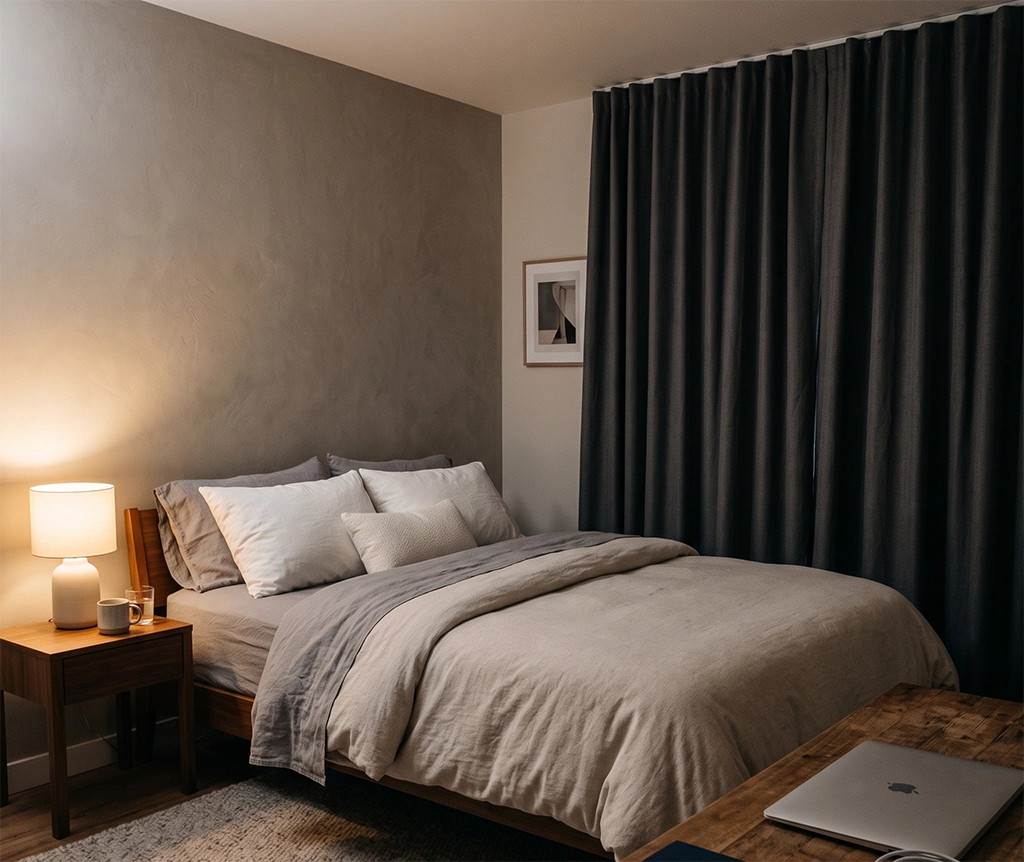
You may spend enough time in bed and still wake up feeling tired. Students might struggle to stay awake during their first class, while office workers may reach for coffee as soon as they arrive at work.
When this happens, it is easy to start shopping for a new pillow, sleep mask, supplement, or sleep-tracking device. However, learning how to improve sleep quality usually involves more than buying a single product.
Your wake-up time, caffeine intake, evening routine, naps, bedroom lighting, and noise levels can all affect how well you sleep. A practical approach is to track your current routine first and then improve one problem at a time.
The following tips are designed for students and office workers who need realistic changes that can fit into a busy schedule.
Set a Consistent Wake-Up Time
Many people try to improve their sleep by forcing themselves to go to bed earlier. However, establishing a consistent wake-up time may be a more practical place to begin.
If you normally wake up at 7:00 a.m. on weekdays, try not to sleep several hours later on weekends. A large difference between weekday and weekend schedules can make it harder to fall asleep on Sunday night and wake up on Monday morning.
You do not need to change your schedule all at once. Try moving your wake-up time by 15 to 30 minutes until you reach a schedule that works for your classes, commute, or working hours.
Students can calculate their wake-up time based on their first class and travel time. Office workers can work backward from the time they need to leave home.
The goal is not to create a perfect routine overnight. It is to give your body a more predictable daily schedule.
Keep a Sleep Diary for Two Weeks
Before purchasing a sleep product, spend about two weeks recording your current sleep habits.
Track the following information:
- The time you get into bed
- The approximate time you fall asleep
- How often you wake up during the night
- Your final wake-up time
- The time and length of any naps
- Your last caffeine intake of the day
- The time you exercise
- Your energy level in the morning
- Your level of daytime sleepiness
A sleep diary can help you identify patterns that are difficult to notice from memory alone. For example, you may discover that you sleep poorly after drinking coffee late in the afternoon or taking a long evening nap.
You may also use a sleep-tracking app or smartwatch. However, consumer wearables should be used to identify general patterns rather than diagnose a sleep disorder.
Avoid becoming overly focused on a single sleep score. Your wake-up time, caffeine intake, daytime energy, and ability to concentrate may provide more useful information than one nightly number.
Establish a Caffeine Cutoff Time
Caffeine is one of the most common sleep-related issues for students and office workers.
Coffee is not the only source. Energy drinks, green tea, black tea, chocolate, pre-workout drinks, and some soft drinks may also contain caffeine.
Start by recording when and how much caffeine you consume. Then move your final caffeinated drink to an earlier time for one week and observe whether your sleep changes.
There is no single cutoff time that works for everyone. Caffeine sensitivity, consumption habits, body size, medication use, and bedtime can influence how long its effects are noticeable.
If you find it difficult to stop drinking coffee in the afternoon, try replacing it with decaffeinated coffee, herbal tea, or water. Students who use energy drinks while studying should also check the caffeine amount listed on the label instead of assuming that one serving equals one can.
Reducing late caffeine intake is one of the simplest ways to improve sleep quality without purchasing a new product.
Stop Studying and Working Before Bed
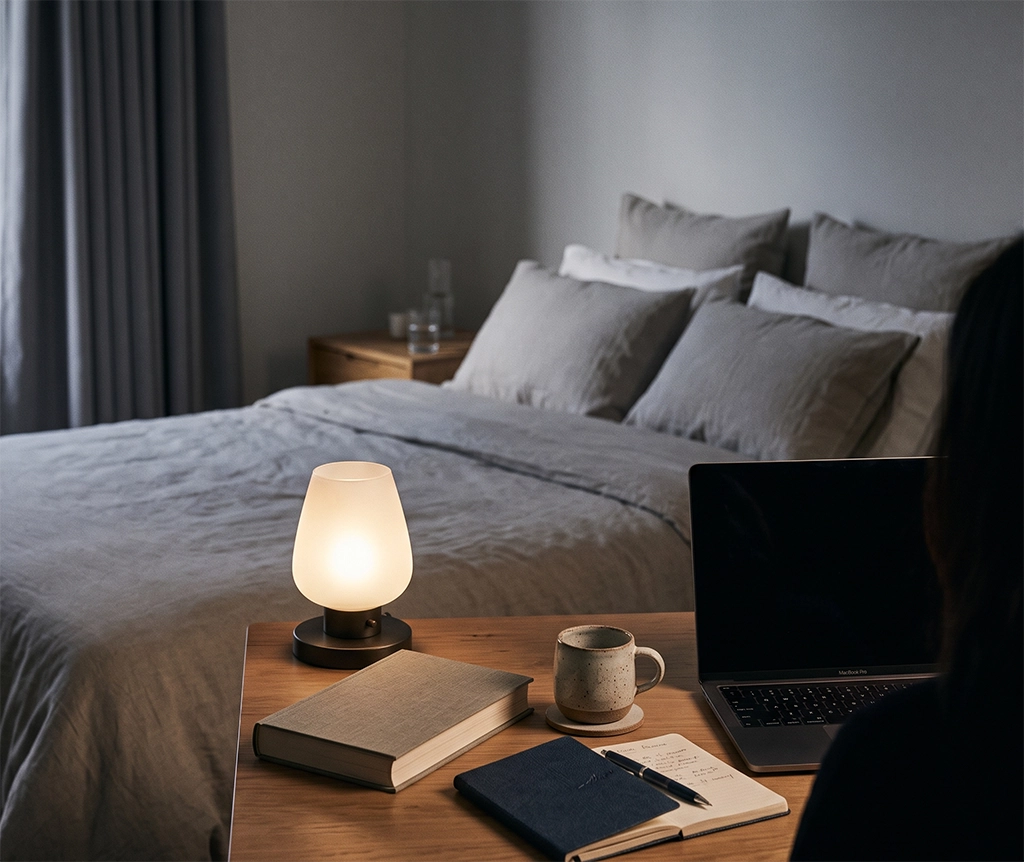
Checking assignments, watching online lectures, or responding to work messages in bed can keep your mind in problem-solving mode.
Create a short shutdown routine 30 to 60 minutes before bedtime. Write down unfinished tasks, close your laptop, put away your study materials, and prepare what you need for the next morning.
This does not need to be an elaborate nighttime ritual. Choose one or two simple activities you can repeat even on busy days.
Possible options include:
- Taking a warm shower
- Reading a printed book
- Listening to quiet music
- Stretching gently
- Preparing clothes for the next day
- Writing tomorrow’s tasks in a notebook
Writing down unfinished tasks can be especially helpful when your mind continues reviewing deadlines after you get into bed.
Keep the routine simple enough to follow consistently. A complicated routine often disappears during exams, project deadlines, or busy work periods.
Reduce Light in the Bedroom
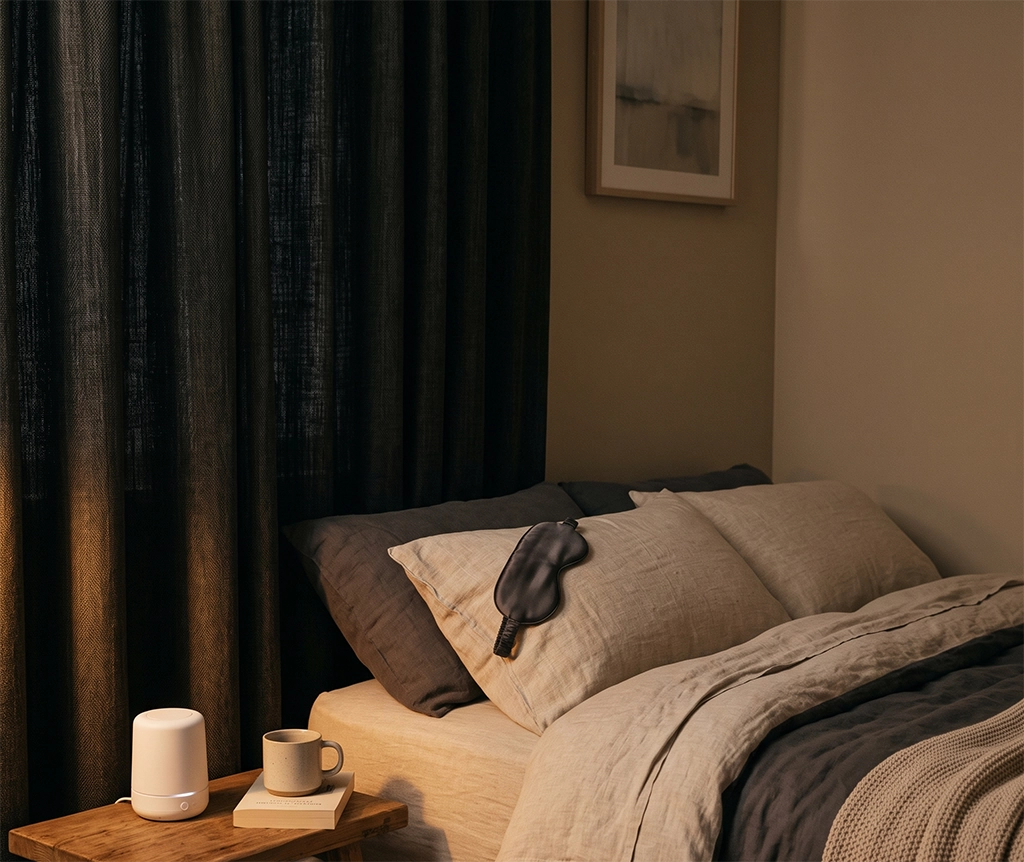
Streetlights, hallway lighting, electronic displays, and early morning sunlight can make a bedroom feel less comfortable for sleep.
If outside light is the main problem, consider blackout curtains. Measure the entire window area before ordering, and choose curtains that extend beyond the window frame. Small gaps around the edges can allow more light into the room than expected.
A sleep mask may be more practical for students living in shared accommodation or professionals who travel frequently. It can also be useful when you cannot modify the curtains or lighting in a rented room.
Compare the following features when choosing a sleep mask:
- Pressure around the eyes
- Light leakage near the nose
- Adjustable strap length
- Breathability
- Washable materials
- Comfort when sleeping on your side
An expensive sleep mask is not automatically more comfortable. Focus on fit, pressure, heat retention, and washing instructions.
Product reviews that discuss long-term comfort, light leakage, or changes after washing are often more useful than reviews that simply say a product works well.
Choose a Noise Solution That Matches the Problem
Different types of noise require different solutions.
Earplugs may help when you are disturbed by occasional traffic, doors closing, conversations, or a roommate’s schedule. However, strong sound isolation may not be appropriate if you need to hear an alarm, emergency notification, child, or family member.
Earplug comfort also varies. A product that works for one person may feel painful or loose for another. Consider the material, size options, insertion method, and whether the product is intended for repeated use.
A white noise machine may be useful when background conversations or household noises continue throughout the night. A fan or other consistent background sound may serve a similar purpose.
When comparing white noise machines, look at:
- Adjustable volume
- Timer settings
- Available sound options
- Power source
- Portability
- Button placement
- Display brightness
Keep the volume at a comfortable level and avoid placing the device directly next to your head.
The best product is not necessarily the one with the most sounds. A simple machine with easy controls may be more practical when you are tired and preparing for bed.
Select a Pillow or Mattress Topper Carefully
If you wake up with neck, shoulder, or back discomfort, examine your pillow height, firmness, and sleeping position.
Side sleepers and back sleepers may need different levels of support. Someone with broad shoulders may also need a different pillow height from someone with a smaller frame.
A mattress topper may be worth considering if your mattress feels slightly too firm. However, a topper may not fully correct a mattress that is badly sagging, damaged, or no longer supportive.
Before purchasing a pillow or topper, check:
- Trial period
- Return and exchange policy
- Pillow or topper dimensions
- Cover removal instructions
- Washing requirements
- Material and firmness
- Recommended sleeping position
- Time needed for odors to fade after opening
A generous return policy can be more valuable than a large discount because comfort cannot always be predicted from product descriptions.
Persistent pain should not be managed by repeatedly changing bedding alone. Consider speaking with a qualified healthcare professional if discomfort continues or interferes with daily activities.
Manage Naps and Exercise Timing
A long nap in the late afternoon can make it more difficult to fall asleep at night.
If you need a nap, try taking it earlier in the day and keeping it relatively short. Record how you feel afterward and whether the nap changes your bedtime.
Some people feel more alert after a short nap, while others wake up feeling heavier or struggle to sleep later. Use your sleep diary to find a pattern that works for you.
Regular daytime physical activity may also support a healthier sleep routine. Walking, cycling, light jogging, and other sustainable activities are easier to maintain than an overly demanding workout plan.
If intense exercise immediately before bed makes you feel more awake, move the workout to an earlier time. Students might exercise between classes or before dinner, while office workers may find lunchtime walking or an early evening workout easier to maintain.
The goal is to create a repeatable routine rather than complete an intense workout occasionally.
Test One Sleep Product at a Time
A common mistake is changing your pillow, sleep mask, lighting, earplugs, bedtime, and sleep app at the same time.
If you make several changes together, you will not know which one helped.
Start with the issue that disrupts your sleep most often.
If Light Is the Main Problem
Consider testing one of the following:
- Blackout curtains
- A comfortable sleep mask
- A dimmable bedside lamp
- A smart bulb with adjustable brightness
If Noise Is the Main Problem
Possible options include:
- Reusable earplugs in an appropriate size
- A white noise machine with a timer
- A fan that produces a consistent sound
If an Irregular Schedule Is the Main Problem
You might try:
- A simple sleep diary app
- A calendar with bedtime reminders
- A sunrise alarm clock
- A smart light with automated morning settings
Use one product for one or two weeks and compare the results with your sleep diary. Consider changes in sleep onset, nighttime awakenings, morning energy, concentration, and daytime sleepiness.
Before purchasing, review the trial period, return policy, subscription fees, and warranty. For sleep apps and wearables, also check which features require a paid subscription and how the provider handles personal sleep data.
Learning how to improve sleep quality should not mean buying every product marketed for better sleep. It should mean choosing the smallest practical change that addresses the specific problem you experience.
Know When to Seek Professional Help
Lifestyle changes and bedroom products cannot solve every sleep problem.
Consider professional evaluation if you regularly have enough time and opportunity to sleep but still struggle to fall asleep, remain asleep, or function during the day.
You should also take symptoms seriously if you experience:
- Loud or persistent snoring
- Gasping or choking during sleep
- Morning headaches
- Severe daytime sleepiness
- Difficulty concentrating while driving or working
- Repeated nighttime awakenings
- Sleep problems that continue for several months
- Anxiety about sleep that affects your daily routine
Depending on the symptoms, an appropriate starting point may include a primary care physician, sleep clinic, mental health professional, or ear, nose, and throat specialist.
Cognitive behavioral therapy for insomnia, commonly known as CBT-I, is a structured approach used for persistent insomnia. It addresses sleep-related thoughts, behaviors, routines, and the relationship between the bed and sleep.
Avoid using prescription sleep medication or over-the-counter sleep supplements for extended periods without appropriate medical guidance. Tell your healthcare provider about medications, supplements, caffeine use, snoring, work schedules, and any sleep-tracking data you have collected.

A Two-Week Sleep Improvement Plan
You do not need to apply all ten strategies at once. Use the following sequence to create a realistic two-week experiment.
Days 1 to 3: Establish a Starting Point
- Choose a consistent wake-up time.
- Record bedtime, wake-up time, naps, and caffeine.
- Rate morning energy and daytime sleepiness.
Days 4 to 7: Adjust Caffeine and Evening Tasks
- Move your final caffeine intake earlier.
- Stop studying or working 30 to 60 minutes before bed.
- Write down unfinished tasks before closing your laptop.
Days 8 to 10: Improve the Bedroom
- Identify whether light, noise, temperature, or physical discomfort is the main problem.
- Change only one environmental factor.
- Avoid buying several products at the same time.
Days 11 to 14: Review the Results
- Compare your morning energy with the first three days.
- Check whether you fell asleep more easily.
- Review how often you woke during the night.
- Decide whether the change should be continued.
- Seek professional advice if serious symptoms or persistent problems remain.
Product Buying Checklist
Before buying a sleep mask, pillow, white noise machine, app subscription, or sleep-tracking device, ask the following questions:
- What specific sleep problem am I trying to solve?
- Have I tracked that problem for at least several days?
- Can I test a free or low-cost solution first?
- Does the product have a trial period?
- Can it be returned after opening?
- Are there recurring subscription fees?
- Is the product easy to clean and maintain?
- Can I use it without disturbing a roommate or family member?
- Will it prevent me from hearing an alarm or emergency?
- Am I expecting a consumer product to solve a possible medical problem?
This checklist helps separate a useful purchase from an impulse purchase based on advertising.
Final Summary
The most effective way to improve sleep quality is to combine a consistent schedule with a bedroom environment that supports rest.
Begin by setting a stable wake-up time and keeping a sleep diary. Review your caffeine intake, naps, evening study habits, and work messages. Then identify whether light, noise, temperature, or physical discomfort is the most important environmental issue.
If light is the problem, compare blackout curtains or sleep masks. If noise is the problem, consider earplugs or a white noise machine. If your schedule is inconsistent, a simple sleep diary app or sunrise alarm may be more relevant than new bedding.
Test one adjustment at a time for one or two weeks. Students can track morning alertness and concentration during classes. Office workers can monitor energy levels, commute safety, and concentration during the first part of the workday.
Most importantly, do not rely on consumer sleep products when symptoms are persistent, severe, or disruptive. Loud snoring, gasping, extreme daytime sleepiness, and long-term insomnia should be discussed with an appropriate healthcare professional.
A better night does not always begin with a more expensive product. It often begins with identifying the exact problem and making one sustainable change.