
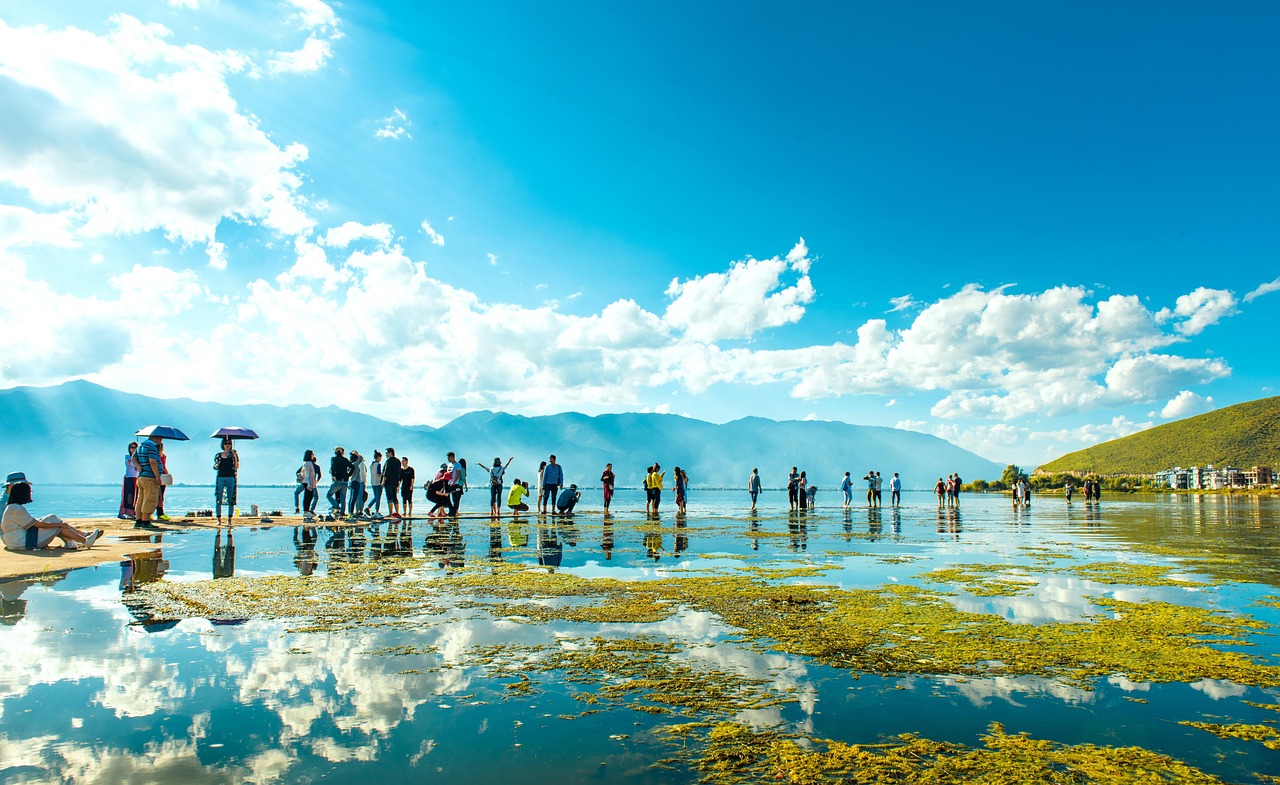
Dali (大理), a highland city in China’s Yunnan Province situated at approximately 1,900 meters above sea level, enjoys a subtropical highland climate with relatively mild temperatures throughout the year. Annual temperatures range from 0°C to 26°C — even in the coldest month of January, daytime highs hover around 15°C, while the hottest month of June rarely exceeds 27°C, making extreme heat or cold virtually nonexistent.
Rainfall follows a clear seasonal pattern. The rainy season (June–October) brings frequent overcast skies and showers, with July recording the highest precipitation, while the dry season (November–May) offers sunny, refreshing weather — February being the driest month of all. With abundant sunshine year-round and cool summers, Dali has long been called the “City of Eternal Spring,” and its warm climate even supports active rice cultivation.
Seasonal Weather in Dali
Spring (March–May)
Spring is one of the best seasons to visit Dali. Temperatures are pleasant, ranging from 5°C to 23°C, with an average of over 12 hours of sunshine per day. March and April offer dry, clear skies ideal for outdoor activities, and the shores of Erhai Lake burst into bloom with cherry blossoms and wildflowers. Note that cold winds off Erhai Lake can make it feel 2–3°C cooler than the actual temperature, and brief showers begin to appear intermittently from late April.
Summer (June–August)
Summer marks the rainy season in Dali. Rain picks up significantly from June, though the plateau elevation of around 1,970 meters prevents the sweltering heat typical of Korean summers — peak temperatures reach only about 27°C in June. July sees the heaviest rainfall, with a daily chance of rain reaching 63%, often accompanied by thunderstorms and sudden downpours. The large daily temperature swings and rapidly changing weather make an umbrella or rain poncho absolutely essential.
Autumn (September–November)
As the rainy season winds down, skies clear and temperatures gradually drop, ushering in a refreshing autumn. September and October are considered prime travel months, with strong sunshine and little rain. From October, lows can dip below 10°C, so a light jacket becomes necessary. The combination of autumn foliage, clear skies, and stunning views of Cangshan Mountain (蒼山) and Erhai Lake makes this arguably the most scenic season of the year.
Winter (December–February)
Winter is the dry season, with very low chances of rain and predominantly clear, sunny days. February — the driest month — has a daily rain probability of just 7%. While daytime temperatures can reach around 15°C under strong sunshine, temperatures plunge close to 0°C after sunset, creating a dramatic diurnal range. Although winters are milder than in Korea, the highland chill in the mornings and evenings is considerable, so a heavy coat and thermal layering are strongly recommended.
Best Time to Visit Dali
The best times to visit Dali are spring (March–April) and autumn (September–October).
Spring (March–April) falls at the tail end of the dry season, offering plenty of sunny days perfect for sightseeing and photography. With temperatures ranging from 5°C to 23°C, flowers in full bloom around Erhai Lake, and fewer crowds compared to peak season, it’s an ideal time for a relaxed trip. Try to plan your visit between mid-March and early April, as intermittent showers begin to appear from late April.
Autumn (September–October) brings clear, cool skies as the rainy season concludes. The autumn foliage on Cangshan Mountain paired with the glittering surface of Erhai Lake creates some of the most breathtaking scenery of the year. With the summer crowds gone and rainfall greatly reduced, October in particular is the perfect month for outdoor activities like Cangshan trekking and Erhai Lake boat tours.
By contrast, summer (June–August) is frequently overcast and rainy, limiting outdoor sightseeing, while winter (December–February) is clear and dry but comes with sharp morning and evening cold that may be uncomfortable for longer itineraries. Both seasons require extra preparation.
Monthly Weather & What to Wear
January
The coldest month, with highs around 15°C and lows near 0°C — a wide daily temperature range. Rain is rare and sunshine is strong. A light jacket suffices during the day, but heavy padding, a coat, and thermal base layers are essential in the morning and evening.
February
The driest month of the year, with a rain probability of just 7% and abundant sunshine. Temperatures are similar to January, with highs of 15–16°C and lows of 1–2°C. UV rays are strong, so sunscreen is a must; pair a thick outer layer with a scarf and gloves.
March
Spring arrives and temperatures rise steadily to highs of 19–20°C and lows of 4–5°C, with warm afternoons. Sunny days are frequent and flowers begin to bloom — a great time to travel. Wear a light long-sleeve shirt or jacket during the day, and a mid-weight fleece or zip-up in the morning and evening.
April
Temperatures climb to highs of 22–23°C and lows of 8–10°C, making this one of the best months to visit. Flowers are in full bloom around Erhai Lake and sunshine is plentiful, though winds off the lake can lower the perceived temperature. T-shirts or light long sleeves work for the day, and a thin windbreaker is a must-have.
May
Warm and comfortable with highs of 24°C and lows of 14°C, May is the last dry-season month before the rains arrive. Occasional showers begin, so carry an umbrella or compact rain jacket. A short-sleeve tee during the day and a light cardigan or long sleeve in the evening is all you need.
June
The rainy season begins in earnest. Temperatures peak at 26–27°C — the highest of the year — but the highland setting keeps the heat manageable. Overcast and rainy days increase significantly. Shorts and T-shirts are the base layer; a portable umbrella or rain poncho is non-negotiable.
July
The wettest month, with a daily rainfall probability of about 63% and frequent heavy thunderstorms. Temperatures are pleasant at highs of 25°C and lows of 15°C, but prepare for sudden, intense downpours. Pack quick-dry T-shirts, lightweight long pants, a waterproof jacket, and waterproof sandals or hiking shoes.
August
Similar to July with continued heavy rain and overcast skies. Temperatures are comfortable at highs of 24–25°C and lows around 15°C. Rain gear remains essential, and carry a light outer layer for cooler evenings.
September
The rainy season begins to wind down and skies gradually clear. Temperatures hold at highs around 25°C and lows around 15°C — still warm. Views of Cangshan and Erhai start to sharpen as clear days increase. Layer a light long-sleeve over a T-shirt and keep an umbrella handy early in the month.
October
The rainy season is fully over, bringing clear and cool weather — one of the best months to visit. Highs of 20–22°C and lows of 8–10°C give the air a pleasant autumnal feel. Long-sleeve shirts or a thin knit sweater work for the day, while a jacket or light puffer is needed in the morning and evening. Don’t forget sunscreen — UV levels remain high.
November
Temperatures drop noticeably to highs of 17–18°C and lows of 4–5°C as the dry season sets in. Strong winds begin to sweep across Erhai Lake, making it feel much colder than the thermometer suggests. A heavy coat, scarf, and windproof layer are essential; layering is strongly recommended.
December
Temperatures approach their annual low, with highs of 15°C and lows of 2°C, under consistently clear and dry skies. The daily rain probability is only about 10%, but the temperature swing exceeds 13°C from day to night. Heavy padding or a wool coat, thermal innerwear, gloves, and a scarf are all must-haves.
Monthly Climate at a Glance
| Month | Avg High (°C) | Avg Low (°C) | Precipitation (mm) | Humidity (%) |
| January | 15 | 0 | 10 | 55 |
| February | 16 | 1 | 8 | 50 |
| March | 20 | 5 | 15 | 52 |
| April | 23 | 9 | 25 | 55 |
| May | 24 | 14 | 55 | 63 |
| June | 27 | 15 | 140 | 78 |
| July | 25 | 15 | 200 | 83 |
| August | 25 | 15 | 185 | 82 |
| September | 24 | 14 | 130 | 80 |
| October | 22 | 10 | 60 | 72 |
| November | 18 | 5 | 20 | 60 |
| December | 15 | 2 | 12 | 55 |