
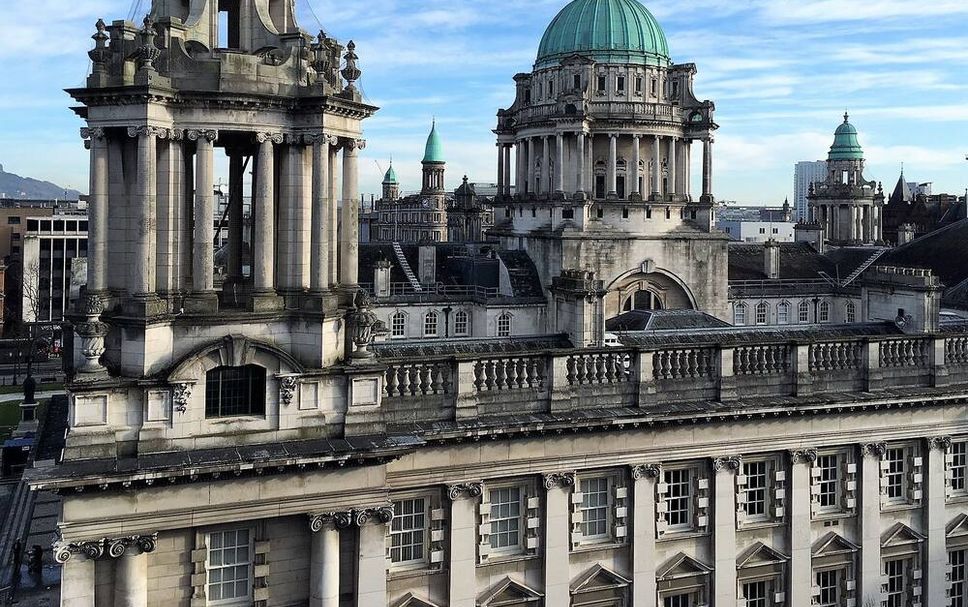
Belfast, Northern Ireland, has a classic maritime climate — no extreme heat or bitter cold, but expect frequent rain, wind, and overcast skies throughout the year. Summer (June–August) is the most popular travel season, with average highs of 18–22°C, while winter (December–February) sits between 3–7°C. Although temperatures rarely drop below freezing, the strong sea winds and high humidity make it feel significantly colder. With annual rainfall exceeding 900mm spread evenly across all seasons, a lightweight waterproof jacket and layerable clothing are essential no matter when you visit.
Belfast Weather by Season
Spring (March–May)
Spring brings a gradual rise in temperatures as the winter chill fades away. Early March still feels cool, but by May, average highs reach 13–15°C and conditions become noticeably milder. May is considered one of the most pleasant months for sightseeing, with the lowest relative humidity of the year (around 81%) and relatively low rainfall (3.8mm), making it ideal for outdoor activities.
Summer (June–August)
Summer is Belfast’s peak travel season. Average daily highs hover around 17°C — refreshingly cool compared to a Korean summer. Late July through mid-August brings the warmest days, occasionally topping 20°C, and June enjoys up to 17+ hours of daylight. That said, roughly half of summer days can be overcast or see passing showers, so a light outer layer and a compact umbrella are always good to have on hand.
Autumn (September–November)
September retains much of summer’s mild weather and sees fewer crowds, making it an excellent time for a visit. From October onward, temperatures drop noticeably, rainfall increases, and windier, cloudier days become the norm, so the feels-like temperature will be lower than the actual reading. Layering up with a waterproof jacket or warm sweater is the key to staying comfortable during this transitional season.
Winter (December–February)
Belfast winters are long, wet, cold, and windy. Average highs sit around 7°C with lows of 3–4°C, and sub-zero temperatures are rare. January is the coldest month, while December records the highest chance of rain and relative humidity as high as 93%. Daylight shrinks to just around 7 hours in December, so it’s wise to plan your schedule around indoor attractions and make the most of the limited afternoon light.
Best Time to Visit Belfast
The best time to visit Belfast is between May and September, when the weather is at its most pleasant. June through August offer average highs of 18–20°C, long daylight hours, and a packed calendar of events — including the Belfast Festival in August. However, this is peak season, so flights and accommodation fill up quickly and prices rise; early booking is strongly recommended.
For those who want mild weather without the peak-season crowds, May or September are outstanding alternatives that strike the perfect balance.
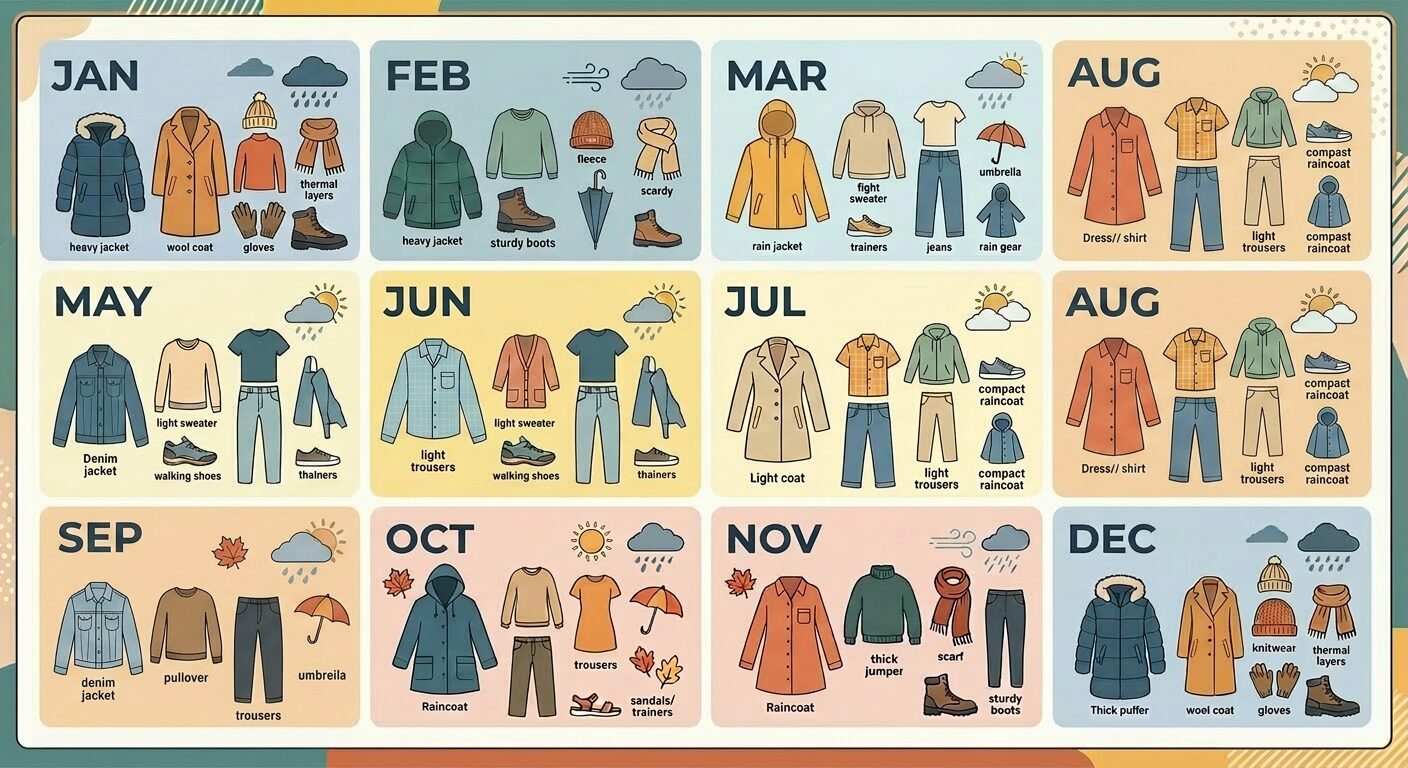
Monthly Weather & What to Wear
January
Average high: 7°C | Low: 3°C | Rainfall: 73mm
The coldest month of the year. Humidity and sea winds make it feel even colder than the thermometer suggests.
What to wear: Heavy winter coat, chunky knit sweater, scarf, waterproof boots.
February
Average high: 7°C | Low: 3°C | Rainfall: 55mm
Still firmly winter — damp and overcast, with frequent light rain similar to January.
What to wear: Lightweight puffer or wool coat layered over long-sleeve thermal tops, plus a hooded waterproof jacket or umbrella.
March
Average high: 8°C | Low: 3°C | Rainfall: 60mm
Technically spring, but still chilly and gusty. Don’t be fooled by the calendar.
What to wear: Knit sweater or sweatshirt under a light puffer or waterproof jacket — layering is key.
April
Average high: 11°C | Low: 5°C | Rainfall: 51mm
Warmer than March but highly unpredictable — sunshine can turn to showers in minutes.
What to wear: Long-sleeve shirt or blouse, light jacket, a thin scarf, and a foldable umbrella.
May
Average high: 13°C | Low: 7°C | Rainfall: 38mm
One of Belfast’s most comfortable months with lower humidity and less rain, perfect for exploring outdoors.
What to wear: Long-sleeve shirt or light knit during the day; add a thin cardigan or waterproof layer for cool mornings and evenings.
June
Average high: 17°C | Low: 10°C | Rainfall: 52mm
Early summer brings long, bright days and pleasantly cool temperatures — no stifling heat here.
What to wear: Pack both short-sleeve and long-sleeve tops; bring a light sweater or windbreaker for evenings.
July
Average high: 18°C | Low: 12°C | Rainfall: 55mm
One of the warmest months, with comfortable summer conditions across most days.
What to wear: T-shirts or light shirts during the day; a thin hoodie or knit for after sunset when it cools down quickly.
August
Average high: 18°C | Low: 12°C | Rainfall: 64mm
Similar to July, with occasional days above 20°C, though drizzly and overcast days are common too.
What to wear: Summer outfits as the base, with a lightweight waterproof layer and water-resistant sneakers for changeable weather.
September
Average high: 16°C | Low: 10°C | Rainfall: 63mm
Early autumn, but still mild and pleasant — one of the best-kept secrets for a Belfast trip.
What to wear: Long-sleeve tops, a light knit, and a casual jacket; layer up as temperatures dip noticeably in the late afternoon and evening.
October
Average high: 13°C | Low: 8°C | Rainfall: 86mm
A clear shift into autumn — noticeably cooler, rainier, and windier, with a much lower real-feel temperature.
What to wear: Sweater or fleece under a waterproof jacket; non-slip, waterproof shoes are a practical must.
November
Average high: 10°C | Low: 5°C | Rainfall: 81mm
Late autumn blending into early winter — damp, grey, and chilly from morning to night.
What to wear: Focus on warmth: coat or light puffer, chunky knit, and a scarf.
December
Average high: 7°C | Low: 3°C | Rainfall: 93mm
The wettest and most humid month of the year, with very short days and a distinctly wintry feel.
What to wear: Warm waterproof coat, knit layers, scarf, and waterproof boots to handle the persistent rain and wind.