
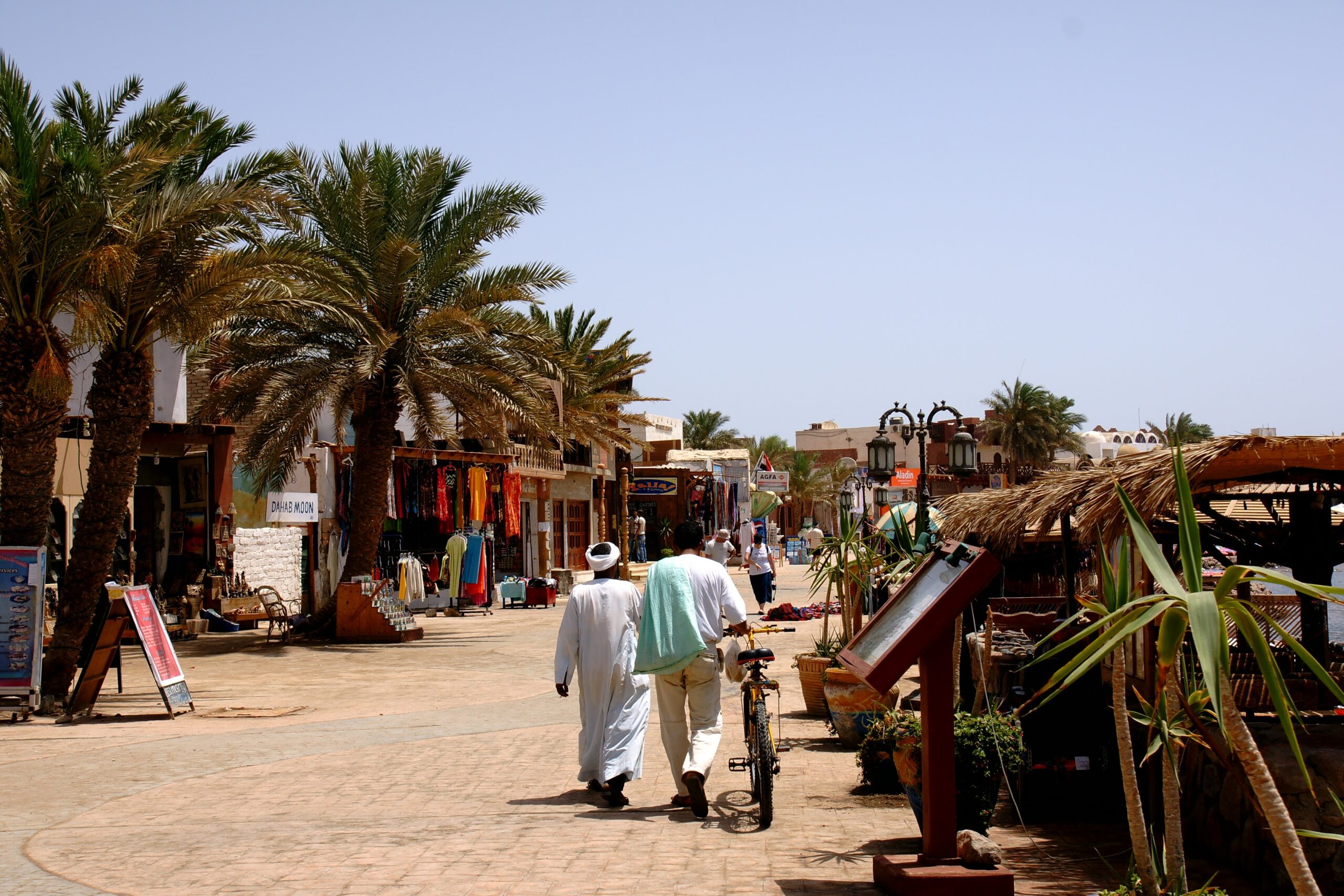
Located on the Red Sea coast at the southern tip of the Sinai Peninsula in Egypt, Dahab enjoys a classic desert climate — sunny and dry year-round with minimal rainfall. Summer temperatures (June–August) can soar to 38–45°C, but low humidity (25–32%) keeps the heat more bearable in the shade. Winters (January–February) remain mild with daytime highs of 19–23°C, large daily temperature swings, and only 3–5 rainy days per year concentrated in the colder months. Red Sea water temperatures stay consistently warm — 28–30°C in summer and 21–24°C in winter — making Dahab an ideal year-round destination for diving and water sports.
Dahab Weather by Season
Spring (March–May)
Spring in Dahab is one of the best times to visit, with daytime temperatures gradually climbing from 25°C to 33°C under clear, dry skies. March has the highest chance of rain in the year, but at just 2%, encounters with rainfall are extremely rare. Sea temperatures range from 21–24°C, which may feel slightly cool, but with 10–11 hours of daily sunshine, the conditions are ideal for outdoor activities and snorkeling.
Summer (June–August)
Summer is Dahab’s hottest season, with peak temperatures reaching 38–45°C and occasionally touching 50°C. This is the driest period of the year with near-zero chance of rain and over 12 hours of intense sunshine daily. Despite the extreme heat, low humidity (25–32%) makes shaded areas feel relatively tolerable, and Red Sea water temperatures peak at 28–30°C — perfect for diving and water sports.
Autumn (September–November)
Autumn is another peak travel season in Dahab. Temperatures gradually ease from 33°C in September to a pleasant 24°C by November. Sea temperatures hold steady at 27–28°C, making this arguably the best time for diving. Clear skies, minimal rainfall, and comfortable temperatures create the perfect combination for both sightseeing and underwater adventures.
Winter (December–February)
Winter days in Dahab are mild at 19–23°C, but nights can drop sharply to 6–10°C — so the daily temperature swing is significant. Temperatures never dip below freezing, but a jacket is essential in the evenings, especially when the wind picks up. The few rainy days of the year (3–5 total) fall mostly in this season, and sea temperatures dip to 21–24°C, meaning a wetsuit is highly recommended for divers.
Best Time to Visit Dahab
The best times to visit Dahab are spring (March–May) and autumn (September–November). Both seasons offer comfortable temperatures of 25–33°C with virtually no rain, making them ideal for outdoor activities, diving, and snorkeling.
Among all months, September and October stand out as the sweet spot — sea temperatures are still warm at 27–28°C while the air has cooled down enough for comfortable sightseeing. October is widely considered the single best month to visit Dahab, followed closely by September and the spring months of April and May.
Winter (December–February) is popular with European travelers thanks to its mild daytime warmth, making it great for sightseeing and trekking. However, this is also peak season, so booking flights and accommodation well in advance is strongly advised.
Midsummer (July–August) is tough for outdoor exploration with temperatures exceeding 40–45°C, but it is low season — meaning flights and hotels are significantly cheaper, which can work well for budget-conscious travelers.
Monthly Weather & What to Wear
January
January is the coldest month in Dahab, with highs of 19–21°C and nighttime lows dropping to 6°C — expect a big daily temperature swing. Skies are mostly clear, but evening winds can feel quite chilly.
What to wear: Long-sleeved shirts or a light knit during the day; a thick jacket or puffer coat is essential in the evening. Layering is key.
February
February is slightly warmer than January, with highs of 22°C and lows of 8–10°C. Sunshine increases to around 8 hours a day, making it a pleasant time to explore.
What to wear: Light long-sleeve tops or a casual sweater by day; always carry a jacket for the evening. Pack a swimsuit too — the sea is still inviting on warmer afternoons.
March
March sees temperatures rise to around 25°C, signaling the start of spring. It technically has the highest chance of rain in the year, but at only 2%, it’s rarely an issue.
What to wear: Short sleeves are possible during the day, but bring a thin cardigan or windbreaker for cool mornings and evenings. Sunscreen and sunglasses are a must.
April
April brings warm and breezy conditions with highs of 28–29°C — one of the most enjoyable months for outdoor activities and diving.
What to wear: T-shirts, shorts, or light linen pants work well during the day. Bring a light outer layer for evenings, along with a hat and sunscreen for strong UV rays.
May
May averages 27°C with highs reaching 33°C, marking the start of the warmer season. Humidity drops to around 25%, rainfall is nearly zero, and sea temperatures reach 24°C — great for water activities.
What to wear: Breathable summer clothing — T-shirts, shorts, tank tops. Pack a light layer for cooler evenings, and always carry SPF 50+ sunscreen, a hat, and sunglasses.
June
Summer officially kicks off in June, with highs hitting 35°C and zero chance of rain. The sun shines for over 12 hours a day, and sea temperatures rise to 26°C — excellent for diving.
What to wear: Light linen shirts and shorts are the go-to. Pay close attention to sun protection outdoors. A thin cover-up or loose kaftan is useful for extended time in the sun.
July
July is one of Dahab’s hottest months, with temperatures reaching 38–45°C. Rainfall is 0mm and daily sunshine exceeds 12 hours.
What to wear: Loose, light-colored linen or cotton clothing is essential. Never step outside without SPF 100+ sunscreen, a wide-brim hat, and UV-protective sunglasses.
August
August mirrors July in heat, with highs of 38°C and lows of 22°C. Low humidity (32%) makes shaded spots more bearable, but direct sun is still intense.
What to wear: Same as July — wear loose, breathable fabrics and limit outdoor activities during peak midday hours. Sun protection remains critical.
September
The heat starts to ease in September, with highs dropping to 33–35°C. Sea temperatures stay warm at 28°C, making this one of the best months for diving and snorkeling.
What to wear: Summer clothing remains the standard, but carry a light layer for cooler evenings. Sunscreen and a hat are still necessary.
October
October offers some of the most comfortable weather in Dahab — highs of 32°C and lows of 18°C. Sea visibility is at its best, and water temperatures hold at 27–28°C.
What to wear: T-shirts and light pants during the day; a cardigan or thin jacket for the evening. Keep sunscreen and sunglasses on hand.
November
November feels like true autumn in Dahab, with temperatures around 26°C. Mornings and evenings can dip below 20°C, and sea temperatures gradually cool to 25°C.
What to wear: Light long-sleeve shirts or sweatshirts during the day; a jacket is needed by evening. Layer up to handle the temperature fluctuations throughout the day.
December
December marks the return of winter, with highs of 21°C and lows of 9°C. Rain chances are at their peak for the year — still only around 1% — and most days remain sunny.
What to wear: Long-sleeve shirts and a light knit by day; a thick jacket or puffer coat for evenings. A windproof outer layer adds extra comfort. Layering works best, just like in January.