

Jinan (济南), the capital of Shandong Province in China, has a temperate monsoon climate with four distinct seasons. The annual average temperature is around 14°C, but temperatures vary dramatically throughout the year. Known as the “City of Springs” (泉城), Jinan is famous for its natural artesian springs — yet its climate demands careful preparation, from bitter winter cold to sweltering summer heat.
Seasonal Weather Overview
Spring (March – May)
Temperatures rise quickly in spring, climbing from around 8°C in March to 22°C by May. Rainfall is at its annual low, making it dry — but spring also brings frequent yellow dust (sand storms) and strong winds from northern China, so a mask and sunglasses are essential when going out. Daily temperature swings of 10–15°C are common, so you may need a thick outer layer in the morning while being comfortable in a T-shirt by afternoon. April is especially beautiful as peach blossoms and cherry blossoms bloom across the city, though a sudden cold snap can still catch you off guard.
Summer (June – August)
Summer is the hottest and wettest season in Jinan. Temperatures begin rising sharply in June, and July averages a high of over 31°C — with extreme heat days reaching 38°C. About 60–70% of the annual rainfall falls between June and August, with heavy downpours and flash storms particularly common in July and August. High humidity makes the heat feel even more oppressive, and heatstroke is a real concern during outdoor activities. A cooling-fabric outfit, wide-brimmed hat, sunscreen, and umbrella are all must-haves.
Autumn (September – November)
Autumn is the best season to visit Jinan. September is still warm at around 25°C, but from October onward temperatures drop to a comfortable 15°C range, with clear blue skies and very little rain. Outdoor sightseeing and trekking conditions are ideal. By November, temperatures fall to around 7°C and the autumn foliage peaks — the scenery around Daming Lake (大明湖) and Thousand Buddha Mountain (千佛山) is especially stunning in mid-to-late October. Layering is recommended due to the large day-to-night temperature gap.
Winter (December – February)
Winter in Jinan is cold, dry, and windy, with strong northwesterly winds. December averages around 2°C, and January — the coldest month — regularly dips below -5°C, with wind chill pushing the feels-like temperature below -10°C. Snowfall is occasional, and icy roads can be hazardous. Unlike cities in southern China, Jinan has a well-developed northern heating system, so indoors is relatively warm. However, full cold-weather gear is absolutely essential when stepping outside.
Best Time to Visit Jinan
The best times to visit Jinan are Spring (April–May) and Autumn (September–October).
April–May offers mild temperatures between 15°C and 25°C with plenty of sunny days, making it ideal for sightseeing. The natural springs and the area around Daming Lake are in full bloom. Pack layers for the temperature swings, and bring a mask and sunglasses for occasional sand storms.
September–October is widely considered the most ideal period to visit. With temperatures between 15°C and 25°C, the summer heat and heavy rains are gone, leaving behind clear skies and low humidity. The autumn foliage around Thousand Buddha Mountain and the lakeside areas peaks in mid-to-late October, offering some of Jinan’s most breathtaking scenery.
Summer (June–August) is uncomfortable for outdoor tourism due to intense heat and heavy rainfall, while Winter (December–February) is the off-season with harsh cold and strong winds. March, with its severe sand storms, is best avoided if possible.
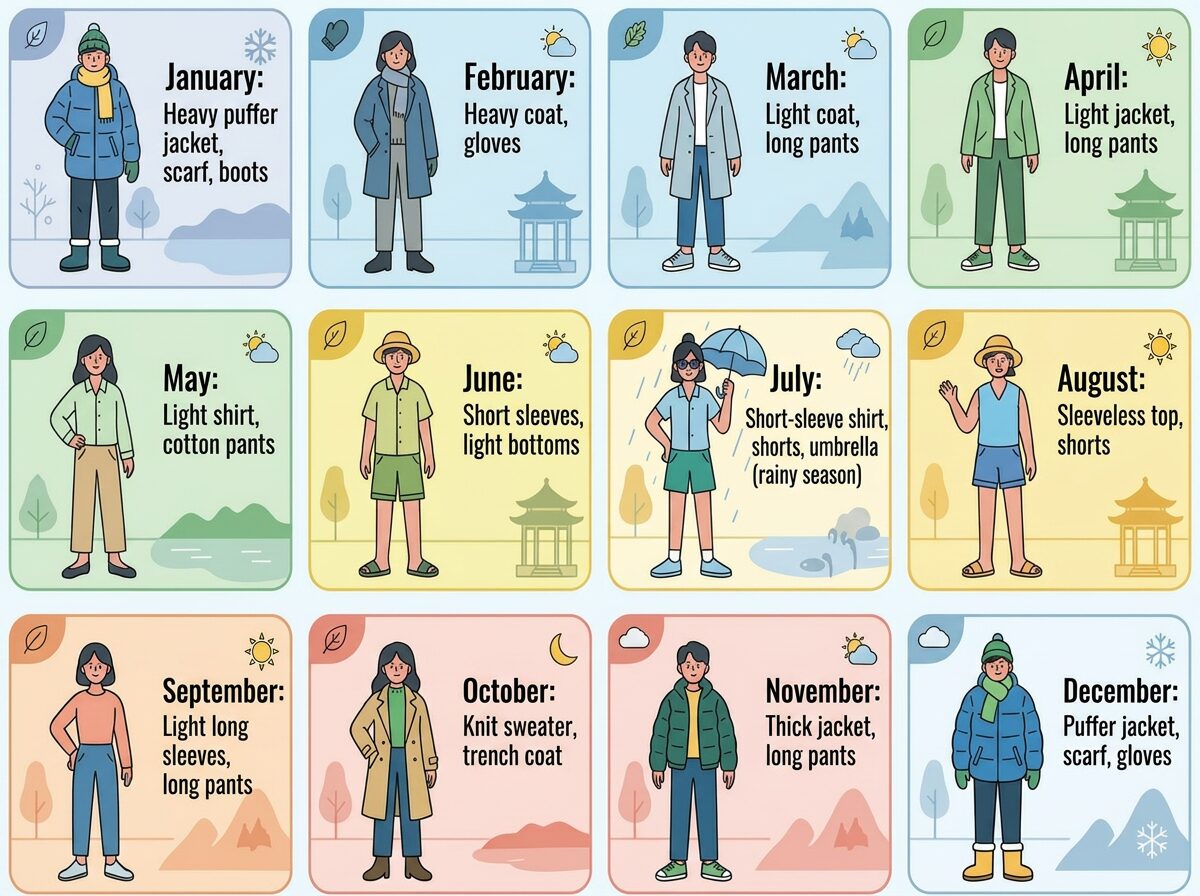
Monthly Weather & What to Wear
January | Low: -5°C / High: 4°C
The coldest month of the year. Strong northwesterly winds and very dry air push the wind chill well below -10°C. Occasional snowfall and icy roads require caution. Recommended: Long puffer coat or thick wool overcoat, heavy sweater, thermal underlayer (top & bottom), thick scarf, gloves, winter boots. A windproof outer layer is essential.
February | Low: -3°C / High: 8°C
Slightly warmer than January but still bitterly cold. Dry conditions continue and early sand storms may begin.
Recommended: Thick coat or puffer jacket, heavy sweater, thermal underlayer, scarf, gloves. Bring a dust mask for sand storm days.
March | Low: 2°C / High: 14°C
Temperatures begin to rise but remain unpredictable. This is the peak season for yellow dust and strong winds, with daily temperature swings exceeding 10°C. Recommended: Light puffer or thick jacket, long-sleeve sweater, jeans. Dust mask and sunglasses are must-haves outdoors.
April | Low: 10°C / High: 22°C
Full spring arrives with flowers in bloom and mostly sunny days, though occasional sand storms and light rain occur.
Recommended: Light jacket or windbreaker, long-sleeve T-shirt, chinos or cotton pants. Layer up for temperature swings — short sleeves may work at midday. Carry an umbrella and mask.
May | Low: 17°C / High: 28°C
Warm and pleasant, with early summer vibes kicking in. Afternoons can get quite hot.
Recommended: T-shirt or light long-sleeve as a base, with a light cardigan or thin jacket for cooler mornings and evenings.
June | Low: 22°C / High: 32°C
The heat kicks into full gear and rainfall starts increasing. Rising humidity makes the temperature feel even higher.
Recommended: Breathable short-sleeve tops, shorts or thin cotton pants. Sunscreen and a hat are necessary for UV protection; carry an umbrella for sudden showers.
July | Low: 25°C / High: 35°C
The hottest month, with frequent heavy downpours and thunderstorms. A large portion of the annual rainfall falls this month.
Recommended: Cooling-fabric T-shirt and shorts, sandals, wide-brimmed hat, sunglasses, sunscreen. Always carry an umbrella and stay well-hydrated.
August | Low: 24°C / High: 33°C
Just as hot and humid as July. High rainfall and humidity make the heat feel extreme.
Recommended: Moisture-wicking cooling tops and shorts, sandals, hat, sunscreen. Keep a light long-sleeve in your bag for heavily air-conditioned indoor spaces.
September | Low: 18°C / High: 27°C
Early autumn, but summer warmth lingers. Mornings and evenings begin to cool down, and rainfall drops significantly.
Recommended: Short-sleeve base with a light long-sleeve or thin jacket for layering. An umbrella is occasionally still needed.
October | Low: 10°C / High: 20°C
Clear, comfortable, and perfect for travel — the best weather of the year. Autumn foliage is at its peak and the skies are brilliantly blue.
Recommended: Long-sleeve T-shirt with a light jacket or cardigan. Some days may still allow short sleeves at midday, so layering is the smart choice.
November | Low: 3°C / High: 12°C
The chill sets in quickly as temperatures drop and northerly winds strengthen.
Recommended: Thick jacket or light overcoat with a sweater and warm inner layer. By late November, a heavy coat and scarf are necessary — opt for windproof outerwear.
December | Low: -3°C / High: 5°C
Winter officially arrives with dry air and biting northwesterly winds. Occasional snowfall.
Recommended: Long puffer coat or wool overcoat, thick sweater, thermal underlayer, scarf, gloves, winter boots. A windproof outer layer, as in January, is far more effective at retaining body heat.
Climate Data at a Glance
| Month | Avg High (°C) | Avg Low (°C) | Precipitation (mm) | Humidity (%) |
| January | 4 | -5 | 5.7 | 53 |
| February | 6 | -3 | 8.5 | 51 |
| March | 13 | 3 | 15.3 | 47 |
| April | 21 | 10 | 27.4 | 46 |
| May | 27 | 16 | 46.6 | 51 |
| June | 32 | 21 | 78.3 | 55 |
| July | 32 | 23 | 201.3 | 72 |
| August | 31 | 22 | 170.3 | 75 |
| September | 27 | 17 | 58.5 | 64 |
| October | 21 | 11 | 36.5 | 58 |
| November | 13 | 3 | 16.2 | 56 |
| December | 6 | -3 | 8.2 | 55 |
| Annual | 17.8 | 9.8 | 672.8 | 57 |