
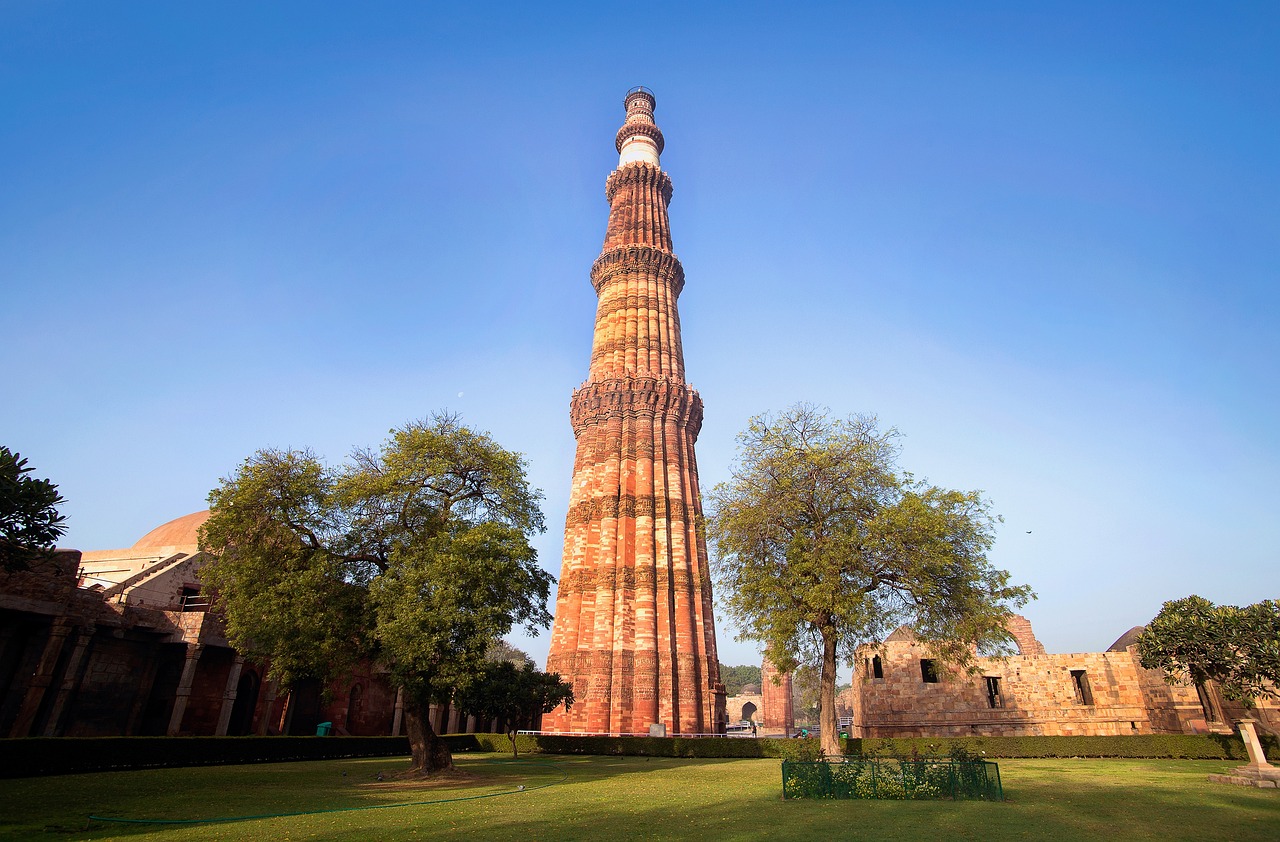
New Delhi has a humid subtropical climate (Cwa) influenced by monsoon winds, characterized by dry winters and scorching summers that rival tropical heat. Annual temperatures range from around 8°C to 40°C, with extreme highs exceeding 46°C during May and June.
From July through early September, monsoon rains bring concentrated rainfall and high humidity, making the air feel oppressively hot. The best time to visit is November through February, when the heat subsides and clear, dry weather prevails — though coal heating and Diwali festival smoke can push air pollution to serious levels during this winter period.
New Delhi Weather by Season
Spring (March – May)
Temperatures begin climbing rapidly from March, with daytime highs exceeding 30°C, and soaring above 45°C during May and June. Since this is the pre-monsoon dry season, the sun is intense but humidity is low, making the heat somewhat more bearable. Large temperature swings between morning and evening are a hallmark of spring, and early March still offers relatively pleasant conditions. March also marks the festival of colors, Holi, offering travelers a vibrant opportunity to experience Indian culture firsthand.
Summer / Monsoon (June – September)
The monsoon arrives in earnest around mid-June, with rainfall reaching approximately 200mm in July and 250mm in August. Daytime highs drop slightly compared to spring — hovering around 35°C — but soaring humidity makes this the most uncomfortable period of the year. Thunderstorms and localized flooding are common, putting strain on the city’s drainage infrastructure. Tourist crowds thin out significantly, meaning major attractions are quieter and accommodation prices drop.
Autumn (Mid-September – November)
As the monsoon winds down from mid-September, temperatures ease to around 30°C and skies begin to clear. In October, highs reach 32°C while lows drop to 19°C, and rainfall falls sharply to around 20mm, signaling the return of dry conditions. November kicks off the tourist high season with Diwali, but crop residue burning and heating emissions combine to create serious smog. October and November offer excellent weather and tourism conditions overall, making them among the best months to visit New Delhi.
Winter (December – February)
New Delhi winters bring daytime highs of 20–24°C and nighttime lows of 7–10°C — comparable to early spring in Seoul — with very little rainfall. Sub-zero temperatures are rare, but dense morning fog in January frequently causes delays at airports and on roads. The temperature gap between day and night exceeds 10°C, so a light jacket and scarf are essential. While the weather is ideal for sightseeing, smog lingering from November can persist into January, so monitoring air quality is important.
Best Time to Visit New Delhi
The best time to visit New Delhi is during the dry season from October to March (winter and early spring), when pleasant weather creates ideal conditions for outdoor exploration. Daytime highs of 20–25°C and nighttime lows of 7–10°C allow for comfortable full-day visits to UNESCO World Heritage Sites like the Red Fort, India Gate, and Qutub Minar.
February stands out as the single best month of the year — the fog has largely cleared and mild temperatures make it perfect for both indoor and outdoor attractions. October and November are equally rewarding, as post-monsoon skies turn crystal-clear just as major festivals like Dussehra and Diwali bring Indian culture to life. However, travelers with respiratory sensitivities should note that smog from November through January can be severe — a mask and daily air quality app check are non-negotiable.
April through June is the peak of summer, with temperatures regularly exceeding 45°C, making it the least suitable time for sightseeing. That said, off-season discounts on hotels and tours can be significant. July through September (monsoon season) brings heavy rain and high humidity that complicates travel, but lush green parks and quieter attractions offer a different kind of charm.
For first-time visitors, planning your trip between early November and late February — taking into account weather, festivals, and overall tourism conditions — is the most ideal approach.
New Delhi Monthly Weather & What to Wear
January
January is the coldest month in New Delhi, with lows around 7°C and highs of 21°C. Rainfall is minimal at about 20mm, but dense fog in the early hours frequently delays flights and road traffic. Afternoons are sunny and warm, but temperatures drop sharply after dark, creating a wide diurnal range. Air pollution is at its worst this month, so wearing a mask outdoors is strongly recommended.
What to wear: Light knit sweater or long-sleeve shirt with a cardigan during the day; a heavy jacket or coat and scarf are essential in the evening.
February
Temperatures rise from January’s lows to 10–24°C, fog gradually lifts, and February becomes the best month of the year for tourism. With only about 15mm of rain and consistently clear skies, outdoor activities are a pleasure. The city atmosphere starts buzzing in anticipation of the Holi festival in early March. Mornings and evenings are still cool, so layering remains important.
What to wear: Thin long-sleeve shirt or light jacket during the day; a thick cardigan or lightweight puffer jacket for early mornings and evenings.
March
With lows of 15°C and highs of 30°C, March marks the beginning of warmer weather, with temperatures rising quickly from mid-month. Rainfall is still around 15mm, dry conditions and sunny days make it a pleasant time to sightsee. The daily temperature swing of around 14°C means dressing in layers is key. Midday highs reaching 30°C call for sunscreen when spending time outdoors.
What to wear: T-shirts or light cotton tops during the day; a thin long-sleeve shirt or cardigan for mornings and evenings.
April
Lows of 21°C and highs of 36°C mark the entry into the scorching season. At only 6.7mm, April is one of the driest months of the year, with intense sunshine throughout the day. Dust storms (known locally as “Aandhi”) begin to appear, so protecting your eyes, nose, and mouth is necessary. Planning your itinerary around air-conditioned indoor attractions helps conserve energy.
What to wear: Breathable cotton t-shirts with shorts or linen pants; a hat, sunglasses, and sunscreen are must-haves.
May
May is the hottest month of the year, with lows around 26°C and highs hitting 40°C — and occasionally spiking to 48°C. Rainfall is low at about 17mm, and the air feels bone-dry despite the extreme heat. Limit outdoor activities during midday and plan sightseeing for early mornings or around sunset. Staying well-hydrated and taking precautions against heat stroke are the top priorities.
What to wear: Loose, light-colored cotton or linen long sleeves (for sun protection), sunglasses, a wide-brimmed hat, and a cooling towel.
June
Temperatures of 28–39°C continue, and by mid-month the monsoon begins, pushing rainfall up to 55mm. Rain briefly cools things down, but humidity spikes sharply, causing discomfort levels to soar. Sudden heavy downpours and thunderstorms are frequent, so outdoor plans need to be flexible. It’s low season for tourism, which means cheaper flights and hotels — though travel conditions are challenging.
What to wear: Moisture-wicking quick-dry t-shirts, a waterproof jacket or umbrella, and non-slip sandals.
July
With lows of 27°C, highs of 35°C, and a whopping 231mm of rainfall, July is the height of monsoon season. Rain falls on 14+ days throughout the month, and the oppressive heat-humidity combination results in the year’s highest discomfort index. Road flooding and traffic congestion are common, so build extra time into your itinerary. Indoor venues like museums and shopping malls make for the smartest sightseeing choices.
What to wear: Quick-dry shorts and t-shirts, a waterproof rain jacket or compact umbrella, and waterproof sandals or shoes.
August
August brings lows of 26°C and highs of 33°C, with peak rainfall of 259mm — the wettest month of the year. Extreme humidity makes the feels-like temperature much higher than the actual reading; watch out for mold and food safety issues. Pack plenty of spare clothes and be ready to change quickly after getting soaked. India’s Independence Day on August 15 draws large crowds around the Red Fort area.
What to wear: Thin, fast-drying fabrics, a waterproof poncho, waterproof sandals, and a rain cover for your bag.
September
Lows of 24°C and highs of 34°C accompany 128mm of rainfall as the monsoon begins to wind down. From mid-September onward, skies clear and temperatures gradually start to fall. Rain is still possible in the first half of the month, so keep an umbrella handy. Late September is a great time to resume outdoor sightseeing as the city transitions back to dry conditions.
What to wear: Light t-shirts paired with a thin long-sleeve shirt, and a compact folding umbrella in your bag.
October
Temperatures drop noticeably to 19–33°C and rainfall falls to around 36mm, making conditions much more visitor-friendly. Clear skies and fresh air coincide with a string of major festivals including Diwali. The wider daily temperature gap means an outer layer for evenings is necessary. As peak tourist season begins, hotel and flight prices start to climb — book ahead.
What to wear: Light t-shirt or long-sleeve during the day; a cardigan or thin jacket for the evenings.
November
November offers mild temperatures of 13–28°C and only 5mm of rain, making it one of the driest and most pleasant months. Clear, comfortable days mark the official start of the high tourist season. However, agricultural burning and heating emissions cause air pollution to deteriorate sharply, with heavy smog blanketing the city. Check your air quality app daily and reduce outdoor exposure when the index is high.
What to wear: Thin long-sleeve shirts during the day; a heavy jacket and scarf in the evenings, plus a KF94-level mask for air pollution protection.
December
December is among the coldest months alongside January, with lows of 8°C and highs of 23°C, and very little rain at 7.8mm. Early mornings can dip below 10°C, making it feel genuinely chilly. Thick fog and smog frequently reduce visibility and cause flight delays. Year-end high season means popular sites like the Red Fort and India Gate are crowded — book tours and tickets in advance.
What to wear: Knit sweaters or thick long-sleeves during the day; a coat or heavy jacket, scarf, and mask for mornings and evenings.
New Delhi Weather Monthly Data
| Month | Avg High (°C) | Avg Low (°C) | Precipitation (mm) | Humidity (%) | Air Quality (AQI) | Sunrise | Sunset |
|---|---|---|---|---|---|---|---|
| Jan | 21.1 | 7.3 | 20.3 | 64% | ~280 Hazardous | 07:15 | 17:36 |
| Feb | 24.2 | 10.1 | 15.0 | 56% | ~210 Unhealthy | 07:10 | 18:01 |
| Mar | 30.0 | 15.4 | 15.8 | 40% | ~150 Unhealthy for Sensitive | 06:47 | 18:22 |
| Apr | 36.2 | 21.5 | 6.7 | 26% | ~120 Unhealthy for Sensitive | 06:12 | 18:39 |
| May | 39.6 | 25.9 | 17.5 | 27% | ~130 Unhealthy for Sensitive | 05:41 | 18:57 |
| Jun | 39.3 | 28.3 | 54.9 | 50% | ~100 Moderate | 05:25 | 19:15 |
| Jul | 35.1 | 26.6 | 231.5 | 78% | ~90 Moderate | 05:28 | 19:24 |
| Aug | 33.3 | 25.9 | 258.7 | 81% | ~80 Moderate | 05:43 | 19:13 |
| Sep | 33.9 | 24.4 | 127.8 | 72% | ~90 Moderate | 06:00 | 18:44 |
| Oct | 32.9 | 19.5 | 36.3 | 53% | ~180 Unhealthy | 06:15 | 18:09 |
| Nov | 28.3 | 12.8 | 5.0 | 54% | ~330 Very Unhealthy | 06:34 | 17:37 |
| Dec | 23.0 | 8.2 | 7.8 | 63% | ~320 Very Unhealthy | 06:57 | 17:25 |
New Delhi Weather FAQ
When is the best time to visit New Delhi?
October through March is the optimal travel window. November through February offers temperatures of 7–25°C with minimal rainfall — ideal for outdoor sightseeing. Since smog can be heavy from November to January, February and October are the top picks for the clearest air quality.
How hot does New Delhi get in summer?
May and June are the hottest months, with average highs above 40°C and extreme readings occasionally hitting 48°C. Avoid outdoor activities between noon and 4 PM; use air-conditioned metro and bus services whenever possible.
When is monsoon season, and how does it affect travel?
Monsoon season runs from July through early September, with rainfall reaching 232mm in July and 259mm in August. Frequent road flooding and flight delays are common, but off-season pricing makes hotels and tours considerably cheaper.
How cold does New Delhi get in winter?
Daytime temperatures from December to February are a mild 20–24°C, but predawn lows can drop to 7–8°C, creating a significant daily temperature swing. Temperatures rarely fall below freezing, but a heavy jacket and scarf are still essential.
How serious is air pollution in New Delhi?
From late October through February, the AQI (Air Quality Index) regularly climbs to 200–400, reaching “Unhealthy” to “Hazardous” levels. November and December are the worst, when crop burning, Diwali fireworks, and vehicle emissions converge — wearing an N95/KF94 mask and checking an air quality app before heading out is a must.
Does winter fog affect travel?
Dense fog settles over the city on December and January mornings, frequently causing flight delays and cancellations. For day trips to the Taj Mahal or other distant destinations, schedule departures for the afternoon or build extra buffer time into your itinerary.
Which month has the most rainfall?
About 80% of New Delhi’s annual rainfall is concentrated in the July–September monsoon period. The rest of the year is very dry — April and May see only 7–17mm per month.
When are daily temperature swings the largest?
October–November and March see the widest temperature gaps, with swings of 14–15°C between day and night. It can feel t-shirt warm at midday and surprisingly cool by evening, so easy-to-layer outfits are the smart choice.
Do I need to worry about dust storms in New Delhi?
During the dry season from April to June, sudden sandstorms known locally as “Aandhi” can hit without much warning. These storms bring strong winds and visibility-reducing dust clouds, so always carry sunglasses and a mask and keep a close eye on weather forecasts during this period.