
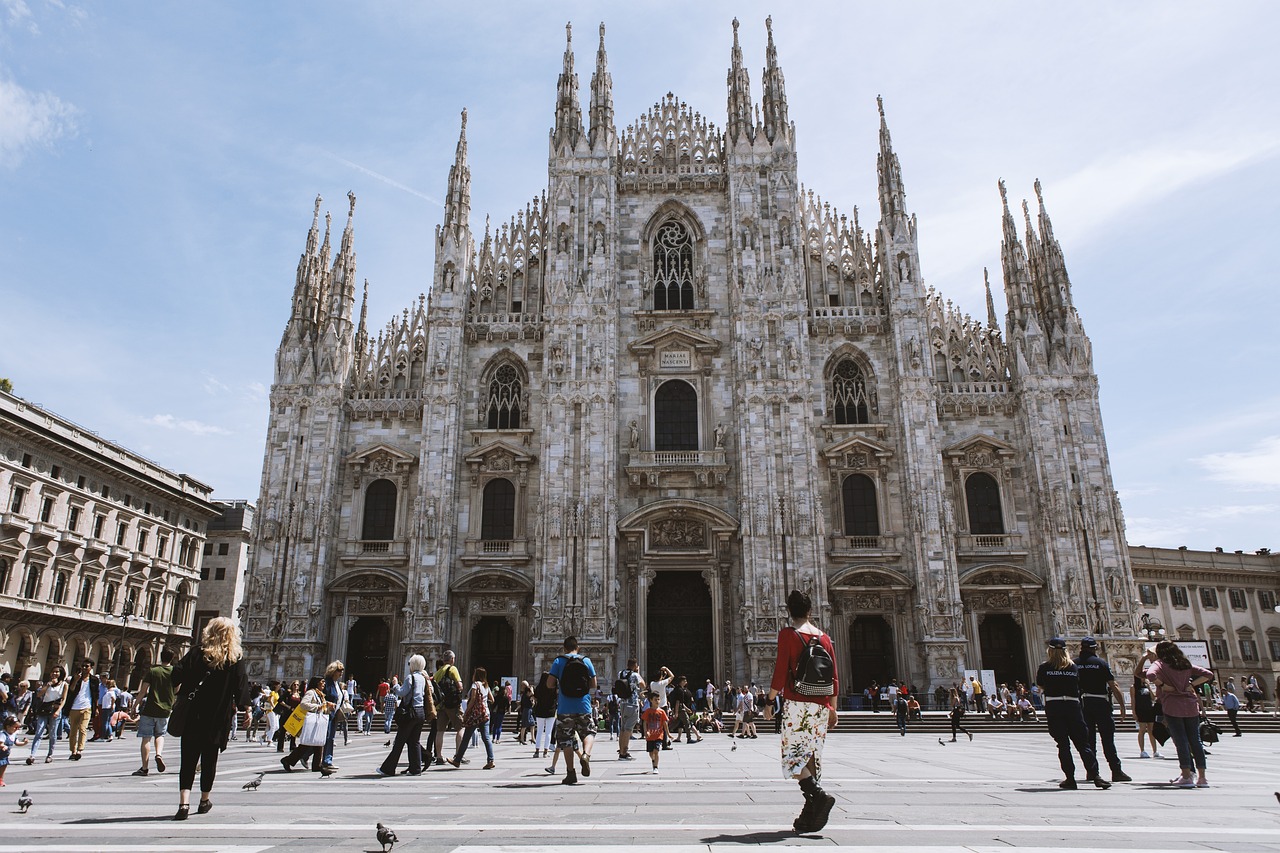
Milan experiences a humid subtropical climate (Cfa) with four distinct seasons and an average annual temperature of around 13°C. Summers (June–August) are hot and humid, with temperatures occasionally exceeding 35°C, while winters (December–February) are cold, foggy, and can dip close to 0°C. Spring (April–May) and autumn (September–October) bring pleasant temperatures between 10–20°C, though rainfall is frequent — always keep an umbrella handy. The Alps and Apennine mountains act as natural barriers that partly shield the city from Arctic air masses, yet humidity remains high throughout the year.
Milan Weather by Season
Spring (March – May)
Temperatures rise gradually, with warm afternoons and cool mornings and evenings typical of early spring. Average temperatures climb from 7–14°C in March, 10–18°C in April, to 14–23°C in May. May is particularly rainy, with up to 15 wet days in a single month — a compact umbrella is essential. Overall, April and May are among the best times to visit Milan for comfortable sightseeing.
What to wear: Light layers in March (spring coat + scarf + umbrella); a trench coat over a light long-sleeve top in April; a light jacket or cardigan with a t-shirt in May.
Summer (June – August)
Milan’s summer is hot and humid, with July temperatures reaching a high of 31°C. From June through September, average highs hover around 27–31°C, accompanied by high humidity that makes the heat feel more intense. Frequent passing showers occur alongside the heat, so sunscreen, sunglasses, and a light umbrella are all recommended. In August, many locals head out of the city on holiday, leaving some shops and restaurants temporarily closed.
What to wear: T-shirts, shorts, and linen or breathable fabrics; sunglasses, a hat, and SPF 50+ sunscreen are a must.
Autumn (September – October)
From September, temperatures gradually cool to a comfortable 16–25°C, making it an excellent time to explore the city. The sun is still fairly strong, so UV protection remains important. October is one of the wettest months of the year, with around 145mm of rainfall, so carry an umbrella at all times. Temperature swings between day and night become more pronounced — layering is the smart approach.
What to wear: Light long-sleeve shirts with a thin jacket or cardigan in September; a thicker jacket or autumn coat with a scarf in October. Always bring an umbrella.
Winter (November – February)
Winter is the coldest period of the year, with January lows dropping to around 1°C. The influence of the Alps makes Milan considerably colder than central and southern Italy, and thick fog (nebbia) is a defining feature of the season. Snowfall is relatively rare, but the damp, bone-chilling cold persists — a heavy coat, scarf, and gloves are non-negotiable. From February onwards, daytime temperatures begin to recover slightly, making layering increasingly effective.
What to wear: Heavy puffer jacket or wool coat, scarf, gloves, and a knit hat from November through January; layered outfits with a thick outer layer in February.
Best Time to Visit Milan
The best times to visit Milan are spring (April–June) and autumn (September–October), when the weather is pleasant and ideal for sightseeing. Temperatures stay between 10–25°C during these periods, and flights and accommodation are far more accessible than during the peak summer season. April and May are especially beautiful — flowers bloom across the city, outdoor cafés come to life, and Milan’s signature aperitivo culture is in full swing.
April hosts the world-renowned Salone del Mobile (Milan Design Week), a must for anyone interested in fashion and design. In September, Milan Fashion Week draws the global style community, and with summer crowds gone, iconic landmarks like the Duomo and Castello Sforzesco can be explored in relative peace.
Summer (July–August) brings sweltering heat above 35°C and high humidity, making prolonged outdoor activities uncomfortable. Many locals take their holidays in August, resulting in numerous closed shops and restaurants across the city.
Winter (December–February) offers the advantage of fewer tourists and lower prices for flights and hotels, but persistent fog and raw, damp cold make it one of the least favourable seasons for outdoor sightseeing.
Monthly Weather & What to Wear
January
January is the coldest month of the year, with average lows of around -0.5°C and highs of just 6°C. Humidity sits at 80%, fog is frequent, and there are approximately 6 rainy days during the month. The damp cold feels more penetrating than the numbers suggest, so thorough layering is essential.
Recommended outfit: Heavy puffer jacket or wool coat, scarf, gloves, and a knit jumper.
February
Temperatures begin to edge upward slightly, with average lows of 0.8°C and highs of 9–12°C. February is the driest month of the year, with only around 5 rainy days, though biting winds keep the wind chill low. Daytime warmth increases gradually, widening the day-night temperature gap.
Recommended outfit: Heavy coat or puffer jacket as a base, with layered pieces to adapt to the afternoon warmth.
March
Spring officially begins, with average lows of 4.9°C and highs of 14–15°C, though cold Alpine winds still make mornings and evenings chilly. Rain falls on around 7–8 days and the temperature swings between day and night are significant. Sunny days feel genuinely warm, but strong gusts can catch you off guard.
Recommended outfit: Light puffer jacket or spring coat with a scarf; pack an umbrella.
April
Spring is in full bloom, with average lows of 8–10°C and highs of 18–19°C. The city buzzes with energy during the globally acclaimed Salone del Mobile, though rainfall is frequent — expect around 8–9 wet days. UV levels begin to climb, so don’t forget sun protection.
Recommended outfit: Light long-sleeve top under a trench coat; an umbrella is essential.
May
One of the best months to visit, with average lows of 12–14°C and pleasant highs around 23°C. It’s ideal for outdoor sightseeing — think rooftop visits to the Duomo terraces — but May is also one of the rainiest months, with up to 15 wet days. Afternoons feel like early summer, breezy and fresh, and humidity drops toward the end of the month.
Recommended outfit: T-shirt or light shirt with a thin jacket or cardigan; pack a compact umbrella.
June
Summer arrives in earnest, with average lows of 18–19°C and highs of 27–29°C. The long daylight hours give you plenty of time to explore, but the UV index climbs sharply. Midday heat and humidity call for frequent hydration.
Recommended outfit: T-shirts and shorts in breathable fabrics; sunglasses and SPF 50+ sunscreen are essential.
July
The hottest month of the year, with average lows of 19–21°C and highs of 29–31°C. Unlike Rome, Milan’s humidity makes the heat feel significantly more oppressive. The UV index reaches 9 — protect yourself during outdoor activities.
Recommended outfit: Linen or cotton t-shirts and shorts; sunscreen, a hat, and sunglasses are non-negotiable.
August
Heat continues at 29–30°C highs, similar to July. Sudden thunderstorms are common, so keep a light umbrella handy. Many local businesses close for summer holidays — always check opening hours in advance.
Recommended outfit: Lightweight, breathable tops and shorts; sunscreen and a compact umbrella.
September
Milan’s “second peak season” — the city hosts Milan Fashion Week and the weather cools beautifully to 16–25°C. Summer crowds thin out, making it much easier to enjoy the city’s top attractions. However, rainfall picks up again with around 12 rainy days, so an umbrella remains a necessity.
Recommended outfit: Light long-sleeve top with a thin jacket or cardigan; carry a compact umbrella.
October
Temperatures drop more noticeably to 12–19°C, and Milan takes on a romantic autumn atmosphere. October is one of the wettest months, with around 145mm of rainfall and humidity rising to 80%. The temperature gap between morning and evening grows considerably — dress in layers.
Recommended outfit: Thick cardigan or autumn jacket with a scarf; umbrella is a must.
November
Cold sets in seriously, with average lows of 6°C and highs of 13°C as foggy, wet conditions become the norm. Humidity hits 81% and thick fog can linger all day, making outdoor sightseeing less comfortable. On the bright side, far fewer tourists means popular attractions are wonderfully uncrowded.
Recommended outfit: Heavy coat or puffer jacket with a scarf; wear waterproof footwear.
December
One of the coldest months, with average lows of around 1°C and highs of just 7°C. Fog is frequent and occasional snowfall adds to the wintry atmosphere. The Christmas season transforms the city with dazzling decorations and festive markets, making for a magical end-of-year atmosphere.
Recommended outfit: Heavy puffer jacket or wool coat, gloves, scarf, and a knit hat — full winter gear is essential.
Monthly Climate at a Glance
| Month | Avg High (°C) | Avg Low (°C) | Rainfall (mm) | Rainy Days | Humidity | Sunrise | Sunset |
|---|---|---|---|---|---|---|---|
| January | 9 | 1 | 61 | 8 | 80% | 08:05 | 17:10 |
| February | 12 | 4 | 57 | 5 | 73% | 07:25 | 17:50 |
| March | 15 | 6 | 76 | 8 | 66% | 07:10 | 18:50 |
| April | 19 | 9 | 80 | 9 | 62% | 06:55 | 20:15 |
| May | 23 | 14 | 150 | 15 | 67% | 06:15 | 20:55 |
| June | 29 | 19 | 97 | 11 | 63% | 05:50 | 21:20 |
| July | 31 | 21 | 139 | 13 | 64% | 06:00 | 21:15 |
| August | 30 | 21 | 138 | 10 | 66% | 06:30 | 20:40 |
| September | 25 | 16 | 135 | 12 | 73% | 07:20 | 19:50 |
| October | 19 | 12 | 145 | 10 | 80% | 07:50 | 18:20 |
| November | 13 | 6 | 72 | 7 | 81% | 07:50 | 17:20 |
| December | 9 | 3 | 75 | 7 | 85% | 08:10 | 17:00 |
Milan Weather FAQ
Q1. When is the best time to visit Milan?
Spring (April–June) and autumn (September–October) are the peak times for comfortable travel, with temperatures between 10–25°C ideal for sightseeing. Flights and hotels are also more affordable than during peak summer. April brings the Salone del Mobile, and September hosts Milan Fashion Week — great events to plan around.
Q2. Does it rain a lot in Milan?
Rainfall is fairly evenly distributed throughout the year, with May (~150mm) and October (~145mm) being the wettest months. Sudden showers are common in spring and autumn, making a compact umbrella a year-round essential. February is the driest month (around 57mm) with the most consistently clear skies.
Q3. How cold is Milan in winter? Does it snow?
Average temperatures from December to January range between 1–9°C. Humidity of 80–85% and dense fog make the cold feel more biting than the numbers suggest. Snow is infrequent but does occur, and fog can significantly reduce driving visibility — take care if renting a car.
Q4. How hot does Milan get in summer?
July and August highs reach 29–31°C, and with high humidity the heat feels even more intense. Heatwaves can push temperatures above 35°C, and sudden thunderstorms are not uncommon. Sunscreen, sunglasses, and a hat are essential, as is staying well hydrated.
Q5. Are temperature swings between day and night significant?
Yes, particularly in spring (March–May) and autumn (September–October), when the temperature difference between midday and evening can exceed 10°C. Layering is the most practical strategy during these months. March in particular can feel quite cold due to strong Alpine winds, so a warm outer layer is important even on sunny days.
Q6. Is sun protection important in Milan?
From May through August, the UV index ranges from 6 to 9, categorised as “High” to “Very High.” July is the most intense month, with a UV index of 9 — SPF 50+ sunscreen, sunglasses, and a hat are essential for outdoor activities. Even on overcast days, UV rays penetrate cloud cover, so don’t skip sun protection in spring and autumn either.
Q7. When does Italy observe Daylight Saving Time?
Italy follows European DST rules, moving clocks 1 hour forward on the last Sunday of March (UTC+2) and 1 hour back on the last Sunday of October (UTC+1). During summer, daylight extends well past 9:00 PM, giving visitors a generous window for evening sightseeing. When booking flights and tours, double-check local times to avoid any confusion during the clock changes.