
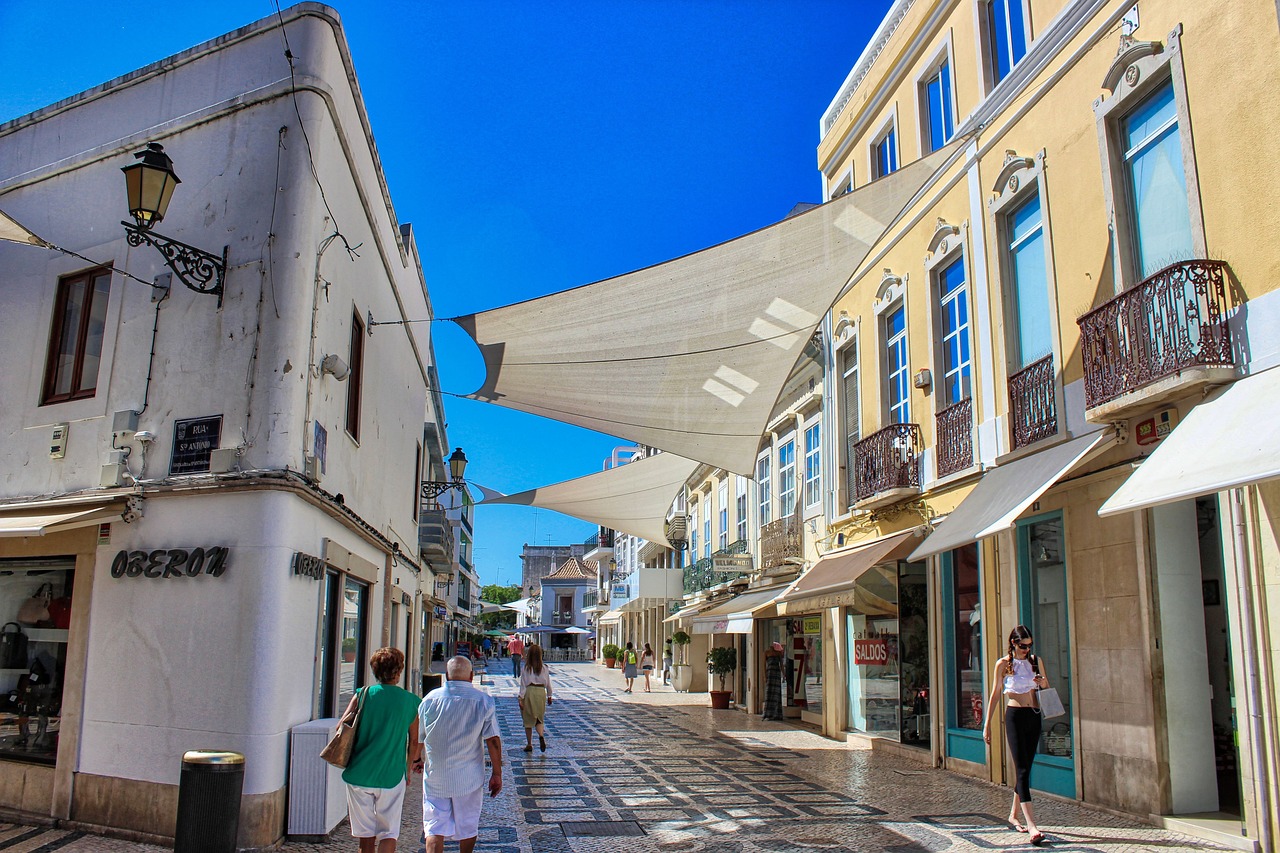
Faro enjoys a Mediterranean climate, maintaining mild temperatures year-round with an annual average high of 23°C and a low of 15°C, along with abundant sunshine. Summers (July–August) are hot and dry with temperatures reaching up to 30°C, while winters (December–January) are cool and breezy with occasional rainfall and lows around 10°C.
The rainy season runs primarily from November to March, with March being the wettest month at around 10 rainy days, while July and August are virtually rain-free. The best times to visit are April, May, June, September, and October, when temperatures hover between 21–26°C and rainfall is minimal.
Seasonal Weather in Faro
Spring (March – May)
Temperatures gradually rise from a high of 18°C in March to 24°C in May, with lows between 11–16°C, making for very pleasant conditions. March is the rainiest month of the year with around 10 wet days, but by May this drops to just 4, with increasingly sunny skies.
Mid-spring — particularly April and May — is considered the prime visiting period, offering an ideal balance of comfortable temperatures and low rainfall. March also brings the strongest Atlantic winds of the year, with gusts reaching up to 43 km/h, so a light windproof layer is recommended.
Summer (June – August)
Summer is short, extremely dry, and predominantly sunny, with highs reaching 30°C in July and August. July and August have virtually zero rainy days, making them the driest months of the year, with nighttime lows staying warm at around 21°C.
June is the best month for swimming, as the sea temperature reaches its warmest point at 19°C. With only 3 rainy days and a comfortable high of 26°C, June avoids the intense heat of peak summer while still offering ideal beach conditions.
Autumn (September – November)
September and October bring refreshing temperatures of 24–26°C with just 3–8 rainy days, ranking them among the best months to visit Faro. From October, rainfall increases and temperatures dip to 17–24°C as the season truly transitions to autumn.
By November, highs fall to 20°C and lows to 13°C, with around 8 rainy days — marking the beginning of the wet season. Despite this, autumn still retains enough warmth for beach activities and outdoor exploration, and with fewer tourists than peak season, the city feels refreshingly relaxed.
Winter (December – February)
Winter is long, cool, and partly cloudy with highs between 16–18°C and lows around 10–11°C, along with occasional winds. December through February average 6–8 rainy days per month, with intermittent rain and overcast skies typical throughout.
By European standards, however, this is a very mild winter — temperatures rarely drop below 4°C. Faro’s off-season brings lower hotel and airfare prices with far fewer crowds, making it a popular warm-winter escape within Europe.
Best Time to Visit Faro
Ideal Travel Seasons
The best time to visit Faro is during spring (April–June) and autumn (September–October), when temperatures are a comfortable 21–26°C and rainfall is low — perfect conditions for sightseeing and outdoor activities.
May and June are especially recommended: warm and sunny weather without the overcrowding of peak summer, making it easy to enjoy the beaches and the charming Old Town at your own pace.
September and October offer lingering summer warmth with a still-inviting sea temperature, fewer crowds than July–August, and noticeably lower accommodation prices.
In terms of budget, the shoulder seasons (April–June and September–November) offer mid-range pricing, while the off-season (December–March) is the most affordable time of year for budget-conscious travelers.
Peak Summer Season
July and August deliver hot, dry, and brilliantly sunny weather with highs of 30°C — ideal for beach lovers who want the full summer experience.
However, the entire Algarve region becomes extremely crowded with European tourists during these months, and hotel and flight prices peak, so advance booking is essential.
Winter Off-Season
December through March offers mild temperatures of 10–18°C — warm by European standards — along with lower prices and fewer tourists, making it a great choice for those seeking a relaxed, authentic travel experience.
Unlike northern Portugal (such as Porto), Faro sees relatively little winter rain and still enjoys 5+ hours of sunshine per day, earning it a reputation as one of Southern Europe’s sunniest winter destinations.
Monthly Weather & What to Wear
January
The coldest month of the year, with average highs of 16°C and lows of 8°C. Expect around 7–8 rainy days and frequent overcast skies. Atlantic winds can make it feel even colder than the thermometer suggests.
Pack: heavy knit sweater, coat or puffer jacket, waterproof shoes, and a compact umbrella.
February
Similar to January, with highs of 17°C and lows of 8°C — still the tail end of the rainy season at around 71mm and 6–8 wet days. Sunny spells gradually increase, offering glimpses of that warm late-winter sunshine. P
ack: coat, chunky knit, layered outfits, and an umbrella.
March
Temperatures start climbing with highs of 18°C and lows of 9°C — spring is arriving. This is the rainiest month of the year (around 10 wet days), so be prepared for sudden showers. The Atlantic winds are also at their strongest.
Pack: light jacket, windbreaker, long sleeves, umbrella, and sunglasses.
April
Warm afternoons at 20°C with cool mornings and evenings around 12°C. Rainy days drop to about 6, and sunny days become the norm — great for outdoor sightseeing. Wildflowers are in full bloom, making it a beautiful time to explore Faro’s Old Town and nature spots.
Pack: light jacket, long-sleeve top, thin scarf, and sunglasses.
May
Highs reach 23°C with lows of 15°C — a warm and pleasant pre-summer feel. Only around 4 rainy days make this one of the most travel-friendly months of the year. Beach activities are beginning to pick up, yet the crowds haven’t arrived yet.
Pack: short-sleeve tops, light cardigan, thin trousers, and sunscreen.
June
Summer begins in earnest with highs of 26°C and lows of 18°C — sunny and dry with just 3 rainy days. Long daylight hours make it perfect for beach days and evening strolls. Sea temperatures hit 19°C, ideal for swimming, while the city hasn’t yet reached its summer peak in visitor numbers.
Pack: short sleeves, shorts, swimwear, sunglasses, sunscreen, and a light layer for evenings.
July
The hottest and driest month — highs of 29°C, lows of 21°C, and essentially zero rain. Long sun-filled days make this the ultimate beach season. Accommodation and flights are at their most expensive, so early booking is a must.
Pack: short sleeves, shorts, sandals, swimwear, hat, and SPF 50+ sunscreen.
August
Temperatures peak at 30°C with lows of 21°C and no rain whatsoever. The beaches and tourist sites are at maximum capacity — the height of peak season. Some days can exceed 37°C, so plan sightseeing for early mornings or evenings to beat the heat.
Pack: breathable short sleeves, shorts, sandals, hat, sunglasses, and high-SPF sunscreen — non-negotiable.
September
A golden month: highs of 27°C, lows of 18°C, and only about 3 rainy days. The sea is still warm for swimming and the weather is comfortable for exploring. As crowds thin out and prices drop, this is one of the best value months to visit.
Pack: mix of short and long sleeves, with a light jacket for evenings.
October
Autumn sets in with highs of 23°C and lows of 15°C, and slightly stronger Atlantic winds. Rainy days increase to 6–8, marking the transition into the wet season. The temperature difference between day and night grows, so layering is key.
Pack: thin knit, windproof jacket, long trousers, and a portable umbrella or rain jacket.
November
Cool early-winter weather arrives with highs of 19°C and lows of 12°C, and around 8 rainy days. It’s overcast more often, but still mild compared to most of Europe. This is a quiet, affordable month with very few tourists.
Pack: thick knit, light coat, waterproof shoes, and an umbrella.
December
One of the coolest months — highs of 16°C, lows of 9°C, and 7–8 rainy days. Snow is virtually unheard of and temperatures rarely dip below freezing. The Old Town’s Christmas lights and festive atmosphere add a charming winter appeal.
Pack: puffer coat or heavy coat, layered clothing, waterproof shoes, umbrella, and a scarf.
Monthly Climate Data
| Month | Avg High | Avg Low | Rainfall | Humidity | Sunrise | Sunset |
| January | 16.5°C | 8.2°C | 60mm | 79% | 07:53 | 17:48 |
| February | 17.1°C | 8.7°C | 45mm | 77% | 07:32 | 18:19 |
| March | 19.0°C | 10.7°C | 50mm | 73% | 06:52 | 18:48 |
| April | 20.7°C | 12.2°C | 35mm | 71% | 07:04 | 20:18 |
| May | 23.4°C | 14.9°C | 25mm | 68% | 06:27 | 20:48 |
| June | 26.6°C | 17.6°C | 5mm | 64% | 06:13 | 21:15 |
| July | 29.3°C | 19.5°C | 0mm | 60% | 06:25 | 21:12 |
| August | 29.1°C | 19.8°C | 0mm | 62% | 06:54 | 20:44 |
| September | 26.3°C | 18.2°C | 30mm | 69% | 07:22 | 19:56 |
| October | 23.4°C | 15.6°C | 55mm | 75% | 07:50 | 19:07 |
| November | 19.8°C | 11.7°C | 65mm | 77% | 07:22 | 17:33 |
| December | 17.3°C | 9.6°C | 110mm | 80% | 07:47 | 17:25 |
Faro Weather FAQ
- What is the hottest month in Faro?
July and August, with average highs of 29–30°C. Heatwaves above 37°C are possible, so strong sunscreen and staying hydrated are essential. - What is the coldest month in Faro?
January, with an average high of 16°C and low of 8°C. By European standards, this is still very mild — freezing temperatures are extremely rare. - Which month gets the most rain?
December, with around 110mm of rainfall. The rainy season spans November to March, while July and August are virtually rain-free. - How many hours of sunshine does Faro get?
Faro averages around 3,000 sunshine hours per year — one of the highest in Europe. Expect 14–15 hours of daylight in summer and around 5–7 hours even in the depths of winter. - When is the best time to swim in the sea?
Sea temperatures warm up from June and peak at around 22°C in August. September is also an excellent option for swimming if you want to avoid peak-season crowds. - Are heatwaves common in summer?
Temperatures can exceed 37°C on some days in July and August. However, Atlantic breezes along the Algarve coast help make the heat more bearable than inland areas. - When is it windiest in Faro?
March is the windiest month, with gusts reaching up to 43 km/h. Atlantic winds are also noticeable in spring and autumn, so packing a windbreaker is recommended. - When is UV radiation highest?
UV levels are very high (index 8–11) from May through September, making SPF 50+ sunscreen essential. Around midday in July and August, seeking shade is strongly advised. - What is the overall best month to visit Faro?
Considering weather, price, and crowd levels, May and Septemberstand out as the top choices. Both offer warm, sunny weather, manageable tourist numbers, and reasonable accommodation and flight prices.