
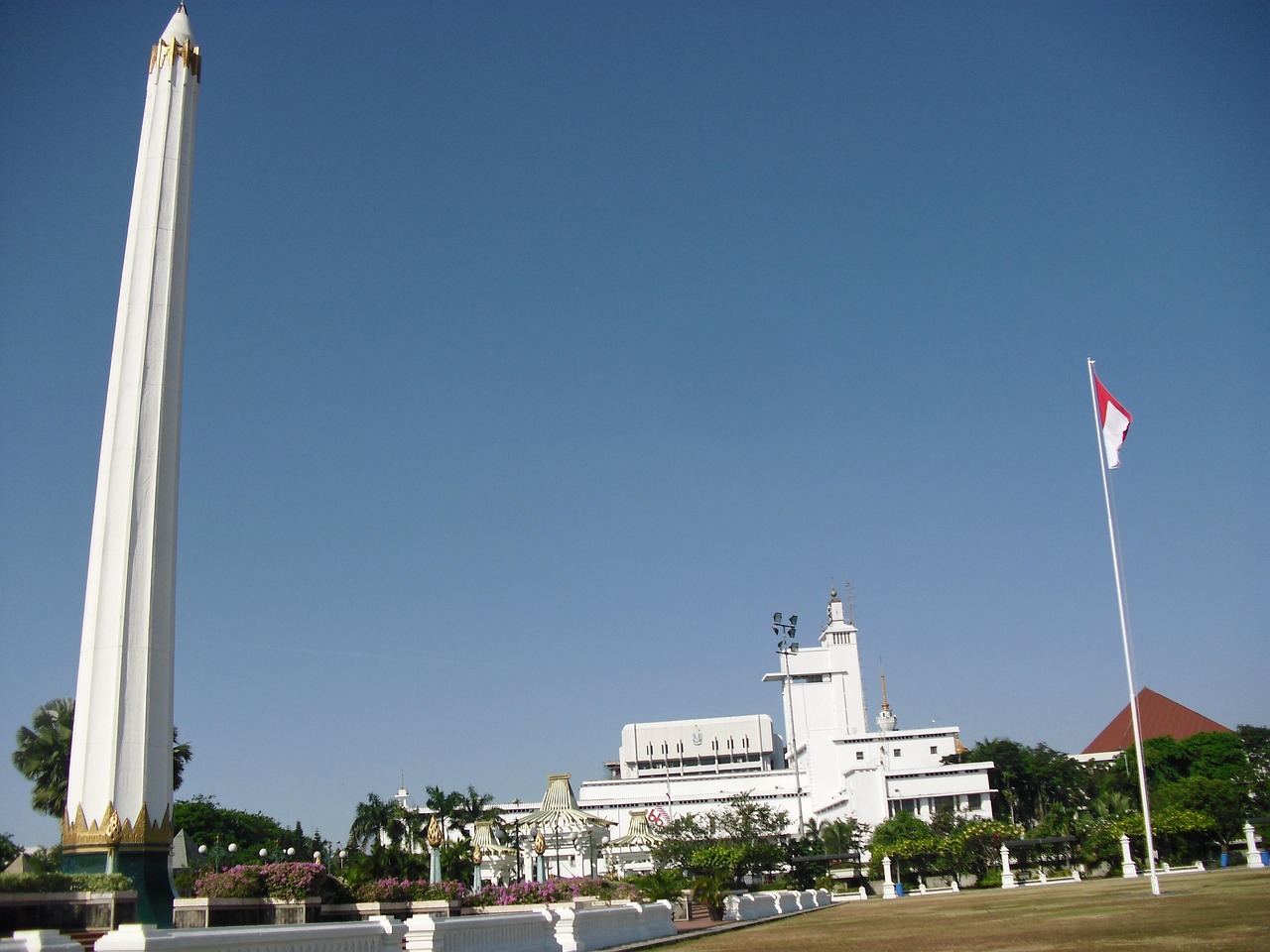
Surabaya, located on the eastern coast of Java Island in Indonesia, has a tropical savanna climate (Aw) with temperatures staying between 28–34°C year-round — meaning there is virtually no seasonal temperature variation. The year is divided into two seasons: the wet season (roughly October/December–April) and the dry season (May–September). During the wet season, rainfall is concentrated and humidity climbs to 65–70%, while the dry season brings little rain and humidity drops to a more comfortable 55–60%.
Compared to western Javan cities like Jakarta or Bandung, Surabaya tends to run hotter overall with a more pronounced dry season. During the dry season peak of June–August, days are sunny and bright while evenings cool down slightly, making it the ideal time for outdoor sightseeing and city exploration.
Surabaya’s Weather by Season
Dry Season (May – Early October)
The dry season starting in May is the best time to visit Surabaya. Days are sunny with minimal rainfall, creating perfect conditions for outdoor activities and city tours. Temperatures reach highs of 31–34°C, but with humidity at just 55–60%, stepping into the shade feels noticeably more comfortable.
July and August mark the peak of the dry season, with temperatures dipping to around 23–25°C in the mornings and evenings, bringing refreshing breezes and crystal-clear skies. September maintains warm temperatures as the dry season winds down, and with fewer tourists around, it’s a great time for a relaxed, unhurried visit.
Wet Season (Late October – April)
From late October through November, the wet season sets in — humidity rises and sudden tropical squalls with thunder become frequent. Average highs during the wet season reach 32–34°C, slightly warmer than the dry season, and humidity pushing to 65–70% makes the heat feel much stickier and heavier.
January and February see the heaviest rainfall of the year, but true to the tropics, rain typically falls in short, intense bursts before skies clear again — all-day rain is rare. Unlike Jakarta and other western Javan cities, Surabaya’s temperatures don’t drop significantly during the wet season. In fact, the lush greenery and vibrant city life during this period offer a different kind of charm that many travelers find appealing.
Best Time to Visit Surabaya
The best time to visit Surabaya is during the dry season from May to September, with mid-June through late September being the absolute prime period of the year. Rainfall is minimal, skies are clear and sunny, and humidity stays at a comfortable 55–60%, making it easy to explore the city’s many attractions at a leisurely pace.
June through August is the peak tourist season, offering the best combination of clear skies and cool evenings — ideal for exploring the historic Kota Lama (Old Town), the Arab Quarter (Kampung Arab), and day trips to Madura Island. This period also coincides with several exciting events: the Surabaya Flower Festival in May, Indonesia’s Independence Day parade and cultural festivities on August 17th, and the International Jazz Festival in September.
If budget is a priority, May and September are excellent alternatives. These shoulder months offer the same pleasant dry-season weather with noticeably lower accommodation rates and fewer crowds compared to the June–August peak.
The wet season from October to April brings frequent squalls and humidity up to 65–70%, which can make outdoor activities uncomfortable. That said, the vibrant tropical atmosphere and lush greenery during this time offer their own unique appeal for adventurous travelers.
Monthly Weather & What to Wear
January
Peak wet season with heavy rainfall and high humidity. Temperatures range from lows of 24°C to highs of 30–31°C, with tropical squalls occurring almost daily. Stick to breathable short-sleeves and shorts, and always carry a waterproof umbrella or rain poncho and waterproof sandals. Indoor air conditioning is blasted very cold, so pack a light cardigan for restaurants and malls.
February
Similar to January, with persistent rainfall and humidity above 80%. Temperatures are 24–31°C with frequent squalls. Choose quick-dry, moisture-wicking fabrics that dry fast even after getting soaked.
March
The wet season begins to wind down, with rain frequency gradually decreasing. Temperatures sit at 24–32°C. Sunny days become more common, but an umbrella or rain jacket is still necessary. Short-sleeves and shorts with a compact umbrella remain the go-to outfit.
April
A transitional month heading into the dry season — rainfall drops noticeably and skies clear up. Temperatures range from 24–33°C as humidity starts to ease. Lightweight, breathable fabrics like linen work well; start incorporating sunscreen and a hat into your daily routine.
May
The dry season officially begins with clear, bright weather. Temperatures are 24–32°C and noticeably more comfortable as humidity drops. Short-sleeves and shorts are the standard; SPF 50+ sunscreen, sunglasses, and a wide-brimmed hat are essential. Bring a thin cardigan for heavily air-conditioned interiors.
June
The start of peak tourist season and one of the best months to visit. Temperatures are 23–32°C with dry, sunny days. Light, breathable summer clothing — short-sleeves, shorts, or sundresses — is ideal. Sun protection remains essential every day.
July
The coolest and driest month of the year — the height of the dry season. Temperatures dip to lows of 23–24°C with highs of 31–32°C, and refreshing breezes in the morning and evening make conditions very comfortable. Short-sleeves are the daytime standard; a thin long-sleeve or light cardigan is handy for evening outings.
August
Equally pleasant as July, with temperatures of 24–32°C and the best outdoor sightseeing conditions of the year. Lightweight summer clothing is all you need, paired with strong sun protection: SPF 50+ sunscreen, a hat, and sunglasses are non-negotiable.
September
The dry season tapers off but remains clear and comfortable. Temperatures creep up slightly to lows of 24°C and highs of 33°C. Crowds thin out compared to peak season, making for a more relaxed experience. Short-sleeves and shorts remain the standard; keep up with sun protection.
October
The hottest month of the year as the city transitions back into the wet season. Temperatures peak at 33–34°C with lows of 24–25°C, and humidity starts climbing again with occasional squalls returning. Wear breathable short-sleeves and start carrying a compact umbrella again.
November
The wet season kicks in fully — tropical squalls become frequent and humidity jumps noticeably. Temperatures are 24–32°C. Switch to quick-dry, moisture-wicking fabrics and always carry a waterproof umbrella or poncho and non-slip sandals.
December
One of the rainiest months of the year alongside January, with heavy afternoon and evening downpours daily. Temperatures are 24–31°C with very high humidity. Waterproof sandals and a rain poncho or umbrella are mandatory; pair quick-dry clothing with a thin cardigan for air-conditioned indoor spaces.
Weather Tips & Travel Warnings for Surabaya
Intense UV Rays & Heat
Surabaya’s tropical location means strong UV radiation year-round, but it’s especially intense during the cloudless dry season of June–September. Apply SPF 50+ sunscreen every two hours during outdoor activities, always wear a wide-brimmed hat and sunglasses, and stay consistently hydrated throughout the day.
Wet Season Squalls & Flooding
The wet season from October to April brings sudden, heavy downpours multiple times per day. While individual rain events tend to be short and intense, January’s monthly rainfall of around 296mm can cause road flooding and significant traffic disruption. Keep your itinerary flexible, and always have a waterproof umbrella or rain poncho and non-slip footwear on hand.
High Humidity & Heat Index
During the wet season from December to February, relative humidity reaches 83–84%, making the air feel far hotter and heavier than the actual temperature. Wear fast-drying, breathable fabrics and avoid prolonged outdoor exposure between noon and 3pm when heat and UV intensity peak.
Air Conditioning Shock
Surabaya’s shopping malls, restaurants, and public transport are heavily air-conditioned, often creating a temperature gap of 10°C or more between indoors and outside. This sudden shift can easily trigger cold symptoms, so always keep a lightweight cardigan or long-sleeve layer in your bag.
Mosquitoes & Tropical Diseases
Standing water after rain accelerates mosquito breeding, raising the risk of dengue fever and other mosquito-borne illnesses during the wet season. Always apply insect repellent before heading outdoors, and opt for long sleeves and pants in the evenings. Check whether any vaccinations (such as for typhoid or hepatitis A) are recommended before your trip.