
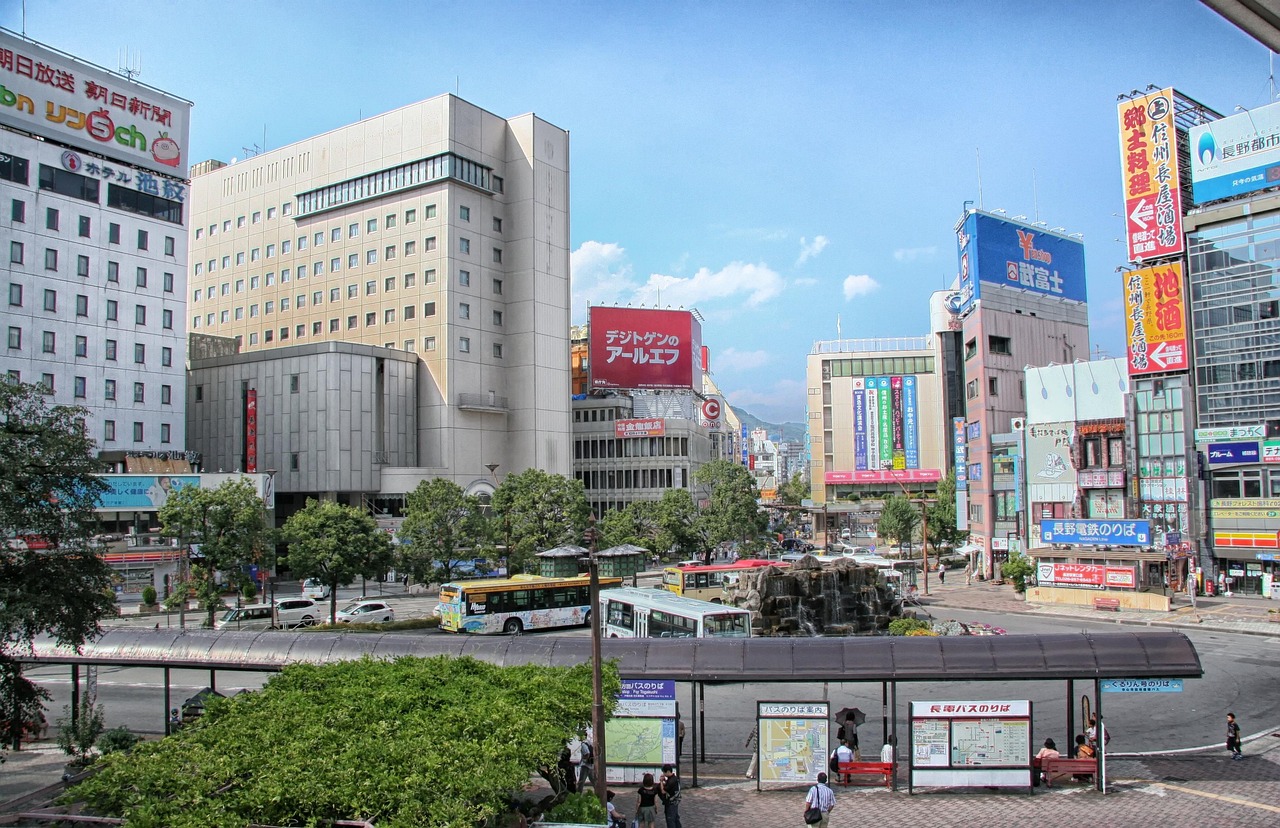
Nagano (長野), nestled in the highland interior of central Honshu, Japan, enjoys a cool continental climate with an annual average temperature of around 12°C. The city experiences four distinct seasons with a wide annual temperature range — summers (July–August) can reach highs of 28–30°C with occasional cloudy, humid days, while winters (December–February) drop to lows of -4 to -8°C with heavy snowfall. Nagano famously hosted the 1998 Winter Olympics, a testament to its world-class ski conditions. Spring (April–May) and autumn (September–October) offer mild, clear weather ideal for sightseeing. Note that temperatures vary significantly by elevation, so even in summer, a warm layer is essential for mountain areas.
Seasonal Weather in Nagano
Spring (March – May)
Temperatures gradually rise from March, reaching a high of around 10°C by late March and peaking at 23°C (high) / 11°C (low) in May. Residual snow can linger into early March, but cherry blossoms begin to bloom in April, transforming the city into a pastel wonderland. Cedar and cypress pollen season peaks during this period, so allergy sufferers should pack masks. Rainfall is at its lowest of the year (roughly 35% chance of rain in May), making it the most reliable season for outdoor sightseeing.
Summer (June – August)
Japan’s rainy season (tsuyu) affects Nagano from June through early July, with rainfall probability reaching approximately 54% in July — the highest of the year. Once the rainy season ends in mid-July, temperatures climb to 27–28°C, but Nagano’s high elevation keeps it noticeably cooler than Tokyo or Osaka. Highland resorts like Karuizawa hover around a pleasant 25°C, making them popular summer retreats. Always pack a warm layer for trekking in the Northern Alps (Kita Alps), where temperatures can drop sharply even in peak summer.
Autumn (September – November)
The summer heat eases into September, with highs around 25°C, before settling into October’s comfortable range of 17°C (high) / 8°C (low). Autumn foliage begins painting the Northern Alps and Kamikochi from mid-October, reaching peak color in late October. With a rainfall probability of only about 34% and over 11 hours of daily sunshine, autumn rivals spring as Nagano’s best travel season. By late November, temperatures plunge and the first snow arrives in the mountain villages.
Winter (December – February)
Nagano winters rank among Japan’s most severe, with January highs of just 0–2°C and lows down to -4 to -7°C. Cold, moist air flowing down from the Northern Alps delivers exceptional snowfall, supporting world-class ski resorts such as Hakuba, Shiga Kogen, and Nozawa Onsen. Snow-covered Zenkoji Temple and the white-draped Northern Alps offer breathtaking winter scenery, making this season a dream for skiers, snowboarders, and Snow Monkey (Jigokudani Wild Monkey Park) visitors alike. Anti-slip boots and heavy winter gear are non-negotiable for getting around the city safely.
Best Time to Visit Nagano
Spring (April–May) and autumn (October–early November) are widely considered the best times to visit Nagano. In spring, cherry blossoms peak around early-to-mid April, adorning Zenkoji Temple and Matsumoto Castle with soft pink blooms — and seasonal Shinshu soba makes for a perfect culinary backdrop. Autumn brings the most spectacular foliage in the Northern Alps, Kamikochi, and Momiji Lake from mid-to-late October, alongside apple and grape harvest experiences unique to Nagano. Rainfall is minimal and skies are clear, making outdoor activities a joy.
Summer (July–August) is ideal for travelers seeking a cool highland escape, with hiking and trekking in Hakuba and Karuizawa. However, the rainy season from June to early July means more overcast, wet days — plan accordingly.
Winter (December–March) is the season of choice for skiers, snowboarders, and Snow Monkey enthusiasts. Despite the bitter cold, the combination of steaming outdoor hot springs (onsen) and snow-laden temple scenery gives Nagano an unmatched winter charm.
Overall recommendation for first-time visitors: mid-to-late October, when autumn foliage is at its absolute peak, the weather is clear, and crowds are manageable.
Monthly Weather & What to Wear
January
The coldest month of the year, with average highs of 2–4°C and lows reaching -4 to -7°C, accompanied by frequent snowfall. Ski and snowboard season hits its peak, and it’s the best time to spot the famous Snow Monkeys at Jigokudani.
What to wear: Heavy down parka, double-layer thermal underwear (Heattech), waterproof snow boots, gloves, scarf, and knit beanie — full winter gear is essential.
February
Similar bitter cold continues, with highs of 3–5°C and lows of -4 to -6°C. Snow accumulation is at its deepest, keeping ski resorts like Hakuba and Shiga Kogen in prime condition.
What to wear: Same as January — thick insulated parka and waterproof snow boots with anti-slip soles for icy roads.
March
Temperatures begin to recover, reaching highs of 8–10°C and lows of 0–2°C. Mornings and evenings still carry a chill, and snow lingers in mountain areas. Plum blossoms start to appear from late March.
What to wear: Light down jacket or heavy wool coat over thermal base layer; layering is key, and always carry warm accessories for evening outings.
April
Cherry blossom season arrives, with comfortable highs of 16–18°C and lows of 5–7°C. Temperature swings between morning and afternoon can be significant.
What to wear: Long-sleeve shirt with a spring jacket or cardigan; light sneakers work well. Bring a mask if you’re prone to pollen allergies.
May
The most pleasant month, with highs of 22–23°C and lows of 11–12°C. Clear skies, low rainfall, and fresh greenery make outdoor activities a delight.
What to wear: Light shirt (short or long sleeve) with a thin jacket for mornings and evenings; comfortable walking shoes.
June
The rainy season begins, bringing humid conditions with highs of 25–26°C and lows of 15–16°C. Rain is frequent.
What to wear: Breathable short-sleeve shirt or light long-sleeve top; carry a compact umbrella or rain jacket. Pack a thin cardigan for air-conditioned indoor spaces.
July
The rainy season ends around mid-July, giving way to full summer. Highs reach 28–30°C in the city, but highland areas like Karuizawa stay around a refreshing 25°C.
What to wear: T-shirt and shorts for the city; windproof and waterproof jacket is a must for hiking in the Northern Alps or Kamikochi.
August
The hottest month, with highs of 28–30°C and an average of 22°C, though mornings and evenings remain noticeably cooler.
What to wear: T-shirt, shorts, wide-brim hat, sunglasses, and sunscreen. For mountain areas above 2,000m, pack a fleece or windbreaker — temperatures can drop below 15°C.
September
Summer heat gradually eases, with highs around 24–25°C and lows of 16–18°C. Typhoons and heavy rain are possible in early September.
What to wear: Layered look — short-sleeve shirt under a light long-sleeve shirt; add a thin jacket as the month progresses. Keep a foldable umbrella handy.
October
Peak autumn foliage month, with highs of 17–19°C and lows of 8–9°C. Clear skies and stunning scenery throughout. The temperature gap between day and night exceeds 10°C.
What to wear: Autumn jacket or light knit sweater during the day; medium-weight coat or padded vest for evenings. Wind-resistant jacket and light gloves for mountain areas.
November
A rapid drop in temperature brings early-winter conditions, with highs of 11–13°C and lows of 3–5°C. First snow appears in mountain areas by late November.
What to wear: Heavy coat or light puffer jacket, thermal base layer, knit sweater, scarf, and light gloves.
December
Full winter sets in with highs of 6–8°C and lows of -1 to -3°C. Ski resorts begin opening, and snow blankets Zenkoji Temple and Matsumoto Castle.
What to wear: Heavy down coat, waterproof snow boots, gloves, scarf, and knit hat — full winter outfit required. Anti-slip boot soles are essential for icy sidewalks.
Nagano Monthly Climate Data
| Month | Avg High (°C) | Avg Low (°C) | Rainfall (mm) | Snowfall (cm) | Humidity (%) |
| Jan | 3.8 | -3.9 | 54.6 | 63 | 79 |
| Feb | 5.3 | -3.7 | 49.1 | 50 | 74 |
| Mar | 10.3 | -0.5 | 60.1 | 17 | 68 |
| Apr | 17.4 | 4.9 | 56.9 | 2 | 61 |
| May | 23.2 | 10.9 | 69.3 | 0 | 63 |
| Jun | 26.1 | 16.1 | 106.1 | 0 | 71 |
| Jul | 29.7 | 20.5 | 137.7 | 0 | 75 |
| Aug | 31.1 | 21.5 | 111.8 | 0 | 73 |
| Sep | 26.2 | 17.2 | 125.5 | 0 | 74 |
| Oct | 19.7 | 10.3 | 100.3 | 0 | 75 |
| Nov | 13.4 | 3.4 | 44.4 | 1 | 76 |
| Dec | 6.9 | -1.5 | 49.4 | 30 | 79 |
| Annual | 17.8 | 7.9 | 965.1 | 163 | 72 |