
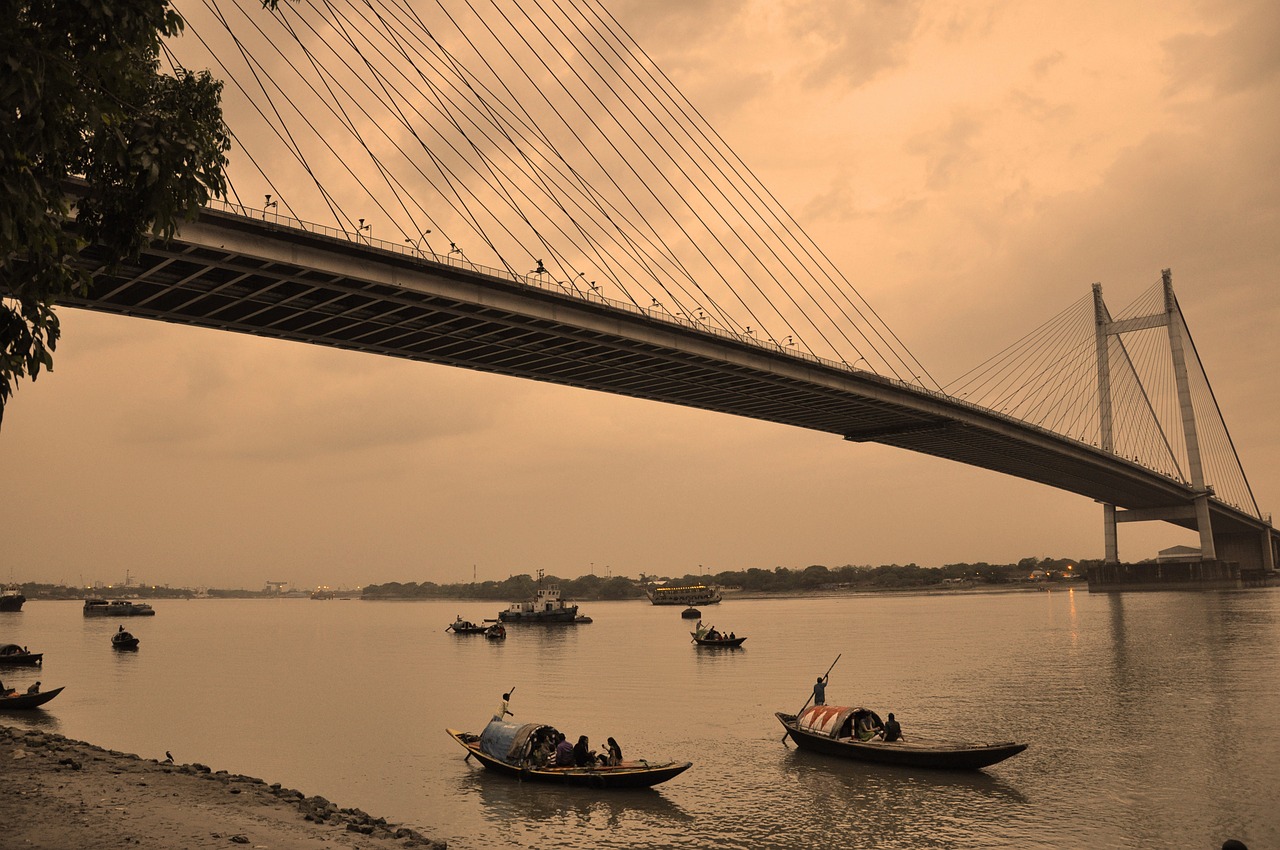
Kolkata belongs to a tropical savanna climate, divided into three distinct seasons throughout the year. From June to September, the southwest monsoon brings a prolonged rainy season, with annual rainfall exceeding 1,500mm — particularly in July and August, when monthly precipitation surpasses 300mm, frequently causing urban flooding. From March to June, the hot and dry summer pushes temperatures to 33–36°C, occasionally approaching 40°C in May. In contrast, winter from December to February is relatively cool and dry, with lows of 10–14°C and highs of 25–27°C, making it the most popular time to visit. Cyclones from the Bay of Bengal can also make landfall around the transition periods of the rainy season, so caution is advised.
Seasonal Weather in Kolkata
Kolkata’s climate is broadly divided into three seasons: winter (dry season), summer (extreme heat), and monsoon (rainy season).
Winter (November – February)
Winter is the most pleasant and travel-friendly season in Kolkata. January temperatures range from a low of 13–14°C to a high of 26–27°C, with very little rainfall — just 7–17mm per month. Cool breezes can pick up at night, so a light jacket or hoodie is recommended, though heavy winter clothing is unnecessary. In recent years, warmer-than-usual December days have been increasingly common due to climate change, with temperatures briefly dipping in January before rising again.
Summer (March – May)
Temperatures begin climbing rapidly from March, exceeding 36°C by April and remaining around that level through May — the hottest month of the year. When high humidity is factored in, the heat index can feel significantly higher than the actual temperature; locals have been known to describe it as feeling up to 55°C. Outdoor activities become extremely difficult during this period, and it’s essential to stay well-hydrated and take precautions against heat stroke.
Monsoon (June – September)
The southwest monsoon arrives in full force in June, bringing intense rainfall. Monthly precipitation peaks at around 260mm in June, 332mm in July, and 329mm in August — with the vast majority of the annual rainfall concentrated in these four months. Thunderstorms are frequent, leading to flooding across the city, and tropical cyclones from the Bay of Bengal can occasionally make landfall during this period. While temperatures (32–34°C max) are slightly lower than summer, the extreme humidity keeps conditions extremely uncomfortable.
Transition Season (October – Early November)
October marks the post-monsoon transition, with rainfall decreasing to around 151mm as conditions gradually dry out. Temperatures stabilize and the weather becomes more travel-friendly, though lingering warmth can persist. By November, highs settle around 29–30°C, rainfall drops below 17mm per month, and Kolkata eases into full winter.
Best Time to Visit Kolkata
The best time to visit Kolkata is late October through February, when dry and mild weather follows the retreat of the monsoon.
Peak Season: Late October – February
From late October, temperatures stabilize with comfortable highs of 25–30°C and lows of 13–17°C through February. Rainfall is minimal and humidity is low, making it ideal for outdoor sightseeing, walking tours, and exploring local markets. October is also when the city’s biggest festival — Durga Puja — takes place, filling the streets with elaborate decorations and vibrant cultural events, making it an especially popular time to visit.
Secondary Season: Early March – Early April
Temperatures begin rising after February but haven’t yet reached extreme levels, so sightseeing remains manageable. However, once April arrives, the heat rises sharply above 35°C, so if traveling during this window, plan activities for the early morning or evening hours.
Seasons to Avoid: May – September
May is the hottest month of the year, and June through September is the monsoon season — the most challenging period for travelers. The combination of extreme heat, high humidity, urban flooding, and the risk of cyclones can severely disrupt any travel itinerary. That said, budget travelers and backpackers may find this period appealing for its lower costs and lush, dramatic scenery.
Monthly Weather & What to Wear
January | Low: 13.9°C / High: 26.6°C / Rainfall: 16.8mm
The coolest month of the year with clear, dry days. Wear a light cardigan or long-sleeved shirt as a base, and layer with a thin jacket to handle the morning and evening chill.
February | Low: 16.9°C / High: 29.7°C / Rainfall: 22.9mm
Warming up from January, still dry and comfortable. Long-sleeved tops or light blouses work well; carry a light outer layer for cooler mornings.
March | Low: 21.7°C / High: 34°C / Rainfall: 32.8mm
Heat starts to build. Opt for breathable short-sleeved tops with lightweight trousers. A thin long-sleeved layer can help with sun protection during the day.
April | Low: 25.1°C / High: 36.3°C / Rainfall: 47.7mm
One of the hottest months. Lightweight linen or cotton short-sleeves and shorts are essential. Sunscreen, a hat, and sunglasses are must-haves for any outdoor activity.
May | Low: 26.4°C / High: 36°C / Rainfall: 101.7mm
Peak of the hot season with rising humidity. Moisture-wicking fabrics in short-sleeves and shorts are ideal. Stay hydrated at all times when going outside.
June | Low: 26.5°C / High: 34.1°C / Rainfall: 259.9mm
Monsoon begins, rainfall surges dramatically. Light short-sleeved tops combined with a waterproof windbreaker are recommended. A compact umbrella or poncho is non-negotiable.
July | Low: 26.1°C / High: 32.2°C / Rainfall: 331.8mm
The wettest month of the year, with near-daily thunderstorms. Wear quick-dry fabrics and waterproof sandals or water-resistant footwear. Always carry a rain poncho.
August | Low: 26.1°C / High: 32°C / Rainfall: 328.8mm
Similar to July — heavy rain continues with intense humidity. Quick-dry clothing, waterproof shoes, and a rain poncho are essential; non-slip footwear is also strongly advised.
September | Low: 25.8°C / High: 32.2°C / Rainfall: 295.9mm
Still rainy, but conditions begin to ease toward month’s end. Light short-sleeves with breathable trousers, plus an umbrella, are a good combination as you gradually resume outdoor activities.
October | Low: 24°C / High: 31.9°C / Rainfall: 151.3mm
Post-monsoon skies clear up and pleasant days return. Durga Puja festival takes place this month. Short-sleeves are fine during the day; bring a light cardigan or long-sleeved shirt for the evenings.
November | Low: 18.9°C / High: 29.8°C / Rainfall: 17.2mm
Dry, clear, and comfortable — great for travel. Light short or long-sleeved tops during the day, with a cardigan or thin jacket for morning and evening temperature drops.
December | Low: 14.3°C / High: 27°C / Rainfall: 7.4mm
The driest month of the year and perfect for sightseeing. A light long-sleeved top or cardigan during the day, and a light jacket or hoodie for cooler mornings and evenings — no heavy winter coat needed.
Weather Warnings & Travel Tips
The biggest weather hazard in Kolkata is extreme heat combined with high humidity. During the April–May hot season, maximum temperatures exceed 36°C, and when humidity is added, the heat index can reach 40°C or more — sometimes feeling as intense as 55°C. The risk of heat stroke and dehydration is extremely high, so outdoor activities should be minimized and regular fluid and electrolyte intake is essential.
During the June–September monsoon, monthly rainfall exceeding 300mm frequently causes urban flooding and traffic disruptions. If a tropical cyclone from the Bay of Bengal makes landfall, travel plans can be completely derailed — always check weather alerts before departure. Even during the dry winter season, air pollution and smog can worsen, so those with respiratory conditions should carry a mask.
Year-round, the high humidity makes breathable cotton or linen clothing the smart choice. During monsoon season, waterproof sandals and a rain poncho or umbrella are absolute essentials for getting around the city.