
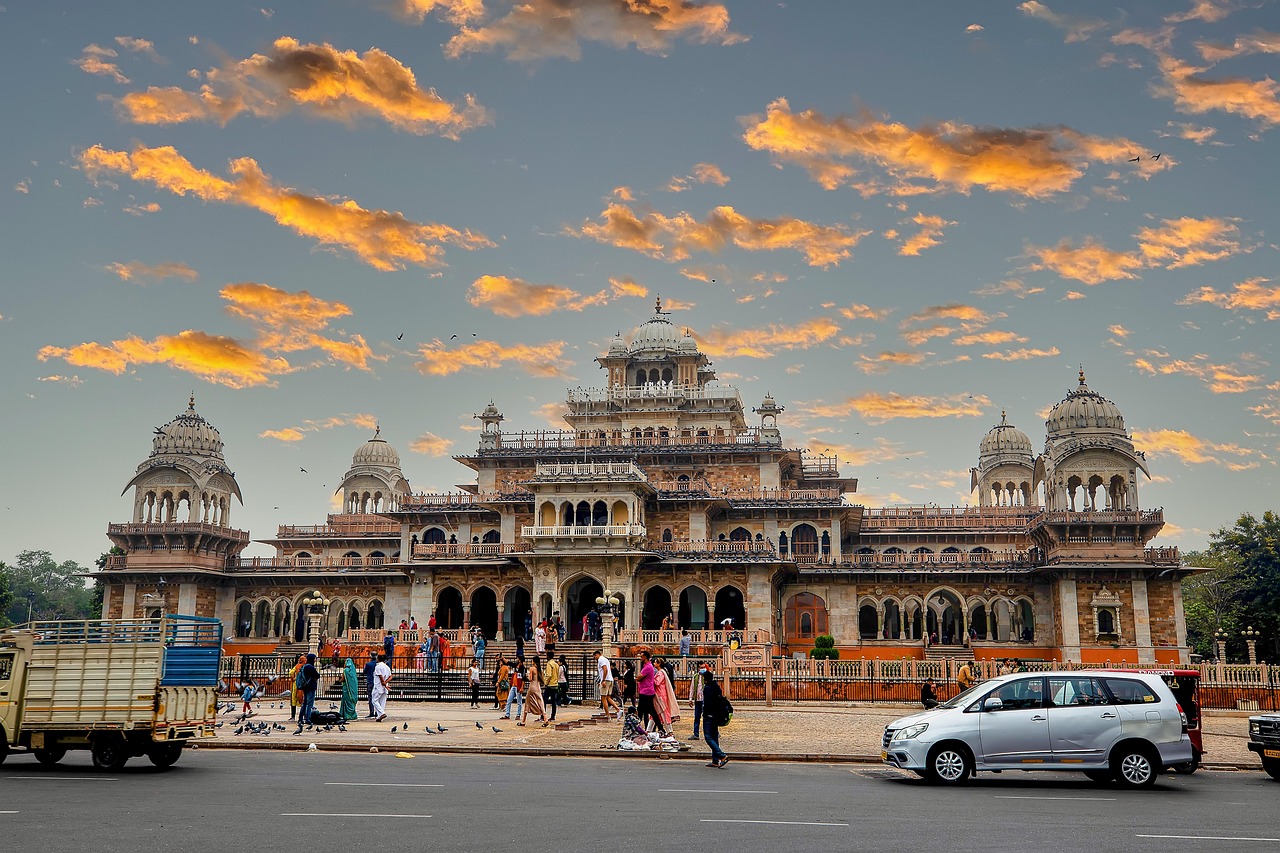
Jaipur, located in the state of Rajasthan in northwestern India, has a semi-arid climate with dramatic temperature swings throughout the year and three distinct seasons: a scorching summer, a monsoon, and a pleasant winter.
Summer (April–June) brings extreme heat with average highs reaching 39–41°C, while the monsoon (July–September) delivers concentrated rainfall — July alone sees rain on up to 21 days. Winter (October–March) offers the most comfortable conditions, with average temperatures of 9–25°C. December through February is particularly pleasant during the day at around 20°C, though nights can dip to 9°C, so a light jacket is recommended.
Jaipur’s Weather by Season
Spring / Early Summer (March–June)
March brings average highs of 31°C and lows of 18°C. With only about 3 rainy days, it’s dry and sunny — the last comfortably cool month for outdoor sightseeing. A light long-sleeve shirt or thin jacket is all you need.
April sees temperatures soar to 37°C with virtually zero rainfall — one of the driest and hottest months of the year. Sandstorms (called “Andhi”) can blow through without warning.
May is the hottest month of the year, with average highs of 39°C and lows of 26°C. Hot, dry winds make outdoor activities extremely challenging.
June stays intensely hot at around 38°C while the approaching monsoon pushes rainy days up to 7. Humidity begins to rise noticeably.
What to Wear: Breathable linen or cotton short-sleeves, wide-brim hat, sunglasses, and SPF 50+ sunscreen are essential. Avoid outdoor activities between 12–4 PM and stay hydrated.
Monsoon (July–September)
July marks the full arrival of the monsoon, with rain falling on up to 21 days and total rainfall reaching 214mm. Temperatures drop slightly to a high of 33°C, but humidity skyrockets above 80%, making it feel even hotter.
August is the wettest month of the year with 231mm of rainfall over 18 rainy days. Road flooding and waterlogging are common risks.
September sees the monsoon gradually weaken — rainfall drops to 101mm over 12 days, and skies start to clear toward the end of the month.
What to Wear: Waterproof jacket or rain poncho, waterproof shoes or sandals, quick-dry short-sleeves, long pants (for mosquito protection), umbrella, and insect repellent.
Autumn (October–November)
October signals the end of the monsoon, with rainy days plummeting to just 3. Average highs of 32°C still feel warm during the day, but mornings and evenings become noticeably more pleasant.
November is one of the best months to visit Jaipur, with average highs of 27°C and lows of 15°C. With only 1 rainy day, clear blue skies dominate. The Jaipur Literature Festival and other cultural events are concentrated during this period.
What to Wear: Short-sleeves or light long-sleeves during the day, thin jacket or cardigan for evenings, comfortable walking shoes, sunscreen, and a light scarf for temple visits.
Winter (December–February)
December is one of the most enjoyable months, with average highs of 23°C and lows of 11°C. With just 1 rainy day, you can spend the entire day exploring Amber Fort, Hawa Mahal, and City Palace under clear skies.
January is the coldest month, with average highs of 21°C and lows of 9°C. Temperatures can dip to 5°C at night due to the desert terrain of Rajasthan. Days can feel warm enough for short-sleeves, but evenings demand a heavy coat.
February brings a gradual warm-up, with highs of 26°C and lows of 13°C — the golden finale of Jaipur’s travel season. The Jaipur Literature Festival (one of the world’s largest) and the Kite Festival (Makar Sankranti) both take place around this time.
What to Wear: Light short-sleeves or long-sleeves during the day, heavy coat and scarf for evenings — layering is key. Don’t forget sunglasses and comfortable walking shoes.
Best Time to Visit Jaipur
The best time to visit Jaipur is October through March — a full six months that make up the city’s official tourist season.
October–November sees the monsoon retreat and skies turn brilliantly clear. With temperatures between 20–32°C and low humidity, you can comfortably explore outdoor landmarks all day long. The highlight of this period is Diwali (Festival of Lights) in late October to early November, when the entire Pink City is draped in dazzling illuminations — a truly unforgettable spectacle.
December–February is Jaipur’s peak travel season. Average temperatures of 9–23°C make walking tours a delight, and with only 1–2 rainy days per month, the contrast of pink sandstone architecture against clear blue skies is absolutely stunning. January and February also host the world-renowned Jaipur Literature Festival and the vibrant Kite Festival (Makar Sankranti), adding rich cultural experiences to your trip.
March is the last comfortable month before the heat takes hold, with highs around 31°C, just 3 rainy days, and plenty of sunshine — ideal for those who want to beat the peak-season crowds.
On the flip side, April–June brings relentless heat above 39°C with sand storms, making outdoor exploration very difficult. July–September is the monsoon season with up to 21 rainy days per month — generally not recommended for sightseeing. That said, this off-season comes with hotel rates up to 40–50% cheaper for budget-conscious travelers.
Jaipur Monthly Climate Data
| Month | Avg High (°C) | Avg Low (°C) | Rainfall (mm) | Humidity (%) |
| January | 22 | 8 | 8 | 53 |
| February | 26 | 11 | 10 | 47 |
| March | 31 | 15 | 5 | 38 |
| April | 37 | 21 | 8 | 25 |
| May | 41 | 27 | 13 | 28 |
| June | 39 | 28 | 55 | 44 |
| July | 34 | 26 | 214 | 77 |
| August | 32 | 24 | 231 | 80 |
| September | 33 | 23 | 101 | 65 |
| October | 33 | 18 | 23 | 43 |
| November | 29 | 12 | 4 | 44 |
| December | 24 | 9 | 3 | 52 |