
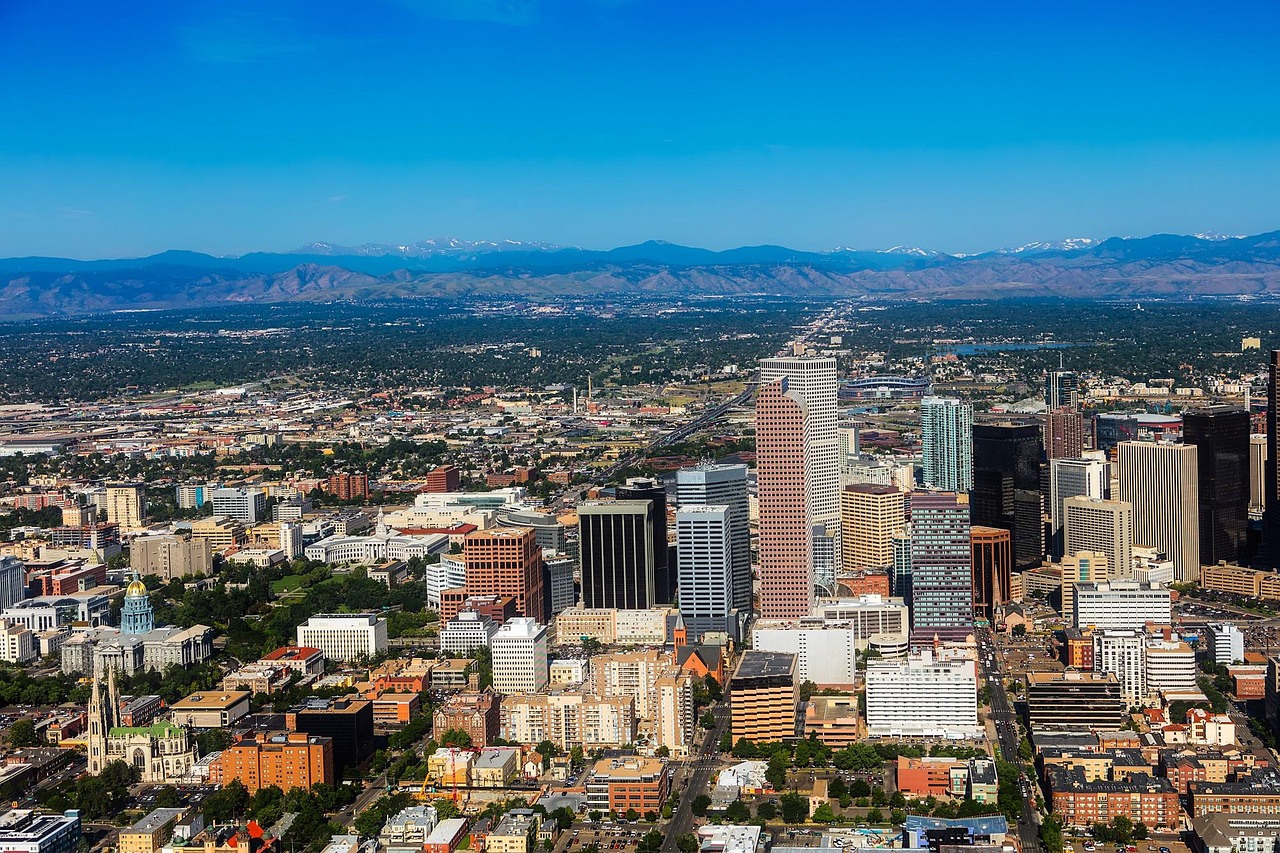
Denver, the capital of Colorado, lives up to its nickname “The Mile High City” thanks to its remarkably high elevation. The overall climate is classified as semi-arid, with over 300 days of sunshine each year. Because the city sits at high altitude, the air is thin and dry, leading to dramatic temperature swings within a single day regardless of season.
Denver Weather by Season
Unpredictable Denver Weather in Spring (March–May)
Denver’s spring is notorious for its unpredictability. Warm sunshine can give way to sudden snowstorms, earning this period the nickname “winter and summer colliding.” Humidity stays low, so shaded areas feel cool, but the high altitude makes direct sunlight feel more intense than expected.
Pleasant and Sunny Denver Weather in Summer (June–August)
Summer daytime temperatures run high, but very low humidity keeps the heat comfortable rather than oppressive. Late afternoons often bring short, intense monsoon-driven thunderstorms that help cool things down. Nighttime temperatures drop significantly, so there’s no need to worry about sweltering nights.
Golden Denver Weather in Fall (September–November)
Fall is often called Denver’s golden season, with clear skies and crisp air lasting for weeks. Low humidity and clean air make this the ideal time to see the changing colors in the Rocky Mountains. Starting in October, though, early unexpected snow is possible, so travelers should prepare for wide daily temperature swings.
Clear and Dry Denver Weather in Winter (December–February)
Denver winters are milder than many expect, and snow tends to melt quickly thanks to strong sunshine even in cold months. The dry air makes the cold feel less harsh than the actual temperature suggests, though cold winds descending from the mountains can cause sharp temperature drops. This is also prime season for skiing and snowboarding, with excellent snow conditions.
Best Time to Visit Denver
The best time to visit Denver is from mid-June to early September, when weather is most stable and ideal for hiking, outdoor concerts, and other activities. Late September through early October is also a great choice, offering comfortable temperatures alongside beautiful fall foliage. On the other hand, March and April can bring sudden snowstorms that disrupt plans, so outdoor-activity-focused travelers may want to avoid these months.
Month-by-Month Weather and Clothing Recommendations
Denver Weather in January
One of the coldest months, with average highs of 7–9°C and lows of -8 to -6°C. Sunny days are common, so sunlight feels warm, but the air remains cold and very dry. Pack a heavy coat or parka along with a scarf and gloves.
Denver Weather in February
Similar temperatures to January, with occasional strong snowstorms. Daytime temperatures often rise above freezing, making outdoor activities possible, though wind can make it feel much colder. Layering with thermal base layers and warm, insulated footwear is recommended.
Denver Weather in March
Statistically Denver’s snowiest month, with highly variable temperatures. Daytime highs can exceed 10°C while overnight snowstorms bring temperatures back below freezing. Wearing multiple thin layers along with waterproof outerwear and shoes is essential.
Denver Weather in April
Spring is clearly underway, but sudden cold spells and snow remain common. Average highs climb to 15–17°C, ideal for walking, though daily temperature swings can exceed 15°C. Pack a light jacket along with a warm sweater to handle the shifts.
Denver Weather in May
Vegetation turns green as average highs surpass 20°C, making conditions very pleasant. Colorado’s characteristic afternoon showers and thunderstorms can occasionally raise humidity briefly. Long-sleeve shirts with a light windbreaker are usually sufficient.
Denver Weather in June
Summer begins in earnest, with daytime highs reaching 27–29°C and long daylight hours. The high altitude makes sunlight feel intense outside the shade, but low humidity keeps sweating minimal. Short sleeves work well, but bring a cardigan for after sunset.
Denver Weather in July
Denver’s hottest month, with daytime highs frequently topping 30°C. Short, intense late-afternoon thunderstorms are common, so a compact umbrella is handy. Breathable summer clothing along with a hat and sunglasses for UV protection are essential.
Denver Weather in August
Similar to July, with hot, sunny days that make it a great time for hiking. Afternoon showers remain likely but pass quickly, revealing clear skies again. Lightweight, functional outdoor clothing and plenty of sunscreen are recommended.
Denver Weather in September
The summer heat fades, giving way to the most comfortable temperatures of the year (24–26°C) and making this a prime travel period. From mid-month onward, daily temperature swings widen again, and mountain foliage begins to change. A layered look—short sleeves by day, a light jacket for morning and evening—works well.
Denver Weather in October
Clear, crisp fall weather continues, though the first snow of the season may arrive by late month. Average highs hover around 18°C, but temperatures drop sharply after sunset, sometimes calling for winter-weight clothing. Pack a light puffer jacket or heavy cardigan to handle the shifting conditions.
Denver Weather in November
Winter approaches, with dry winds and single-digit temperatures becoming more frequent. Snowfall increases, and the very dry air can cause dry nose and throat discomfort. A warm coat along with moisturizer is a good idea.
Denver Weather in December
Full winter weather sets in, with frequent snow around the Christmas season. Thanks to the high-altitude climate, even sub-freezing temperatures can feel warmer once the sun comes out—a uniquely Denver experience. Pack a heavy coat and winter boots to stay fully prepared for the cold.
Denver Weather Precautions
-
Strong UV exposure: At roughly 1,600 meters elevation, UV levels run much higher than at sea level. Use sunscreen and sunglasses even on cloudy days to prevent sunburn.
-
Hydration and altitude sickness: The dry air and high elevation can cause dehydration or mild altitude sickness (headaches, dizziness). Drink significantly more water than usual.
-
Sharp daily temperature swings: Even on sunny days, temperatures often drop 15–20°C or more after sunset. Always keep an extra layer in your bag.
-
Lightning safety: Summer afternoon thunderstorms frequently bring lightning. If you hear thunder during outdoor activities, move indoors or into a vehicle immediately.
Denver Monthly Climate Data (Typical Averages)
Denver Weather FAQ
Q1. Does Denver get heavy snow all year round?
A. Denver sees frequent snow in winter and early spring, but strong sunshine typically melts it within a few days. Road snow removal is also very efficient, so getting around the city rarely poses major problems.
Q2. Is Denver humid in summer?
A. No, Denver summers are quite dry. Even at high temperatures, there’s little stickiness, and shaded areas feel comfortable since sweat evaporates quickly.
Q3. How can I prepare for altitude sickness?
A. Avoid strenuous activity right after arrival and drink plenty of water. Reducing alcohol intake and eating carbohydrate-rich meals can also help your body adjust to the altitude.
Q4. Do I need to bring an umbrella?
A. Sudden afternoon showers are common in summer, so a small folding umbrella or light rain jacket comes in handy. Since winds can be strong, a hooded waterproof jacket is often more practical than an umbrella.
Q5. How big are Denver’s daily temperature swings?
A. Depending on the season, day-to-night temperature differences often exceed 15–20°C. Even in summer, a light long-sleeve layer is useful, and in spring and fall, having both a light layer and a heavier coat on hand is the smart approach.