
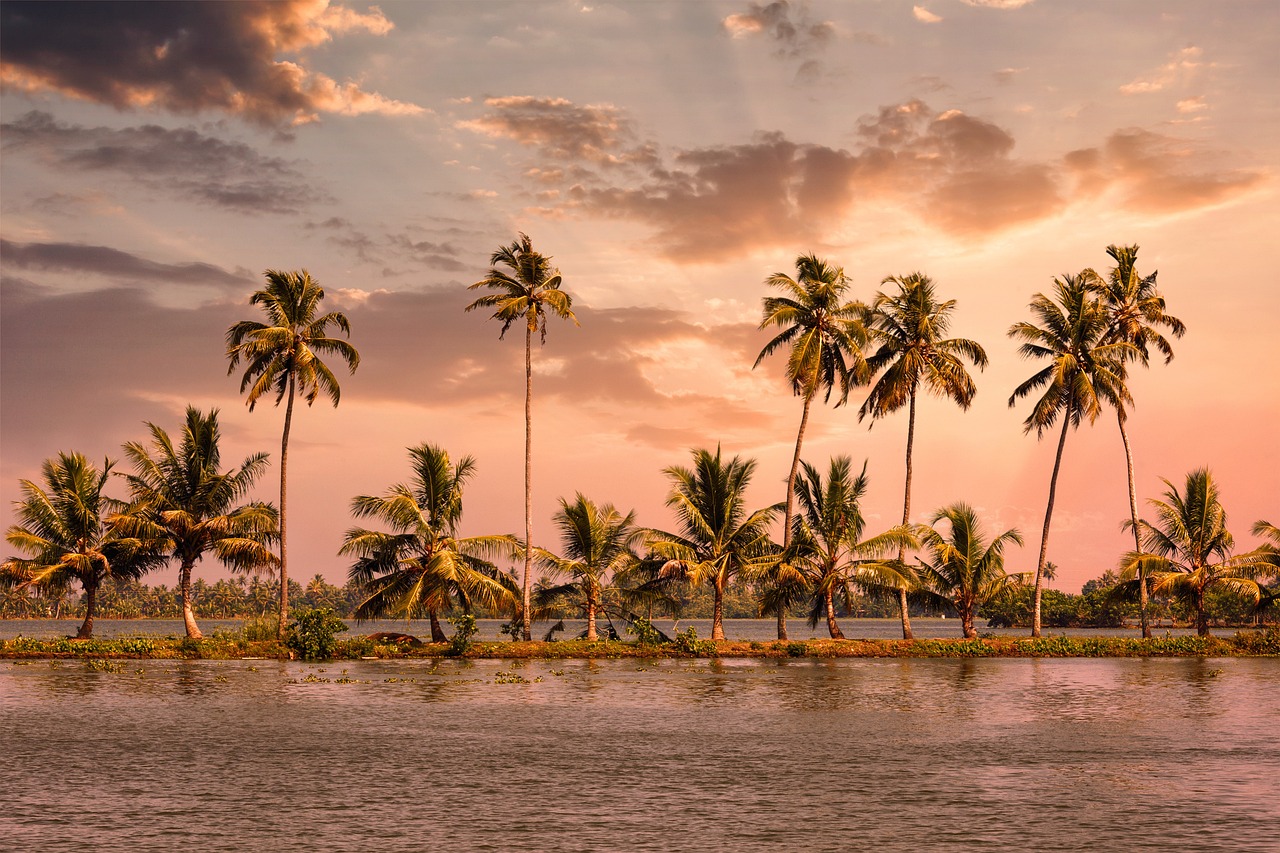
Kerala has a tropical monsoon climate, with temperatures ranging between 22°C and 34°C year-round, broadly divided into four seasons. The dry season (October–January) is the most comfortable period, with temperatures hovering between 18°C and 28°C — the prime time for tourism. The hot season (February–May) sees temperatures climb to 24–34°C, while the monsoon season (June–September) brings some of the heaviest rainfall in India, with monthly precipitation reaching up to 726mm. Annual total rainfall stands at approximately 2,923mm, with the Western Ghats acting as a barrier that concentrates rainfall inland. This abundance of rain keeps Kerala blanketed in lush greenery year-round and sustains rich crops of coconuts, rubber, pepper, and coffee.
Seasonal Weather in Kerala
Kerala’s year is divided into four distinct seasons: Dry Season (Winter), Hot Season (Summer), Southwest Monsoon, and Northeast Monsoon.
Dry Season / Winter (November – January)
This is the best time to visit Kerala. Daily highs sit at a comfortable 30–31°C and lows at 22–23°C, while monthly rainfall is a mere 8–37mm — making for clear, dry days in abundance. With calm seas and brilliant skies, this season is ideal for backwater tours, beach holidays, and all outdoor activities, and marks the peak tourist season when visitors from around the world converge on the state.
Hot Season / Summer (February – May)
Temperatures reach their annual peak, with daily highs climbing to 32–34°C alongside rising humidity that makes the heat feel considerably more oppressive. April and May are the most uncomfortable months, with both temperature and humidity at their highest and sporadic afternoon downpours beginning to arrive. That said, Kerala never experiences the extreme heatwaves (40°C+) seen in northern India, and highland destinations such as Munnar in the Western Ghats remain refreshingly cool and popular even at this time of year.
Southwest Monsoon (June – September)
Kerala is the first state in India to receive the southwest monsoon, which sweeps in from the Arabian Sea in early June. Monthly rainfall peaks at approximately 650mm in June and 726mm in July — among the highest in the entire country. While temperatures actually dip slightly to 29–30°C compared to the hot season, humidity surges to nearly 90%, creating a sauna-like environment. Heavy rains bring risks of flooding and landslides that can restrict travel. On the positive side, the landscape transforms into an extraordinary tapestry of deep green, and this is considered the most effective season for Ayurvedic treatments — many Kerala Ayurveda resorts run their most intensive programmes during the monsoon.
Northeast Monsoon (October – November)
A second wave of rainfall arrives from the northeast after the southwest monsoon retreats. October sees around 292mm of rain, and November around 151mm — less intense than the southwest monsoon, but still frequent. Temperatures gradually ease to around 30°C during the day, and from late November onwards sunny days become more common, marking the transition into the peak tourist season. Rural landscapes are verdant and beautiful, and attractions are less crowded — making this a rewarding period for travellers who prefer a more relaxed pace.
Best Time to Visit Kerala
The dry season from November to February is the absolute best time to visit Kerala. Temperatures of 22–31°C, minimal rainfall, calm seas, and clear skies create the perfect conditions for experiencing everything Kerala has to offer — from backwater houseboat cruises and beach holidays to jungle treks and wildlife safaris. December and January are the absolute peak, and travellers planning to visit then should book accommodation and houseboats at least 2–3 months in advance.
For budget-conscious travellers, late October and early March offer an excellent compromise. These shoulder seasons sit just outside the peak window, meaning fewer crowds, lower accommodation prices, and still-pleasant weather. Late October in particular is especially photogenic, as the landscape remains lush and green after the rains while the skies begin to clear.
Travellers seeking Ayurvedic healing or wellness retreats are actually better served by the monsoon season (June–September). Traditional Ayurvedic medicine holds that the high humidity and cooler temperatures of the monsoon open the body’s pores and maximise the absorption of herbal medicines — and in practice, Kerala’s Ayurveda resorts offer their most concentrated treatment programmes during this period. Just be sure to build flexibility into your itinerary to account for heavy rain, potential flooding, and transport disruptions. Conversely, midsummer (April–May) is the most challenging time for outdoor activities, as heat and humidity peak simultaneously. If visiting then, focus your itinerary on the cooler highland destinations of Munnar and Wayanad in the Western Ghats.
Monthly Weather & What to Wear
January
The most comfortable month of the year. Daily highs of 30–31°C and lows of 22–23°C, with virtually no rainfall and clear blue skies make this the golden window for travel — every attraction from beaches and backwaters to wildlife sanctuaries is at its best.
What to wear: Breathable short-sleeved T-shirts, shorts, and light linen dresses or trousers are ideal. Temperatures can feel mildly cool in the early morning and evening, so pack a thin cardigan for those moments. Always carry a scarf or sarong in your bag to cover shoulders and knees when visiting temples.
February
Temperatures begin to rise slightly, with daily highs reaching 31–32°C. Rainfall remains minimal and sunny weather continues, making February the tail end of the peak tourist season. Both outdoor activities and water sports are excellent at this time.
What to wear: The same light summer wardrobe as January works perfectly. As the sun grows stronger, sunscreen, sunglasses, and a wide-brimmed hat become essential.
March
The hot season begins in earnest, with daytime highs climbing to 32–33°C and humidity rising noticeably. As tourist numbers drop, accommodation prices fall and popular sites become less crowded — a welcome trade-off for those who can handle the heat.
What to wear: Choose light-coloured, moisture-wicking cotton or linen tops and shorts. Apply high-protection sunscreen (SPF 50+) and keep sunglasses handy at all times.
April
One of the hottest months in Kerala, with daytime highs of 33–35°C and humidity exceeding 80%, making the heat feel particularly intense. Sudden afternoon showers are common. Coastal areas are especially sweltering — the highlands of Munnar and Wayanad offer a far more pleasant escape.
What to wear: Opt for the lightest, most breathable fabrics available — sleeveless or short-sleeved tops, loose shorts, or wide-cut linen trousers. Pack both high-SPF sunscreen and a compact rain jacket or umbrella to handle the UV rays and unpredictable downpours.
May
The hottest and most humid month of the year, with highs around 34°C and a heat index that can make it feel close to 40°C. Pre-monsoon showers become increasingly frequent from mid-month onwards. Plan any outdoor activities for the early morning or evening when conditions are more bearable.
What to wear: Keep clothing as light and breathable as possible, and carry a waterproof rain jacket or compact umbrella at all times. With mosquito activity ramping up significantly, long-sleeved layers and insect repellent are strongly recommended.
June
The southwest monsoon makes its dramatic landfall in Kerala — the first state in India to experience it. Monthly rainfall of approximately 650mm means heavy rain falls on almost every day of the month. Temperatures actually ease slightly to 29–31°C compared to May, but humidity climbs to nearly 90%, creating an intensely muggy atmosphere.
What to wear: A reliable waterproof rain jacket or poncho is non-negotiable. Quick-dry polyester-blend fabrics are far more practical than cotton, which stays wet and heavy. Wear waterproof sandals or light rubber flip-flops, and store valuables in a waterproof bag or dry sack.
July
The wettest month of the year, with rainfall reaching 726mm — many days see heavy, sustained downpours from morning to night. Temperatures of 28–30°C are relatively mild, but extreme humidity makes it feel uncomfortable. Flooding can affect backwater regions and some beaches and ferry services may be suspended. The festive atmosphere begins to build in preparation for the Onam harvest festival.
What to wear: Same monsoon-ready essentials as June — waterproof outerwear and waterproof sandals are the priority. A thin long-sleeved quick-dry top adds a layer of comfort when soaked, and breathable underwear helps prevent skin irritation caused by persistent dampness.
August
Heavy rain continues but monthly totals ease slightly to 500–600mm. Temperatures hold at 28–30°C and brief windows of sunshine occasionally break through the clouds. The Onam festival — Kerala’s most important cultural celebration — falls in August, featuring spectacular snake boat races (Vallam Kali) and traditional festivities across the state.
What to wear: Continue with the monsoon wardrobe. If you plan to attend Onam celebrations, consider picking up a lightweight white Kerala-style outfit locally — it’s a wonderful way to participate in the festivities.
September
The southwest monsoon gradually retreats, and rainfall begins to diminish — monthly totals drop to approximately 292–350mm compared to the peak months. After the rains clear, the air is fresh and the landscape is at its most brilliantly green and photogenic. Temperatures nudge back up to 29–31°C.
What to wear: Keep a rain jacket or umbrella handy as showers remain frequent, but sunny spells are increasingly common — breathable short-sleeved tops make a good base layer. Reapply sunscreen on clearer days.
October
The transition from southwest to northeast monsoon. Southern Kerala still receives regular rain (around 292mm for the month), while northern areas begin to clear. Temperatures settle at a pleasant 29–31°C. From late October, the pre-peak season energy begins to return to tourist areas.
What to wear: Keep a light umbrella or rain jacket in your bag, but summer clothing is fine on clear days. A thin cardigan is useful for cool evenings after the rain.
November
The peak tourist season officially begins. Temperatures of 29–30°C by day and 22–23°C at night represent the most balanced weather of the year, rainfall drops sharply, and the seas calm — reopening beaches and backwater routes to their full potential.
What to wear: Light breathable tops, shorts, and thin dresses are all ideal. Pack one thin long-sleeved layer for cooler evenings. Keep a scarf or shawl accessible for temple visits.
December
Alongside January, December is the finest month to be in Kerala. Temperatures of 22–31°C, negligible rainfall, and a festive Christmas and New Year atmosphere make it magical. It is also the busiest and most expensive month — early booking is essential.
What to wear: Standard summer clothing — short-sleeved tops, light shorts, and linen trousers — is all you need. Pack one light jacket or layer for sea breezes in the early morning and evening. If you plan to visit upscale restaurants or Christmas events, bring one smarter outfit.
Monthly Climate Data (Kochi Reference)
| Month | Max Temp (°C) | Min Temp (°C) | Rainfall (mm) | Rainy Days | Season | Travel Rating |
| January | 30 | 22 | 23 | 1 | Dry Season | ⭐⭐⭐⭐⭐ |
| February | 31 | 23 | 31 | 1 | Dry Season | ⭐⭐⭐⭐⭐ |
| March | 32 | 24 | 52 | 3 | Hot Season | ⭐⭐⭐⭐ |
| April | 34 | 25 | 118 | 7 | Hot Season | ⭐⭐⭐ |
| May | 34 | 25 | 221 | 10 | Hot Season | ⭐⭐ |
| June | 30 | 24 | 650 | 17 | SW Monsoon | ⭐⭐ |
| July | 29 | 23 | 726 | 14 | SW Monsoon | ⭐ |
| August | 29 | 23 | 530 | 9 | SW Monsoon | ⭐ |
| September | 30 | 23 | 292 | 8 | SW Monsoon | ⭐⭐ |
| October | 30 | 23 | 292 | 12 | NE Monsoon | ⭐⭐⭐ |
| November | 30 | 23 | 151 | 9 | NE Monsoon | ⭐⭐⭐⭐ |
| December | 31 | 22 | 37 | 4 | Dry Season | ⭐⭐⭐⭐⭐ |