
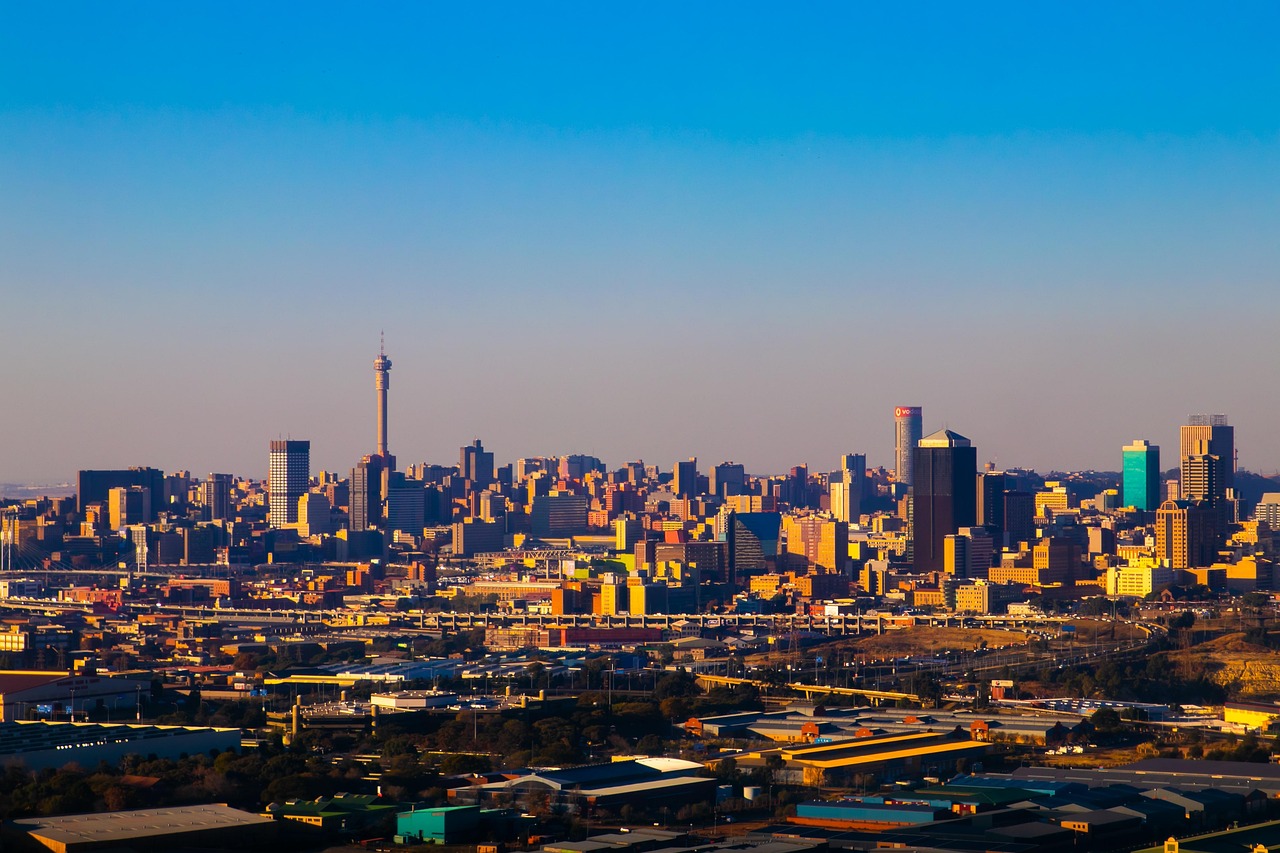
Johannesburg sits on a high plateau at approximately 1,694 meters above sea level, giving it a highland subtropical climate with annual temperatures ranging from as low as 2°C to as high as 26°C. Because the city lies in the Southern Hemisphere, its seasons are reversed from those in the Northern Hemisphere — summer runs from November to February, characterized by warm temperatures and frequent afternoon thunderstorms, while winter falls between May and August, bringing dry and clear but often bitterly cold mornings and evenings. Johannesburg enjoys abundant sunshine throughout the year, averaging around 8.5 hours of sunlight per day, and the contrast between a distinct wet season (summer) and dry season (winter) is one of the city’s most defining climatic features.
Seasonal Weather in Johannesburg
Summer (November – February) — Wet Season, Hot with Frequent Showers
Summer in Johannesburg is the wettest time of year, with warm and generally pleasant daytime conditions regularly interrupted by intense afternoon thunderstorms. Average low temperatures sit between 13°C and 15°C, while highs reach 24°C to 26°C. Almost every afternoon between 3 PM and 5 PM, powerful thunderstorms roll in, dumping heavy rain for one to two hours before skies clear again. January is the wettest month, recording an average of 125mm of rainfall over about 16 rainy days. Despite the heat during the day, temperature swings of 10–11°C mean a light outer layer is advisable for evenings. A compact umbrella or waterproof jacket is absolutely essential during this season.
Autumn (March – May) — Transitioning into the Dry Season
Autumn is widely regarded as one of the best times to visit Johannesburg. March still sees temperatures averaging 13°C at night and 24°C during the day, with rainfall around 91mm, as the tail end of the wet season lingers. From April onward, however, conditions dry out noticeably — average highs drop to a comfortable 21°C and rainy days shrink to just 8–9. By May, rainfall is a mere 13mm over fewer than three days, marking the effective start of the dry season. Sunny, clear skies dominate, making outdoor sightseeing and safari trips a real pleasure. Daily temperature swings of 10–12°C mean layering remains important.
Winter (June – August) — Dry Season, Sunny but Frigid Mornings and Evenings
Johannesburg’s winter is defined by exceptionally dry, crystal-clear skies and dramatic temperature contrasts between day and night. June and July see average lows of just 4°C, with highs reaching 16–17°C at midday. Mornings and nights can drop below freezing — in July 2023, temperatures plunged to an extraordinary −4°C and the city experienced its first snowfall in 11 years. July is the driest month of the year, with only 4mm of rain over a single rainy day. Counterintuitively, UV levels remain high even in winter, so sunscreen is a must. Warm winter gear including a heavy jacket, gloves, hat, and scarf is essential, particularly for early-morning safari excursions.
Spring (September – October) — Largest Daily Temperature Swings of the Year
Spring marks the end of the dry season and a gradual shift back toward the wet season, producing the widest daily temperature ranges of the year. September sees lows of 9°C and highs of 23°C — a swing of up to 14°C in a single day — with mornings feeling brisk and afternoons warm enough for short sleeves. By October, average highs climb to 24°C and rainfall increases to 72mm, with afternoon showers beginning to return. This is also when Johannesburg bursts into color, as jacaranda trees lining the city’s streets bloom in spectacular shades of purple. It’s an excellent time for safaris and national park visits before the summer rains take hold. Layering is the key strategy for spring dressing.
Best Time to Visit Johannesburg
Overall Best: April – May (Autumn)
April and May, as the wet season winds down and the dry season begins, represent the sweet spot for visiting Johannesburg. Temperatures are mild — averaging 7–11°C at night and 21–23°C during the day — rainfall drops sharply to just 13–54mm, and long stretches of sunny, low-humidity weather make outdoor exploration supremely comfortable. The city is no longer battered by summer downpours, yet it hasn’t turned as cold as the depths of winter. This combination makes April and May ideal for first-time visitors.
Best for Safari: May – September (Dry Season)
If a safari to Kruger National Park or surrounding reserves is on your itinerary, the dry season from May to September is unquestionably the prime window. As vegetation dries out and water sources shrink, wildlife congregates around remaining watering holes, making animal sightings far more frequent and reliable. Sparse foliage also improves visibility dramatically. An added benefit is the significant drop in mosquito activity during the dry season, which reduces health risks. Note that early-morning game drives in July and August can be bitterly cold, with temperatures dropping to 4–6°C, so a heavyweight insulated jacket is non-negotiable.
Best for Culture & City Exploration: September – October (Spring)
Spring offers a compelling mix of comfortable weather and vibrant city life. Clear winter skies linger into September while temperatures begin to warm, and by October the city’s famous jacaranda trees are in full bloom, carpeting streets and parks in purple. Local cultural life picks up as residents return from winter retreats, filling theatres, galleries, and events. Bear in mind that showers start returning from October onward, so keep a light raincoat or umbrella handy.
Times to Avoid
The peak wet season from December to February brings daily afternoon thunderstorms that can disrupt outdoor plans, and December in particular sees peak-season hotel rates due to the Southern Hemisphere summer holidays. June through August winter mornings and evenings can feel uncomfortably cold for visitors who are underprepared, with sub-zero temperatures possible on the worst nights.
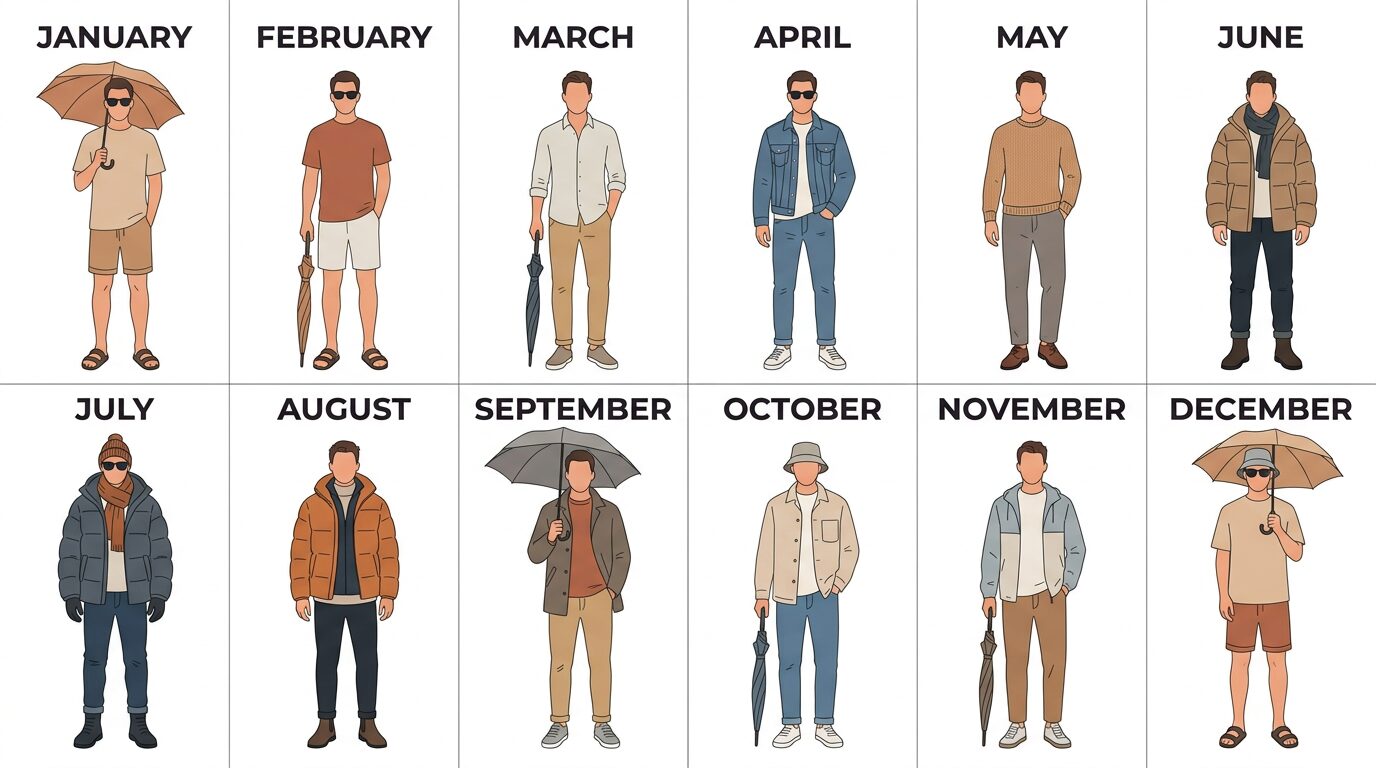
Monthly Weather & What to Wear
January — Midsummer, Peak Wet Season
The hottest and rainiest month, averaging 14°C at night and 26°C during the day, with 125mm of rainfall over roughly 16 days. Afternoons bring almost-daily thunderstorms between 3 and 5 PM. Wear light t-shirts and shorts, but always carry a compact umbrella or waterproof jacket. Bring a light cardigan for cooler evenings.
February — Summer, Showers Continue
Very similar to January, with averages of 14°C and 25°C and 90mm of rainfall. Afternoon downpours remain frequent. Stick with t-shirts and shorts, and keep your umbrella close. Sunglasses and sunscreen are essential.
March — Early Autumn, Showers Tapering Off
A transitional month with lows of 13°C and highs of 24°C, and still 91mm of rainfall. Days are warm but evenings cool noticeably. Mix short and long sleeves during the day, and pack a light jacket for the evening. An umbrella is still advisable.
April — Entering the Dry Season, Prime Travel Month
Rainfall drops to 54mm and conditions become noticeably drier and more comfortable, with lows of 10°C and highs of 21°C. Clear, sunny days make this one of the best months to visit. Wear long-sleeve shirts and jeans, with a thin jacket or cardigan for mornings and evenings. Sunglasses and sunscreen remain important.
May — Dry Season Proper, Big Temperature Swings
Only 13mm of rain falls all month, confirming the start of the dry season. Days are pleasant at up to 19°C, but mornings and evenings dip to around 7°C. Long-sleeve shirts with a light jacket work during the day, but a heavier jacket or sweater is needed for early mornings and after dark. Layering is essential.
June — Winter Begins, Dry and Sunny
The Southern Hemisphere winter arrives, with lows of 4°C and highs of 16–19°C, and just 9mm of rain. Mornings and nights are very cold while midday sun can feel surprisingly warm. Layer up with a sweater under a padded jacket, and bring a scarf and gloves for the evenings. Indoor spaces can also be quite cold.
July — Peak Winter, Driest Month of the Year
The coldest and driest month: lows of 4°C, highs of 17°C, and only 4mm of rain. Temperatures have been known to fall to −4°C in extreme events. Pack a heavy coat or puffer jacket, sweater, gloves, hat, and scarf. Despite the cold, UV levels are high — don’t forget sunscreen and sunglasses.
August — Late Winter, Still Very Dry
Conditions begin to ease slightly, with lows of 6°C and highs of 19°C, and just 6mm of rainfall. Mornings and evenings remain chilly. Keep layering with a thick jacket as your base, stripping down during warm midday hours. Moisturiser is important in the very dry air.
September — Spring Begins, Widest Temperature Range
Temperatures rise quickly — lows of 9°C and highs of 23°C — creating the largest daily swings of the year (up to 14°C). Light showers begin returning, with 27mm of rainfall. Short sleeves are fine at noon, but a heavy jacket is still needed in the morning. Carry an umbrella again.
October — Peak Spring, Jacaranda Season
The most visually stunning month, as purple jacaranda blossoms fill the city. Lows of 11°C and highs of 24°C, with 72mm of rainfall and more frequent afternoon showers. Wear a t-shirt as a base and layer with a long-sleeve shirt or knit in the morning and a windbreaker in the evening. Pack a compact umbrella and sunscreen.
November — Early Summer, Wet Season Returns
Temperatures rise sharply, with lows of 13°C and highs of 24°C, while rainfall jumps to 117mm over about 14 rainy days. Afternoon thunderstorms become a daily occurrence again. Mix short and long sleeves, and carry a waterproof jacket or umbrella for afternoon downpours. A light cardigan works for cooler evenings.
December — Midsummer, Wet Season in Full Swing
Along with January, December is the warmest month: lows of 14°C, highs of 25°C, and 105mm of rainfall over 13 days. It is also peak holiday season, meaning higher hotel rates and busier attractions. Wear t-shirts and shorts, and always pack an umbrella or rain jacket for the inevitable afternoon storms. Hat, sunglasses, and SPF sunscreen are essential.
Weather Warnings & Tips for Visitors
Afternoon Thunderstorms — Unpredictable and Intense
During the wet season (November–March), violent thunderstorms can erupt seemingly out of nowhere in the early to mid-afternoon. Clear mornings can transform into dramatic electrical storms within minutes. Plan outdoor activities in the morning to avoid being caught out, and seek shelter immediately if skies darken. Storms typically pass within one to two hours, but they can bring lightning and hail.
Extreme Daily Temperature Swings — Always Layer
Situated at high altitude, Johannesburg experiences temperature differences of 10–14°C between morning and afternoon on the same day. During the spring and autumn shoulder seasons, this swing is at its most extreme. Always carry an extra layer — even on seemingly warm days — as conditions can change quickly.
Strong UV Radiation Year-Round
The combination of high altitude and abundant sunshine means UV levels are intense even in winter. Skies may be cool and clear in July, but sun exposure can still cause significant skin damage. Apply SPF 30+ sunscreen, wear sunglasses, and use a sun hat whenever spending extended time outdoors, regardless of the season.
Winter Cold — Colder Than It Looks
Johannesburg’s winter often catches visitors off guard. Daytime sun can feel pleasant, but mornings and evenings regularly fall below freezing. Early-morning safari departures in particular demand full winter gear: a heavy insulated jacket, gloves, hat, and scarf. Do not rely solely on the midday forecast when packing for a winter trip.
Dry Season Air — Skin and Respiratory Care
Between May and September, monthly rainfall drops to just 4–27mm, leaving the air extremely dry. Expect chapped lips, dry skin, and potential irritation of the nose and throat. Pack quality moisturiser, lip balm, and a hydrating skincare routine, and increase your water intake on dry, sunny days.
Malaria Risk During the Wet Season
Mosquito activity peaks during the rainy season from November through March. If you plan to visit Kruger National Park or other natural areas, consult a doctor about antimalarial medication and use insect repellent diligently. Johannesburg city itself sits at an altitude too high for malaria transmission, but surrounding lowland regions carry a risk during the wet season.