
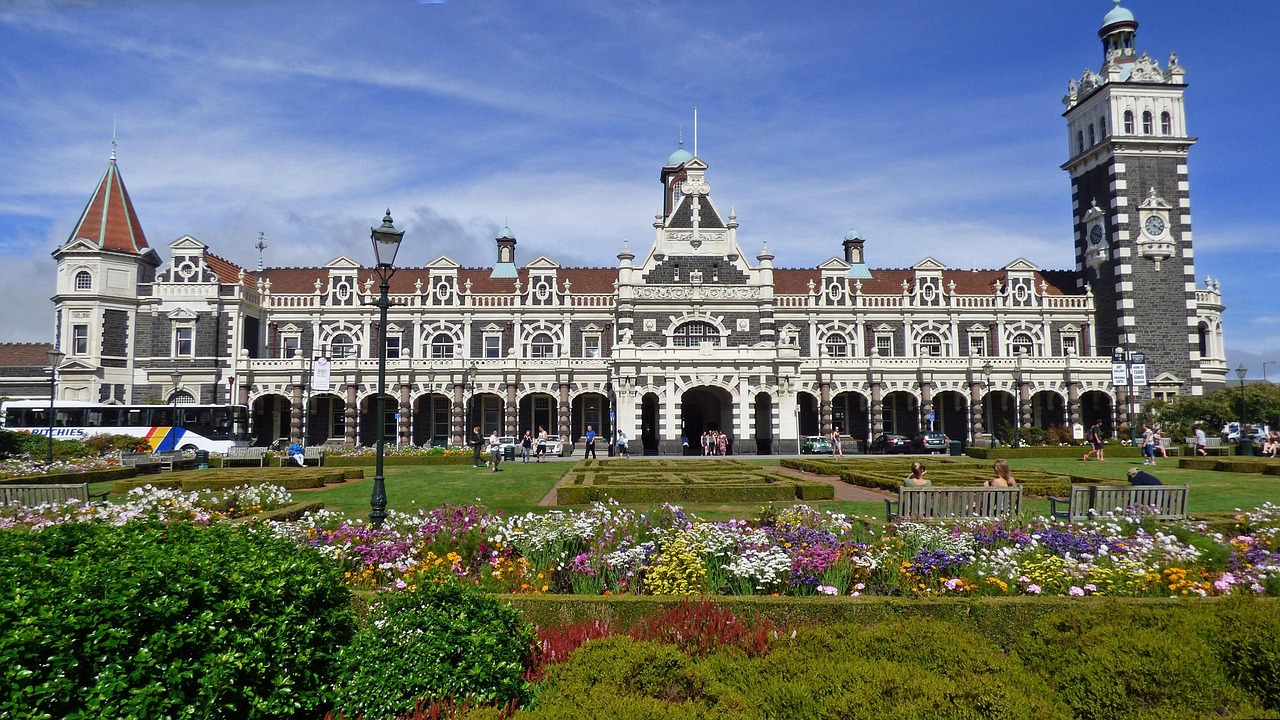
Dunedin is a city located in the Otago region of New Zealand’s South Island, characterized by a temperate oceanic climate with cool, unpredictable weather and annual temperatures ranging between 4°C and 18°C. As a Southern Hemisphere city, its seasons are the reverse of the Northern Hemisphere — December through February is summer (highs of 17–18°C) and June through August is winter (lows around 4°C) — and even summer rarely brings truly hot weather, keeping the city pleasantly cool year-round.
Due to its proximity to Antarctica, warm air masses from the north frequently collide with cold polar air, making hailstorms, strong winds, and sudden downpours common occurrences. Dunedin is famously known for experiencing all four seasons in a single day. Rainfall is distributed fairly evenly throughout the year, with December being the wettest month and August the driest. Strong winds are a near-constant presence, making the feels-like temperature significantly lower than the actual reading.
Seasonal Weather in Dunedin
Summer (December – February)
This is the warmest season Dunedin has to offer. Average highs sit between 17–19°C, making it feel pleasantly cool and mild rather than hot. January brings up to 15 hours of daylight, making it ideal for outdoor activities — though a 30% daily rain probability means sudden showers can appear without warning. UV levels are particularly intense during this period due to the thinner ozone layer over New Zealand’s South Island, so sun protection is non-negotiable.
Autumn (March – May)
Temperatures begin to drop noticeably, with afternoon highs falling to 13–16°C. The temperature gap between day and night widens, and strengthening winds make the feels-like temperature significantly lower than the thermometer reads. Clear days alternate with overcast ones, and the city puts on a stunning display of autumn foliage. By May, rainfall probability drops to around 15%, making it one of the drier stretches of the year. Long sleeves and a light jacket become the standard outfit for this season.
Winter (June – August)
This is Dunedin’s coldest and most unpredictable season. July average highs sit around just 9°C, with lows dropping to 5°C. Cold air masses pushing up from Antarctica bring hail, sleet, and occasional snowfall, and wind chills can make it feel close to 0°C. Daylight hours shorten to 8–9 hours, and overcast skies are common. Heavy layering, a waterproof jacket, and warm accessories are all essential. Indoor-focused itineraries are strongly recommended for this time of year.
Spring (September – November)
The cold begins to lift as Dunedin transitions back into warmer weather. September daytime highs hover around 11–13°C, climbing to around 15°C by November. November has the lowest rainfall probability of any month, with relatively clear and sunny days becoming more frequent. This season also coincides with the wildlife breeding season on the Otago Peninsula — an excellent time to spot penguins, sea lions, and other native wildlife. Despite the improving weather, large temperature swings and strong winds remain common, so a light puffer or windproof jacket is still a must.
Best Time to Visit Dunedin
The best time to visit Dunedin is during summer, from December to February. Temperatures reach a comfortable 17–19°C, daylight stretches to around 15 hours, and the conditions are ideal for outdoor exploration and nature walks. The Otago Peninsula is at its most active during this period — penguins, sea lions, and albatrosses can all be observed in their natural habitat. The city’s Victorian Gothic architecture and Scottish-inspired streetscapes are also best enjoyed in the longer, brighter days of summer. That said, even in summer, sudden rain showers and strong winds are common, so always carry a windproof, waterproof jacket.
If Aurora Australis (Southern Lights) viewing is on your itinerary, plan your visit between March and September. Spots like Tunnel Beach and St. Clair Beach offer stunning views of the Southern Lights around midnight. The March to May autumn window is especially appealing, as the aurora display is complemented by vibrant fall foliage across the city. On the other hand, June through August brings temperatures of just 5–9°C, frequent hailstorms, and strong winds that severely limit outdoor activity — this period is best avoided unless you are well prepared for harsh winter conditions.
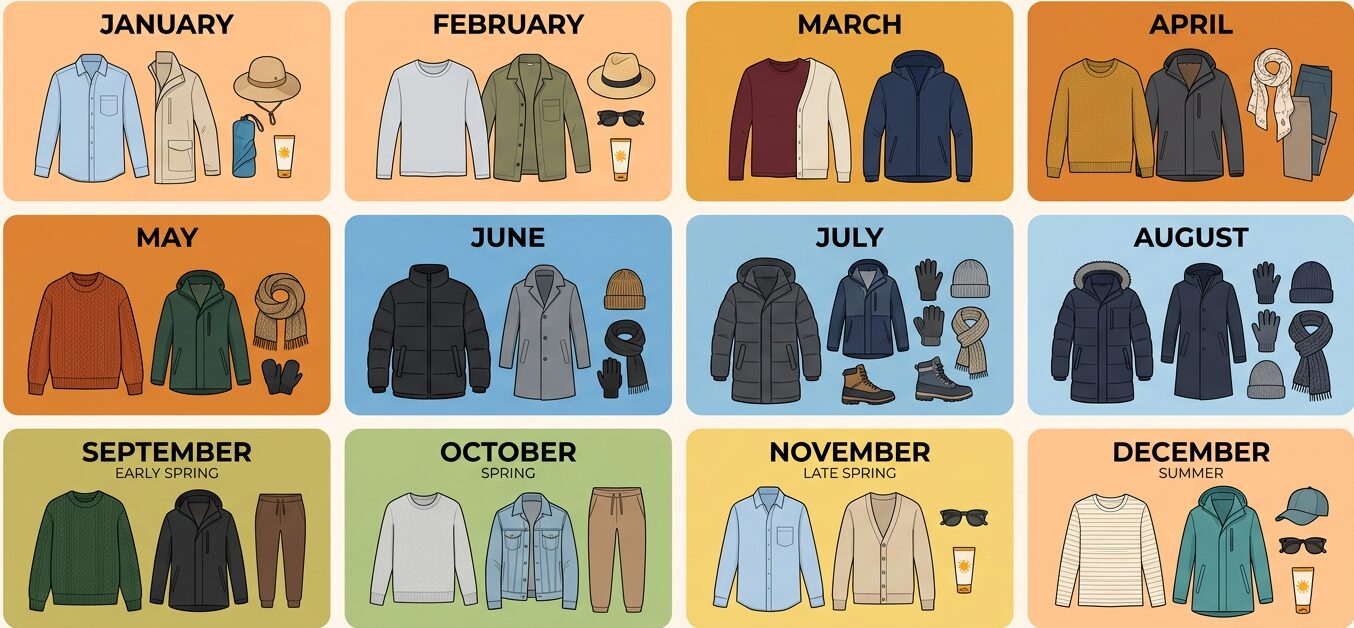
Monthly Weather & What to Wear
No matter what month you visit, a windproof and waterproof jacket is an absolute essential in Dunedin. Temperatures remain cool year-round (4°C–18°C), and weather can change dramatically within a single day.
January
One of the warmest months of the year, with average highs of 18°C and lows of 11°C. Long daylight hours and mostly clear skies make it great for sightseeing, though a 30% rain probability means showers can appear at any time.
What to wear: A light long-sleeve T-shirt or casual shirt with a thin jacket or cardigan; carry a waterproof outer layer for sudden showers.
February
The warmest month in Dunedin, with average highs of 19°C and lows of 11°C. Clear and mild conditions are ideal for wildlife watching on the Otago Peninsula and outdoor activities throughout the city.
What to wear: A light long-sleeve shirt or thin cotton jacket as a base; sunscreen and a hat are essential given New Zealand’s intense UV levels.
March
The transition into autumn begins, with afternoon highs easing to 16–17°C. The temperature gap between morning and afternoon widens, and winds start to pick up.
What to wear: A long-sleeve shirt layered with a thin jacket or cardigan; add a windproof outer layer for breezy conditions.
April
Full autumn arrives, with daytime highs around 14–15°C and mornings occasionally dipping below 10°C. Autumn foliage is at its most beautiful, though rain and strong winds become more frequent.
What to wear: A knit sweater or mid-layer topped with a windproof jacket; layering is key for managing the shifting temperatures throughout the day.
May
Late autumn brings daytime highs of 12–13°C and a noticeably cool bite to the air. Rainfall probability drops to around 15%, making it one of the more settled months despite the colder temperatures.
What to wear: A thick knit sweater or wool mid-layer with a windproof and waterproof jacket; a warm scarf adds useful extra insulation.
June
Winter sets in, with daytime highs around 10°C and a heavy, cold feel to the air. Overcast skies, strong winds, and the occasional sleet or light snow become part of the daily forecast.
What to wear: A heavy puffer jacket or warm coat with a waterproof shell layer; gloves, a beanie, and a muffler are all necessary.
July
The coldest month of the year. Average highs of just 9°C and lows of 5°C, with wind chills that can approach 0°C. Hail and strong gusts are common.
What to wear: Full winter gear — thick puffer or wool coat layered with a waterproof jacket, waterproof boots, gloves, a wool beanie, and a heavy muffler. No compromises.
August
Similar to July in terms of cold, though highs begin to edge up to 9–10°C toward the end of the month. The lowest rainfall probability of the year, but winds remain strong.
What to wear: Same full winter layering as July; prioritize easy-to-adjust layers to handle the difference between cold outdoors and heated indoor spaces.
September
Early spring brings gradual improvement, with highs recovering to 11–13°C. Weather remains highly variable — bright sunshine can give way to sudden wind and rain with little warning.
What to wear: A thick knit or sweater as a base, topped with a windproof and waterproof jacket; flexible layering helps handle the unpredictable conditions.
October
Spring deepens and afternoon highs climb to 14–15°C, making the city noticeably more comfortable. Wildlife breeding season begins on the Otago Peninsula, attracting visitors to the area.
What to wear: A light knit or sweater with a windproof jacket; keep the wind protection handy as breezy conditions continue through the month.
November
The approach to summer, with highs reaching 15–16°C and the lowest rainfall probability of the year. Longer, sunnier days make this an excellent time for outdoor exploration.
What to wear: A light long-sleeve shirt with a thin jacket or cardigan is sufficient; sunscreen and sunglasses are a must as UV levels begin to rise.
December
Summer officially begins, with highs of 17–18°C and the city entering its most lively travel season. A 38% rain probability — the highest of the year — means showers can interrupt any day, so stay prepared.
What to wear: A light shirt or long-sleeve top with a thin waterproof outer layer; sun protection items (hat, sunscreen, sunglasses) are equally important.