
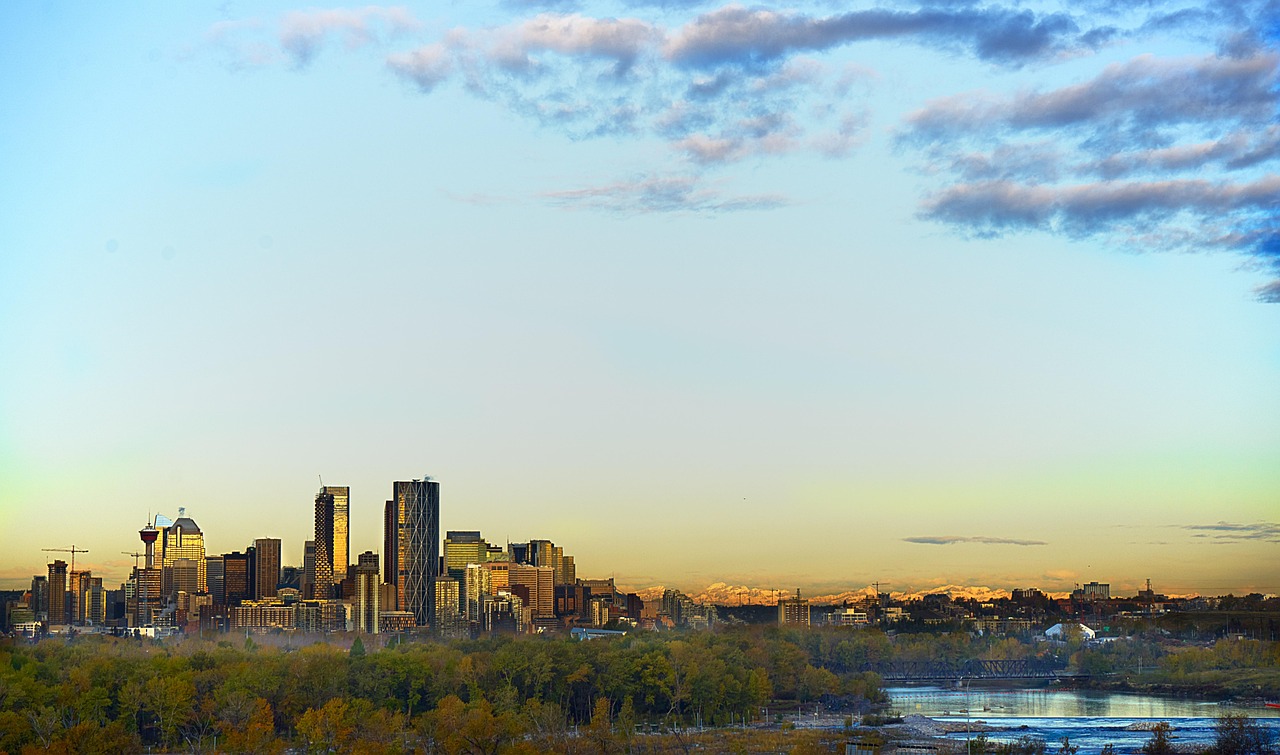
Calgary, located in Alberta, Canada, has a humid continental climate characterized by extreme temperature swings and very low humidity throughout the year. The annual average temperature is around 5.7°C — summers (June–August) are pleasant with highs of 14–22°C and abundant sunshine, while winters (December–February) can plunge to around -15°C with frequent snowfall. One of Calgary’s most remarkable weather phenomena is the Chinook wind — a warm, dry wind that blows down from the eastern slopes of the Rocky Mountains roughly 25 days per year, causing temperatures to surge by 20°C or more within hours. Thanks to the dry air, the cold feels less harsh than the numbers suggest. The best time to visit for warm weather and access to Banff National Park is July and August.
Calgary’s Seasonal Weather
Spring (March–May)
Spring in Calgary is unpredictable and constantly changing. March averages between -7.8°C and 4°C — still very much winter-like — while April ranges from -2.1°C to 11.3°C, and May warms up to 3.1°C–16.4°C. Even so, it’s not unusual to experience a blizzard in the morning and near-20°C warmth by afternoon, all thanks to the Chinook effect. Rain and snow frequently mix, with precipitation on 7–12 days per month, making layered clothing and a waterproof jacket essential.
Summer (June–August)
Summer is Calgary’s most pleasant and popular season for outdoor activities, with average temperatures ranging from lows of 8–11°C to highs of 21–24°C. Low humidity, intense sunshine, and long daylight hours make it perfect for camping, hiking, and rafting. It’s also the best time to explore Banff and Jasper National Parks. The occasional afternoon thunderstorm can roll in quickly, and evenings cool down enough to need a light jacket — July averages a high of 22.8°C and a low of 9.3°C.
Fall (September–November)
Fall brings stunning autumn foliage but also a rapid drop in temperatures. September is still comfortable at 4°C–17°C, but by October it falls to -1°C–11°C, and November dips firmly below freezing. September is the best month for leaf-peeping and outdoor photography, but snow can arrive as early as mid-October, so winter prep should start early. Monthly precipitation is 10–35mm, increasingly a mix of rain and snow, so a warm waterproof jacket is strongly recommended.
Winter (December–February)
Calgary winters are long and harsh, with average temperatures ranging from -15°C to -5°C, occasionally dropping below -30°C. January is the coldest month, averaging -15.1°C to -2.8°C, and the city regularly gets blanketed in snow. However, Calgary’s dry continental air makes the cold feel less biting than it appears on paper. Chinook winds can unexpectedly raise temperatures by 10–20°C even in the dead of winter, offering brief, welcome warm spells. It’s an ideal season for skiing and snowboarding, with many visitors heading to nearby Banff ski resorts.
Best Time to Visit Calgary
Summer (June–August) — Top Recommendation
Summer is hands-down the best time to visit Calgary. With highs of 21–24°C, long sunny days, and all outdoor trails open, it’s the perfect season for sightseeing and adventure. In early July, the world-famous Calgary Stampede — one of the largest outdoor festivals on the planet — draws over one million visitors with rodeos, concerts, and entertainment. It’s also the ideal time to combine your trip with a visit to the Canadian Rockies in Banff and Jasper.
Winter (December–February) — For Winter Sports Lovers
If skiing and snowboarding are on your agenda, December through February is your window. World-class slopes at Banff Ski Resort and Lake Louise are right on Calgary’s doorstep. Although temperatures hover around -15°C, the dry air keeps the cold manageable. Travel costs are lower than in summer, and the Calgary Zoo’s Zoolights festival (mid-November to early January) adds a magical touch to a winter visit.
Times to Avoid
March to early April is arguably the least attractive time to visit — melting snow leaves the streets slushy and brown, and trees haven’t leafed out yet. May is improving but still unpredictable, with rain and snow making it difficult to plan outdoor activities reliably.
Monthly Weather & What to Wear
January
Average temperatures: -15.1°C (low) to -2.8°C (high). Precipitation chance is around 11%, with an average snowfall of 7.4mm on snowy days. Chinook winds can briefly spike temperatures, but extreme cold gear is absolutely essential.
What to wear: Thermal base layers + fleece-lined leggings/pants + thick wool sweater + long down parka or insulated coat, waterproof winter boots, ear muffs, thick gloves, scarf, and hand warmers.
February
Average: -12°C (low) to -0.1°C (high). Slightly warmer than January, but still bitterly cold with 6–12 snowy days. Chinook winds can cause sudden temperature spikes of 10°C or more.
What to wear: Same heavy layering as January. Opt for easy-to-remove layers to adapt to Chinook warmth. Waterproof winter boots, gloves, and a warm hat are non-negotiable.
March
Average: -7.8°C (low) to 4°C (high). Spring begins, but winter still dominates. Frequent snow, large daily temperature swings, and mornings below zero followed by above-zero afternoons.
What to wear: Light puffer jacket or heavy coat + sweater layers, windproof jacket, waterproof footwear. Less extreme than January, but warmth is still the priority.
April
Average: -2.1°C (low) to 11.3°C (high). Spring temperatures are within reach, but unexpected snowfall is still common and rain-snow mix days repeat frequently.
What to wear: Light knit or long-sleeve shirt + light puffer or windproof jacket. Waterproof shoes and a compact umbrella are essential. Layering remains key.
May
Average: 3.1°C (low) to 16.4°C (high). True spring finally arrives. Daytime is warm enough for outdoor activities, but mornings and evenings remain chilly. Early May snow is still possible.
What to wear: Long-sleeve shirt + cardigan or light knit + windbreaker. Jeans and sneakers for the day; add a light down jacket for mornings and evenings.
June
Average: 7.3°C (low) to 20.2°C (high). A pleasant early summer with warm days and strong sunshine. Afternoon showers and thunderstorms can appear suddenly, and evenings cool off noticeably.
What to wear: T-shirt + thin long-sleeve layer or windbreaker. Pack a waterproof jacket for showers. Sunglasses and sunscreen are a must. Add a cardigan for evenings.
July
Average: 9.4°C (low) to 22.9°C (high). Calgary’s peak season — sunny, low-humidity, and ideal for every outdoor activity. The Calgary Stampede kicks off in early July. Brief afternoon showers are possible.
What to wear: T-shirt and shorts or a light dress. Bring a light down jacket for Rocky Mountain day trips, plus sunscreen, sunglasses, and a thin waterproof jacket for showers.
August
Average: 8.6°C (low) to 22.5°C (high). Very similar to July — warm and clear, but temperatures start to ease toward month’s end. Evenings become noticeably cooler.
What to wear: T-shirt and shorts for the day; a light puffer or thick cardigan for evenings and Rocky Mountain excursions. Sunscreen, sunglasses, and a light rain jacket.
September
Average: 4°C (low) to 17.6°C (high). Autumn begins with beautiful foliage and fewer crowds. Temperatures can drop sharply by late September.
What to wear: Long-sleeve shirt + autumn jacket or light coat. Add a scarf and light down jacket for mornings and evenings. Waterproof shoes and layering are recommended.
October
Average: -1.4°C (low) to 12.1°C (high). Temperatures drop fast and dip below freezing. Rain-snow mix is common, and the first proper snowfall often arrives by mid-month.
What to wear: Thick coat or short puffer + heavy knit. Start transitioning to waterproof boots, gloves, and a beanie. Full layering is necessary.
November
Average: -8.9°C (low) to 2.8°C (high). Full winter has set in. Frequent snow, strong winds, and below-freezing temperatures define this quiet off-season month.
What to wear: Long down parka + thick sweater layers. Winter boots, insulated gloves, ear muffs, and a scarf are all essential.
December
Average: -13.4°C (low) to -1.3°C (high). Full-on winter. Snowfall probability around 11% with an average of 8mm on snowy days. Christmas events and ski season are in full swing.
What to wear: Maximum winter layering — thermal base layers + fleece-lined pants + thick knit + long down parka + heavy winter boots + thick gloves + ear muffs + scarf + hand warmers.
Monthly Climate Summary
| Month | Avg High (°C) | Avg Low (°C) | Precipitation (mm) | Snowfall (cm) | Precip Days | Conditions |
| January | -0.9 | -13.2 | 9 | 18 | 10.5 | Severe cold, snow |
| February | -1.6 | -12.4 | 12 | 20 | 8.3 | Severe cold, Chinook possible |
| March | 4.0 | -6.7 | 29 | 17 | 13.3 | Snow and rain mix |
| April | 10.0 | -2.7 | 28 | 22 | 9.6 | Spring, snow still possible |
| May | 17.0 | 4.0 | 35 | 6 | 13.0 | Spring, large temp swings |
| June | 20.2 | 8.3 | 97 | 0 | 17.0 | Early summer, frequent showers |
| July | 24.2 | 9.2 | 51 | 0 | 3.5 | Sunny, peak season |
| August | 22.9 | 7.0 | 56 | 0 | 6.4 | Sunny, cooling at month’s end |
| September | 14.9 | 3.3 | 35 | 3 | 8.2 | Autumn, fall foliage |
| October | 7.2 | -2.7 | 22 | 10 | 11.2 | Sharp temperature drop |
| November | 0.0 | -6.0 | 25 | 25 | 11.1 | Early winter, snowfall |
| December | -4.8 | -11.5 | 15 | 23 | 12.3 | Severe cold, heavy snow |
| Annual | 9.7 | -2.7 | 414 | 144 | 124 |