
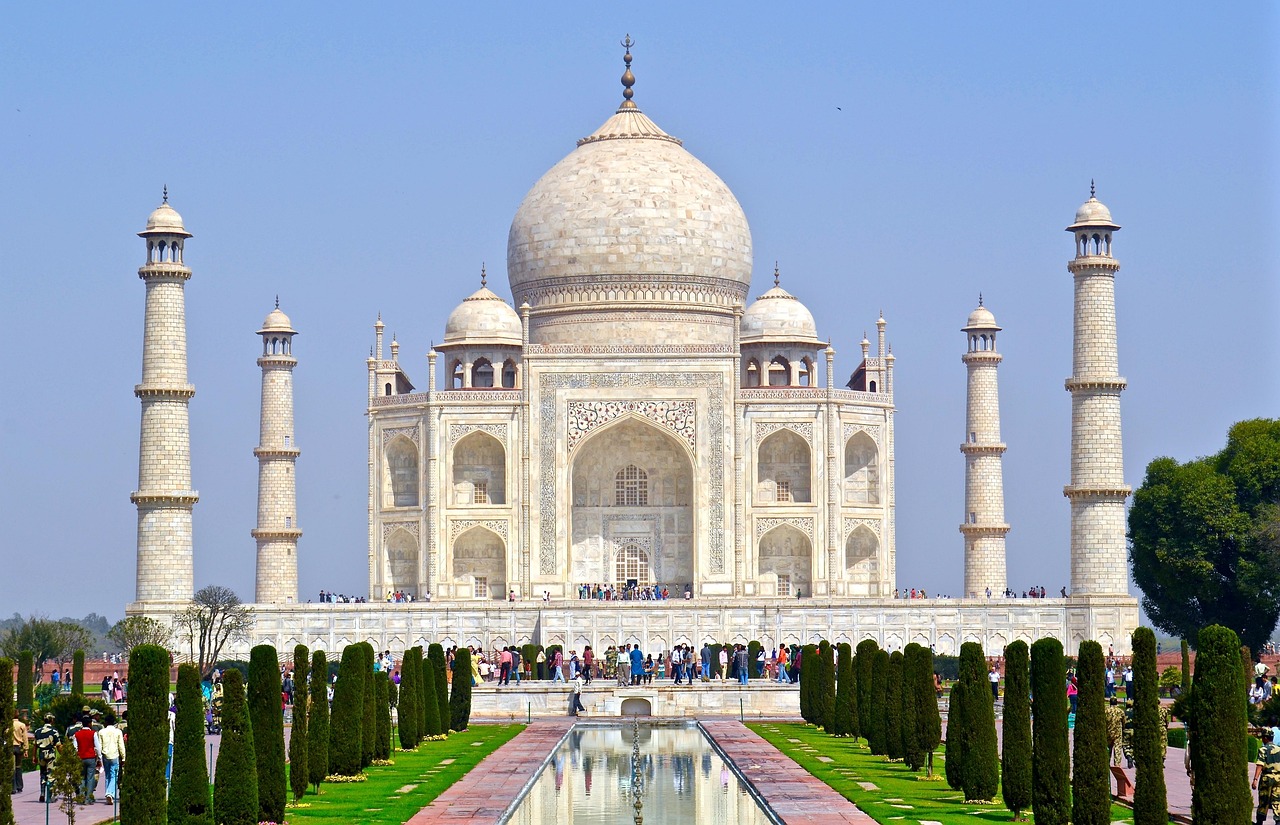
Agra, located in the northern Indian state of Uttar Pradesh, has a semi-arid steppe climate (BSh) characterized by extreme temperature swings throughout the year. Winters (November–February) bring lows of 4–7°C with mild highs around 23°C, while summers (April–June) deliver intense heat with highs reaching up to 45°C.
June through September is the monsoon season, concentrating most of the annual rainfall — though Agra receives comparatively less rain than many other parts of India. From October onward, skies clear and temperatures drop to comfortable levels, making October through March the ideal time to visit, especially for exploring the Taj Mahal.
Agra’s Weather by Season
Winter (November – February)
Winter is the most comfortable season in Agra, with highs of 22–28°C and lows of 9–15°C. Rainfall is minimal and days are clear and dry, making it the perfect time to explore outdoor landmarks like the Taj Mahal and Agra Fort. Early mornings in January are often blanketed in dense fog, which creates an ethereal atmosphere around the Taj Mahal at sunrise — though it can occasionally obstruct views, so timing your visit accordingly is recommended. In December and January, temperatures can dip to 4–9°C in the early hours, so a light down jacket or wool coat is essential.
Spring & Early Summer (March – May)
March brings pleasant warmth with lows of 18°C and highs of 31°C, still comfortable enough for outdoor sightseeing. However, from April, intense heat sets in with highs soaring to 37–39°C, and by May–June, temperatures can peak at 40–45°C. During this period, a hot, dry wind known as the “Loo” blows across the plains, and occasional dust storms are possible. Outdoor activities should be limited to early morning or late afternoon, and staying well-hydrated with strong sun protection is essential.
Monsoon Season (June – September)
The monsoon arrives in late June, bringing the bulk of Agra’s annual rainfall. July and August record the highest precipitation at 241mm and 190mm respectively. Temperatures remain high at 33–38°C with lows of 27–29°C, though the rain offers some relief from the scorching heat. Rainy days average 19–23 per month in July and August, making outdoor sightseeing quite difficult. Extra caution is needed on the marble surfaces of the Taj Mahal and other monuments, which become extremely slippery when wet. September marks a transition as rainfall drops to 151mm, but heat and humidity remain significant.
Autumn (October – November)
From October, rainfall drops sharply to around 44mm and skies become clear and bright. Temperatures ease to highs of 33°C and lows of 22°C, creating ideal conditions for travel. By November, daytime highs reach 28°C and lows fall to 15°C, signaling the start of the peak tourist season. The temperature gap between day and night widens considerably, so layering is recommended. October is an excellent time to visit — the post-monsoon greenery is beautiful, crowds are smaller, and accommodation rates are more affordable than during the peak months.
Best Time to Visit Agra
The best time to visit Agra is during the dry season from October to March. Temperatures are a comfortable 22–33°C, rainfall is minimal, and conditions are ideal for exploring iconic outdoor sites such as the Taj Mahal, Agra Fort, and Fatehpur Sikri.
November through February is the golden season — the coolest and clearest stretch of the year, perfect for witnessing the Taj Mahal emerging mystically through early morning mist. That said, this is peak tourist season, so accommodation and flight prices are at their highest. Booking at least 2–3 months in advance is strongly recommended.
If budget is a priority, early October to early November is an excellent alternative. The air is fresh after the monsoon, the landscape is lush, and prices are noticeably lower with far fewer crowds, allowing for a much more relaxed experience.
The scorching heat of April–June (up to 45°C) and the heavy monsoon rains of July–September make outdoor sightseeing quite uncomfortable, and these months are best avoided if possible.
Monthly Weather & What to Wear
January
The coolest month of the year in Agra, with lows of 7–9°C and highs of 19–22°C. Rainfall is around 13mm and sunny days are the norm, but thick morning fog is common. A heavy sweater or wool jacket works well during the day, while a padded coat or heavy jacket is needed for mornings and evenings.
February
Temperatures gradually climb to lows of 10–12°C and highs of 25°C, making this one of the driest months of the year with only around 18mm of rain. Light-to-mid-weight layers and a jacket for mornings and evenings are sufficient.
March
Full spring arrives with lows of 15–18°C and highs of 31–32°C. Rainfall is minimal at just 9mm, and outdoor sightseeing is excellent. A short-sleeve shirt works as your base layer; bring a light jacket for early mornings and don’t forget sunscreen and sunglasses.
April
Heat intensifies with lows of 21–23°C and highs of 37–38°C. Rainfall is scarce at about 6mm, but direct sunlight is extremely strong. Breathable short-sleeves, shorts, and cotton fabrics are essential, along with high-SPF sunscreen and a wide-brimmed hat. Keep outdoor activities to early morning or dusk.
May
The hottest month of the year, with lows of 26°C and highs reaching 39–42°C. The dry “Loo” wind makes conditions feel even more oppressive. Wear the lightest, most breathable fabrics in pale colors, hydrate consistently, and minimize time outdoors during midday hours.
June
The monsoon begins in June, with lows of 28–29°C, highs of 38–41°C, and rainfall increasing to around 56mm. The heat remains extreme, though intermittent rain brings brief relief. Lightweight summer clothing is the base; always carry a portable umbrella or rain poncho.
July
Full monsoon season, with rainfall reaching approximately 203mm and rainy days averaging 13–23 per month. Temperatures sit at lows of 26–28°C and highs of 34–36°C. Waterproof sandals or shoes and an umbrella are a must; opt for quick-dry fabrics to stay comfortable throughout the day.
August
Peak rainfall month at around 243mm, with lows of 25–27°C and highs of 33°C. High humidity makes the heat feel much worse than the thermometer suggests. Pack quick-dry clothing, waterproof footwear, and a sturdy umbrella. Non-slip shoes are strongly recommended for visits to marble-floored monuments.
September
The monsoon begins to retreat, with rainfall dropping to around 130mm and humidity around 70%. Temperatures range from 24–27°C at night to 33–34°C during the day, but showers are still frequent. Layer a light long-sleeve over your short-sleeve outfit and always keep an umbrella handy.
October
Rainfall drops sharply to around 25mm and the air clears noticeably. Temperatures settle at lows of 19–22°C and highs of 33–34°C — increasingly comfortable for travel. Short-sleeves are fine during the day; bring a light jacket for mornings and evenings, and keep applying sunscreen.
November
Firmly in the dry season, with lows of 12–15°C and highs of 28–29°C. Rainfall is negligible at just 4mm, and clear, pleasant days make this one of the best months for sightseeing. Short-sleeves or a light long-sleeve work during the day; a mid-weight jacket or cardigan is ideal for the cooler mornings and evenings.
December
One of the two coolest months, with lows of 8–10°C and highs of 22–24°C. Rainfall is minimal at around 6mm. A heavy sweater or lightweight puffer jacket is needed during the day, with a coat or padded jacket for mornings and evenings. If you plan to spend extended time outdoors at monuments, make sure to dress adequately for the cold.
Weather Warnings & Travel Tips for Agra
Extreme Heat (April – June)
From April, temperatures exceed 37°C, and by May–June the heat can reach a punishing 45°C. The dry “Loo” wind dramatically increases the feel of the heat, and strong direct sunlight can be painful on exposed skin. Avoid outdoor activity between 11am and 4pm, use SPF 50+ sunscreen, wear a wide-brimmed hat and sunglasses, and hydrate regularly with water and electrolyte drinks.
Monsoon Flooding & Slippery Surfaces (July – September)
July and August see 200–240mm of rain with 19–23 rainy days per month. Sudden downpours can cause road flooding and traffic disruption, so build flexibility into your itinerary. The marble flooring at the Taj Mahal and other monuments becomes dangerously slippery when wet — wear non-slip shoes and always carry a waterproof umbrella or rain poncho.
Winter Fog & Cold Mornings (December – February)
Despite India’s reputation for heat, Agra winters can be genuinely cold, with temperatures dropping to 4–9°C on some mornings. Dense fog in January frequently rolls in at dawn, sometimes obscuring the Taj Mahal entirely and causing train and flight delays. Pack a proper warm jacket (down or wool), build buffer time into your schedule, and always check weather forecasts before early morning visits.
Air Pollution & Smog (October – February)
The peak tourist season coincides with some of north India’s worst air quality. Agricultural burning near Agra in October–November can push pollution levels to hazardous levels. Travelers with respiratory conditions should carry an N95 respirator mask and monitor daily air quality indices before planning outdoor activities.
Large Daily Temperature Swings
During the dry season, the gap between daytime and nighttime temperatures often exceeds 10–15°C. What starts as a hot afternoon can turn into a cold evening with little warning. Dress in easy-to-layer clothing so you can adapt quickly throughout the day.