
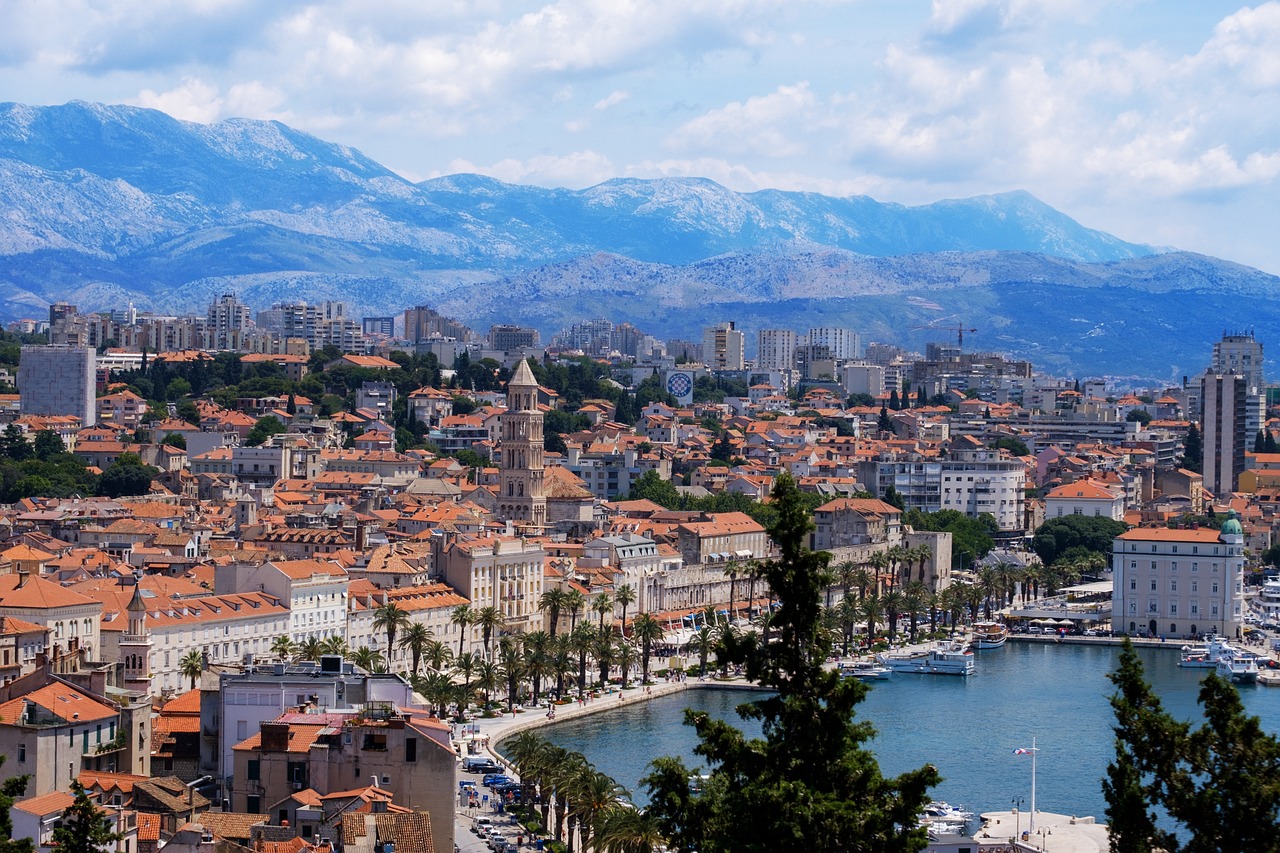
Split, Croatia, located on the Adriatic coast, has a classic Mediterranean climate — hot and dry summers, mild and wet winters. Annual temperatures range from 4°C to 32°C, with July averaging a peak of around 31°C and January lows rarely dropping below 6°C, meaning truly harsh cold is almost nonexistent.
Rainfall is strongly seasonal: the summer months (June–August) form a dry season with very little precipitation, while most rainfall is concentrated in autumn and winter (October–December), with November and December seeing the highest monthly totals. Split is also one of the sunniest cities in Europe, averaging over 7 hours of sunshine per day throughout the year and reaching a remarkable 12 hours per day in July.
Seasonal Weather in Split
Spring (March–May)
Spring is one of the most comfortable seasons to visit Split. Temperatures climb gradually from 14°C to 23°C, and daily sunshine hours jump to 9–12 hours. March and April bring occasional spring showers, but clear days are plentiful, and by May the city bursts into bloom — Diocletian’s Palace and the waterfront promenade look especially stunning in the warm spring light. With fewer tourists than in peak summer and a full calendar of local cultural events including the Split Spring Festival, this season offers a relaxed and rewarding travel experience.
Summer (June–August)
Summer is Split’s peak season — hot, dry, and almost entirely sunny. Temperatures soar to 28–32°C, with July being the hottest month and averaging 12 hours of sunshine per day. This is the driest time of year, making it ideal for swimming, island-hopping, and outdoor activities. However, July and August bring massive crowds of European tourists, driving up prices for accommodation, restaurants, and transport significantly. If you prefer a less hectic experience, June or September are the smarter alternatives.
Autumn (September–November)
Autumn is another prime season for visiting Split. September and October offer temperatures between 15–25°C — cool and refreshing yet still warm enough to swim, as the Adriatic Sea retains its summer heat well into October. Crowds thin out noticeably after summer, making it much easier to enjoy the Old Town and the palace at a leisurely pace. From October onward, rainfall gradually increases and temperatures drop, though not enough to significantly disrupt outdoor sightseeing. November brings cooler, wetter days and strong bura winds, but local events such as the Split Boat Show and Mediterranean Food Festival keep the city lively.
Winter (December–February)
Split’s winters are mild thanks to its Mediterranean climate, with average temperatures sitting between 6–12°C. This is the rainiest time of year, with November and December seeing the heaviest rainfall and many overcast days. Snow is rare, but when it does fall the city can grind to a halt, and the bura — a fierce northeast wind — can make the cold feel sharper than the thermometer suggests. On the upside, this is the cheapest and quietest season: accommodation and flights are at their lowest prices, and you can explore Diocletian’s Palace, Christmas markets, and New Year’s events without the crowds.
Best Time to Visit Split
The best time to visit Split depends on what you’re looking for, but late spring (May–June) and early autumn (September–October) are widely considered the sweet spots.
Spring (April–June) offers comfortable temperatures of 14–25°C, clear skies, and far fewer crowds than the peak summer months. By May and June the weather is warm enough to swim in the Adriatic and take boat trips to nearby islands like Hvar and Brač. Accommodation and flights are noticeably cheaper than in high summer, making this the best season for value-conscious travellers. Local festivals add a vibrant cultural layer to the experience.
Summer (July–August) delivers the best beach weather of the year — hot, sunny, and bone dry. It’s the perfect time for water sports, island excursions, and open-air dining. That said, temperatures can hit 31°C and tourist numbers are at their peak, causing congestion at top attractions and steep price hikes. This season suits those who don’t mind the heat and the hustle.
Early autumn (September–October) combines warm sea temperatures, cooler air, and a much quieter atmosphere. The Split Regatta and Mediterranean Food Festival make October especially appealing for culture seekers, and prices drop significantly from their summer peaks — making this the ideal window for a relaxed, budget-friendly trip.
Winter (December–February) is the off-season: rainy, grey, and quiet. Outdoor sightseeing can be limited by wet weather, but for those who want rock-bottom prices and a genuinely local feel, a winter visit to Split can be surprisingly rewarding.
Monthly Weather & What to Wear
January
The coldest month of the year, with highs of 10°C and lows of 6°C. Expect frequent overcast skies and rain; daily sunshine averages just 4 hours. When the bura wind blows, temperatures feel significantly colder. Wear a heavy puffer jacket or wool coat with thermal base layers, and bring a scarf, gloves, and hat.
February
Similar to January, with highs of 11°C and lows of 6°C. Cold winds and damp conditions persist, though sunshine hours begin to increase slightly compared to January. A heavy coat layered over a warm knit is essential; waterproof shoes and an umbrella are must-haves.
March
Spring begins to emerge, with highs reaching 14°C and lows around 8°C. Sunny days start to appear, but spring rain is still frequent and temperature swings between morning and evening are noticeable. A trench coat or light jacket layered over a knit sweater works well; always carry an umbrella.
April
Highs of 18°C and lows of 11°C bring a proper spring feel, with blooming flowers and plenty of sunny days ideal for sightseeing. Occasional showers still occur, and coastal breezes can feel cooler than expected. A light jacket or cardigan over long sleeves and jeans is the right call; pack a thin extra layer for evenings.
May
One of the best months to visit, with warm highs of 23°C and lows of 16°C and 9–10 hours of daily sunshine. Sea temperatures start rising, making swimming possible at some beaches. T-shirts or light long sleeves work during the day; a light cardigan or thin jacket is enough for mornings and evenings. Sunscreen is a must as UV levels ramp up.
June
Summer kicks off with highs of 27°C and lows of 20°C — sunny and very dry. Sunshine lasts 11 hours a day and the sea is warm enough for comfortable swimming. Light summer clothes (T-shirts, shorts, sundresses) are the go-to, and sunscreen, sunglasses, and a hat are non-negotiable.
July
The hottest and sunniest month, with highs of 31°C, lows of 22°C, and an average of 12 daily sunshine hours. Rain is virtually absent, making conditions perfect for the beach — but midday sun is intense, and heatstroke is a real risk. Opt for breathable linen or cotton T-shirts and shorts, bring a wide-brimmed hat, and use SPF 50+ sunscreen. Comfortable sandals or lightweight trainers are ideal footwear.
August
Hot and dry like July, with highs of 30°C and lows of 22°C. Crowds are at their absolute peak and popular beaches and attractions become very busy. Dress the same as in July — light, breathable fabrics — and note that evenings remain warm enough that a single layer is all you need after dark.
September
The last taste of summer before the rains return, with pleasant highs of 25°C and lows of 18°C. Sea temperatures stay high, so swimming is very much still on the agenda. Wear T-shirts and shorts during the day and add a light long-sleeve or cardigan for evenings. Carry a compact umbrella early in the month as occasional showers begin to creep back in.
October
Temperatures cool to highs of 20°C and lows of 14°C, and rainfall picks up noticeably. Clear days are still wonderful for exploring the city on foot, but wet days become more frequent. A lightweight knit or long-sleeve top layered under a jacket or trench coat is ideal; waterproof footwear is a sensible choice. Keep the sunscreen — UV levels remain surprisingly strong.
November
A significant drop to highs of 15°C and lows of 10°C, with heavy rainfall and frequent overcast skies. Strong bura winds can push the real-feel temperature much lower. Pack a mid-weight to heavy coat, warm knit layers, a waterproof jacket, and an umbrella — all essential for this month.
December
Chilly and wet, with highs of 12°C and lows of 7°C and persistent rain and cloud cover. Snow is rare but possible, and when it falls the city is largely unprepared for it. Bundle up in a heavy puffer or wool coat with thermal innerwear, waterproof boots, gloves, and a scarf. If visiting Christmas markets, keep a warm drink in hand as you explore.
Monthly Climate at a Glance
| Month | Avg High (°C) | Avg Low (°C) | Precipitation (mm) | Humidity (%) |
| January | 10 | 6 | 79 | 72 |
| February | 11 | 6 | 69 | 70 |
| March | 14 | 8 | 65 | 68 |
| April | 18 | 11 | 58 | 66 |
| May | 23 | 16 | 47 | 64 |
| June | 27 | 20 | 28 | 60 |
| July | 31 | 22 | 18 | 55 |
| August | 30 | 22 | 25 | 57 |
| September | 25 | 18 | 68 | 63 |
| October | 20 | 14 | 97 | 69 |
| November | 15 | 10 | 128 | 74 |
| December | 12 | 7 | 107 | 74 |