

When you are new to intermittent fasting, it can be difficult to know where to begin. You may wonder how many hours you should fast, what you can drink during the fasting window, and whether the popular 16:8 schedule is the right choice for you.
There are many approaches, including 16:8, 18:6, alternate-day fasting, and one meal a day. However, starting with a long fasting window can cause fatigue, poor concentration, intense hunger, or overeating later in the day.
Learning how to start intermittent fasting is not about going without food for as long as possible. The main goal is to establish a consistent eating schedule, reduce unnecessary snacking, and find an approach that fits your daily routine.
Intermittent fasting is not suitable for everyone. Children and teenagers, pregnant or breastfeeding women, people who are underweight, anyone with a history of an eating disorder, and people taking diabetes medication or other prescription drugs should consult a qualified healthcare professional before making significant changes to their eating schedule.
What Is Intermittent Fasting?
Intermittent fasting is an eating pattern that separates the day or week into eating and fasting periods. It does not require you to eliminate a particular food group or follow a highly restrictive menu.
The 16:8 method is one of the most widely used approaches. It involves fasting for 16 hours and eating within an 8-hour window.
For example, if you have your first meal at 12 p.m. and finish your final meal by 8 p.m., you would fast until 12 p.m. the following day. Sleeping time is included in the fasting window, so you are not expected to remain awake and hungry for 16 hours.
Beginners do not need to start with a 16-hour fast. A 12-hour overnight fast is often a more practical starting point. You can gradually adjust the schedule after observing your hunger, energy, sleep, and concentration.
How to Start Intermittent Fasting With a 3-Week Plan
Trying to follow a strict 16:8 schedule immediately may result in strong hunger, low energy, or evening overeating. A gradual three-week plan can make intermittent fasting easier to manage.
Week 1: Begin With a 12:12 Schedule
During the first week, use a 12-hour eating window followed by a 12-hour fasting window.
If you eat breakfast at 8 a.m., finish dinner by 8 p.m. If your first meal is at 9 a.m., stop consuming food and calorie-containing drinks by 9 p.m.
The purpose of this stage is not to tolerate extreme hunger. It is to reduce late-night snacks, desserts, and calorie-containing drinks.
If you regularly eat chips, pastries, ice cream, or takeout after dinner, setting a clear kitchen closing time may help you manage your total daily intake without making major changes to your regular meals.
Week 2: Move to a 14:10 Schedule
If the 12:12 schedule feels manageable, increase the fasting window to 14 hours during the second week.
You could eat between 10 a.m. and 8 p.m. or between 9 a.m. and 7 p.m. Instead of suddenly skipping breakfast, try delaying your first meal by one hour or finishing dinner one hour earlier.
Return to the 12:12 schedule if you experience persistent headaches, severe fatigue, difficulty concentrating, or intense evening hunger.
Reducing the fasting window is not a failure. It is part of finding an eating pattern that is appropriate for your needs.
Week 3: Try the 16:8 Method
If you can maintain the 14:10 schedule without significant discomfort, you may try a 16:8 intermittent fasting schedule during the third week.
Common eating windows include:
- 11 a.m. to 7 p.m.
- 12 p.m. to 8 p.m.
- 9 a.m. to 5 p.m.
The best window depends on your work schedule, family meals, exercise routine, social activities, and usual bedtime.
A theoretically perfect schedule will not be useful if it conflicts with your daily life. Choose a schedule you can follow consistently without regularly skipping social meals or overeating before the fasting window begins.

16:8 Intermittent Fasting Schedules for Different Lifestyles
Schedule for Office Workers
- 11 a.m.: First meal
- 3 p.m.: Optional snack
- 6:30 p.m.: Dinner
- 7 p.m.: Eating window ends
This schedule may work well if you can eat an early lunch and finish dinner shortly after work.
If you need a snack, consider plain yogurt, a boiled egg, fruit, or a measured portion of nuts. Choose something that helps you reach dinner without becoming excessively hungry.
Schedule for People With Evening Plans
- 12 p.m.: First meal
- 4 p.m.: Snack or small meal
- 7:30 p.m.: Dinner
- 8 p.m.: Eating window ends
This option may be more practical if you regularly have dinner with family, friends, or coworkers.
Avoid making lunch too small in an attempt to save calories for dinner. A lunch containing protein, vegetables, and a reasonable portion of carbohydrates can reduce the risk of overeating at night.
Early Eating Schedule
- 9 a.m.: First meal
- 1 p.m.: Lunch
- 4:30 p.m.: Early dinner
- 5 p.m.: Eating window ends
An early eating window may suit people who begin their day early and rarely attend evening dinners.
However, it can be difficult to maintain if family meals and social events usually take place in the evening. Long-term consistency is generally more valuable than forcing yourself to follow an inconvenient schedule.
Schedule for Shift Workers
Shift workers may find it difficult to use the same clock times every day. In this situation, it may be more practical to plan meals around waking and sleeping times.
Consider having your first meal within one to three hours of waking and completing your final meal approximately three hours before going to sleep.
If your work schedule changes frequently, a 12:12 or 14:10 pattern may be easier to maintain than a strict 16:8 schedule.
What Can You Have During a Fast?
Water is the simplest choice during the fasting window.
Some people also drink unsweetened tea or black coffee without sugar, syrup, milk, or cream. However, drinking coffee on an empty stomach may cause heartburn, nervousness, a rapid heartbeat, or sleep problems in people who are sensitive to caffeine.
Juice, milk, sweetened plant-based drinks, protein shakes, and coffee containing sugar or cream provide calories. To keep the fasting rules simple, consume these drinks during your eating window.
You do not need to drink excessive amounts of water. Drink according to your thirst, activity level, exercise routine, and the weather. If you experience dizziness, trembling, sweating, or severe weakness, do not assume that you simply need to push through the discomfort.
Can You Eat Anything During the 8-Hour Window?
A common misconception is that you can eat unlimited amounts of food as long as everything is consumed within eight hours.
Even with a limited eating window, consuming large quantities of fried food, pastries, snacks, sugary drinks, desserts, or takeout can make it difficult to manage your overall intake.
The fasting window is only one part of the plan. The quality and amount of food you eat also matter.
A balanced meal can include the following four components:
- Protein from eggs, tofu, fish, chicken, lean meat, beans, or lentils
- Vegetables such as leafy greens, cucumbers, mushrooms, tomatoes, or peppers
- A moderate portion of carbohydrates such as brown rice, whole grains, potatoes, or sweet potatoes
- A moderate amount of fat from nuts, seeds, olive oil, or similar foods
You do not need to eat special diet products. It is often easier to improve familiar meals by adding a reliable protein source and more vegetables.
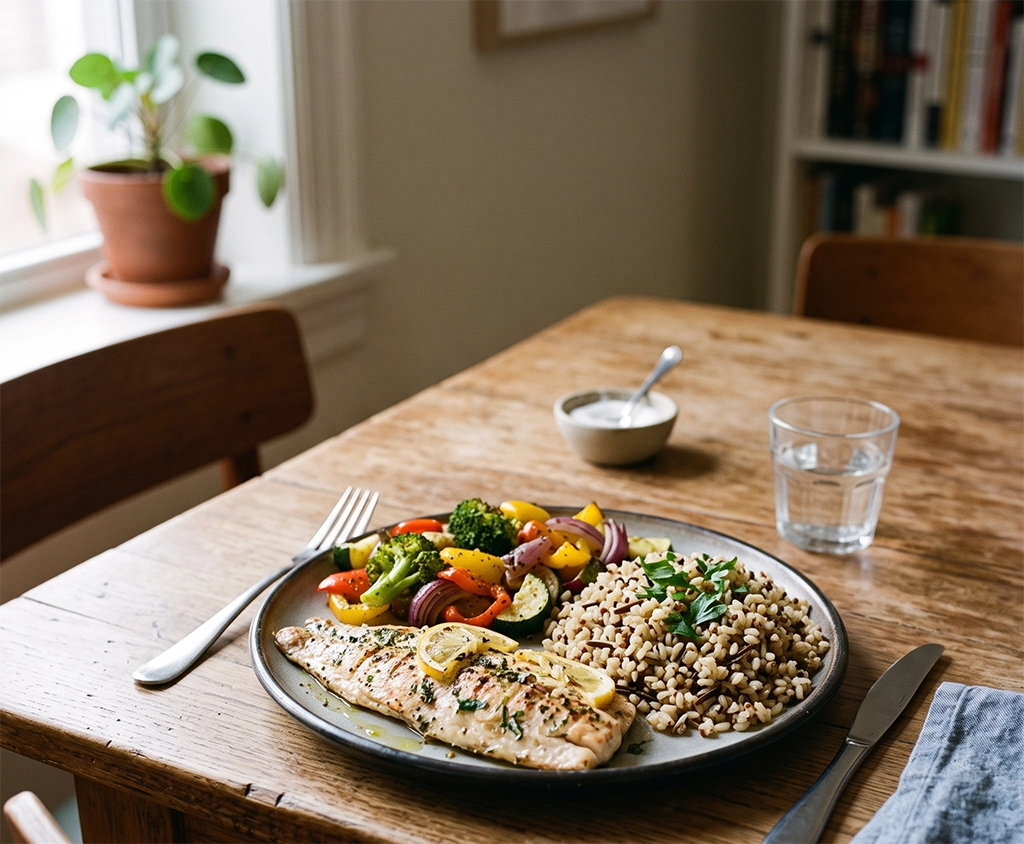
7-Day Intermittent Fasting Meal Plan for Beginners
The following intermittent fasting meal plan is a general example. Appropriate portions vary depending on your body size, activity level, health status, allergies, goals, and medication use.
Monday
For your first meal, have brown rice or another whole grain with steamed eggs, grilled tofu, and vegetables.
For dinner, choose grilled fish, vegetables, and a moderate portion of rice or potatoes.
Tuesday
Prepare a chicken and vegetable rice bowl for your first meal. Keep high-sugar or high-sodium sauces on the side so you can control the amount.
For dinner, have a vegetable soup with tofu, beans, fish, or lean meat. Add rice, potatoes, or whole-grain bread according to your hunger and activity level.
Wednesday
If you need to eat out, select a meal with ingredients that are easy to identify. Examples include a rice bowl with vegetables and protein, grilled fish with side dishes, a tofu-based meal, or a soup with lean protein.
Rather than dramatically reducing the main meal, start by avoiding the combination of a sugary drink and dessert. If you order soup, focus on the solid ingredients and limit the amount of broth if it is very salty.
Thursday
Your first meal could be a sandwich containing eggs, chicken, tuna, tofu, or another protein source with vegetables. You can add plain yogurt and fruit if you need a more substantial meal.
For dinner, have stir-fried vegetables with chicken, tofu, beans, or shrimp and a moderate portion of rice.
Friday
If you have a work lunch, eat normally without continuing until you feel uncomfortably full.
A larger lunch does not mean you must completely skip dinner. Check your actual hunger and choose a lighter meal containing eggs, tofu, vegetables, soup, or another simple protein source.
Saturday
When eating out with family or friends, do not focus on following the fasting schedule perfectly. Record when you started and finished eating and return to your usual schedule at the next opportunity.
Combine meat or fish with vegetables, and be mindful of alcoholic drinks and sugary beverages. Avoid treating a flexible meal as permission to overeat for the entire day.
Sunday
Review your eating pattern from the previous week.
Identify when you felt the most hungry, when you wanted late-night snacks, and whether poor sleep contributed to overeating. Instead of immediately extending your fasting window, correct the most obvious problem first.
How to Prevent Overeating After a Fast
If you regularly overeat after fasting, your plan may be too restrictive.
A first meal consisting only of a small salad may leave you extremely hungry later in the day. Include a meaningful source of protein and a reasonable portion of carbohydrates in your first meal.
For example, combine eggs, tofu, fish, chicken, beans, or yogurt with rice, potatoes, whole-grain bread, or fruit. This is often easier to sustain than relying on vegetables alone.
You can also rate your hunger on a scale from 0 to 10 before eating. If you repeatedly wait until your hunger reaches 9 or 10, your fasting window may be too long or your previous meal may not have been sufficient.
Try shortening the fasting period by one or two hours. A manageable 14:10 schedule is more useful than a 16:8 plan that repeatedly leads to overeating.
Common Intermittent Fasting Mistakes
Starting With an 18-Hour Fast
A more demanding plan does not guarantee faster or better results.
Beginners should usually start with a 12:12 schedule, monitor their energy and appetite, and increase the fasting period only when the current schedule feels manageable.
Restricting During the Week and Overeating on Weekends
A large difference between weekday and weekend eating patterns can make it difficult to develop a consistent routine.
It is reasonable for weekend meals to begin or end one or two hours later. However, avoid fasting all day to prepare for one very large evening meal.
Ignoring Nutrition During the Eating Window
A short eating window does not automatically create a balanced diet.
If most meals consist of pastries, chips, sugary drinks, and takeout, you may struggle to obtain enough protein, fiber, vitamins, and minerals. Include at least one protein source in each main meal and add vegetables and an appropriate carbohydrate portion.
Measuring Success Only With Body Weight
Body weight can change because of water retention, sodium intake, bowel movements, sleep, exercise, and other short-term factors.
Consider weighing yourself once or twice a week under similar conditions. You may also track waist circumference, sleep duration, hunger, meal timing, and late-night eating.
Ignoring Uncomfortable Symptoms
Do not continue fasting through repeated dizziness, sweating, trembling, severe headaches, faintness, nausea, or serious difficulty concentrating.
Stop the fast and assess your condition. Contact a qualified healthcare professional if the symptoms are severe, continue to occur, or may be related to a medical condition or medication.
Who Should Consult a Healthcare Professional First?
Intermittent fasting may be an option for some healthy adults, but it is not suitable for everyone.
Speak with a physician or registered dietitian before beginning if you:
- Are a child or teenager
- Are pregnant or breastfeeding
- Have a current or previous eating disorder
- Are underweight
- Have recently experienced unintentional weight loss
- Take diabetes medication
- Take medication that should be consumed with food
- Are receiving treatment for a chronic health condition
- Frequently experience dizziness, fainting, or severe fatigue
- Have a job or activity in which a sudden decline in concentration could create a safety risk
Another person’s successful intermittent fasting schedule may not be appropriate for your health, medication schedule, or daily responsibilities.

How to Track Your Intermittent Fasting Results
For beginners, consistency and general well-being are more important than rapid changes on the scale.
Record the following information for at least two weeks:
- Time of your first meal
- Time of your final meal
- Total fasting duration
- Time when hunger was strongest
- Late-night eating or overeating
- Sleep duration
- Exercise
- Body weight once or twice a week under similar conditions
- Waist circumference once a week
- Headaches, dizziness, fatigue, or other symptoms
You do not need a dedicated fasting app. A phone calendar, note-taking app, spreadsheet, or paper journal can work just as well.
If overeating continues for two weeks or the schedule interferes with work, sleep, or exercise, shorten your fasting window. Following a 12:12 or 14:10 schedule is still a valid approach.
When Should You Exercise?
Exercising in a fasted state is not automatically better for everyone. A beginner performing intense exercise after a long fast may experience fatigue, dizziness, trembling, or nausea.
Start with lower-intensity activities such as walking, gentle cycling, mobility exercises, or light resistance training.
If you prefer strength training, arrange your schedule so that you can eat afterward. For example, if your eating window begins at 12 p.m., you could complete a moderate workout at approximately 11 a.m. and then have your first meal.
Stop exercising if you experience dizziness, sweating, shaking, nausea, or unusual weakness. Do not treat these symptoms as proof that the workout is effective.
How Long Should You Follow Intermittent Fasting?
Intermittent fasting should not feel like a punishment used only for rapid weight loss. It is better viewed as one possible method for creating a structured eating routine.
Follow a manageable schedule for approximately two weeks while tracking hunger, sleep, energy, concentration, meal timing, and overeating.
If you feel well and can maintain the schedule without overeating, you may continue with the same eating window. There is no need to extend the fasting period simply because your current schedule has become comfortable.
If fasting causes you to think about food all day or leads to cycles of restriction, overeating, and guilt, the method may not be appropriate for you. Shorten the fasting window or return to a regular meal schedule.
Conclusion: Build a Consistent Eating Routine Instead of Fasting Longer
Learning how to start intermittent fasting does not need to be complicated. The most important step is finding an eating schedule that fits your health needs and daily routine.
Beginners can start with a 12:12 schedule to reduce late-night eating, move to 14:10 if it feels manageable, and try 16:8 only when it does not interfere with work, sleep, exercise, or social life.
During the eating window, build meals with protein, vegetables, carbohydrates, and an appropriate amount of fat. Avoid eating very little at the first meal and then overeating at night.
The key points are:
- Do not begin with an unnecessarily long fasting window.
- Start with 12:12 and adjust the schedule gradually.
- Reduce late-night snacks and calorie-containing drinks first.
- Pay attention to food quality and total intake during the eating window.
- Include protein and carbohydrates in your first meal.
- Track hunger, sleep, waist circumference, and meal timing.
- Do not ignore dizziness, sweating, trembling, or severe fatigue.
- Consult a healthcare professional if you have a medical condition or take prescription medication.
If you are unable to find a manageable schedule, record your meals, fasting times, symptoms, sleep, and exercise for two weeks. Bring this information to a physician or registered dietitian for more personalized guidance.