
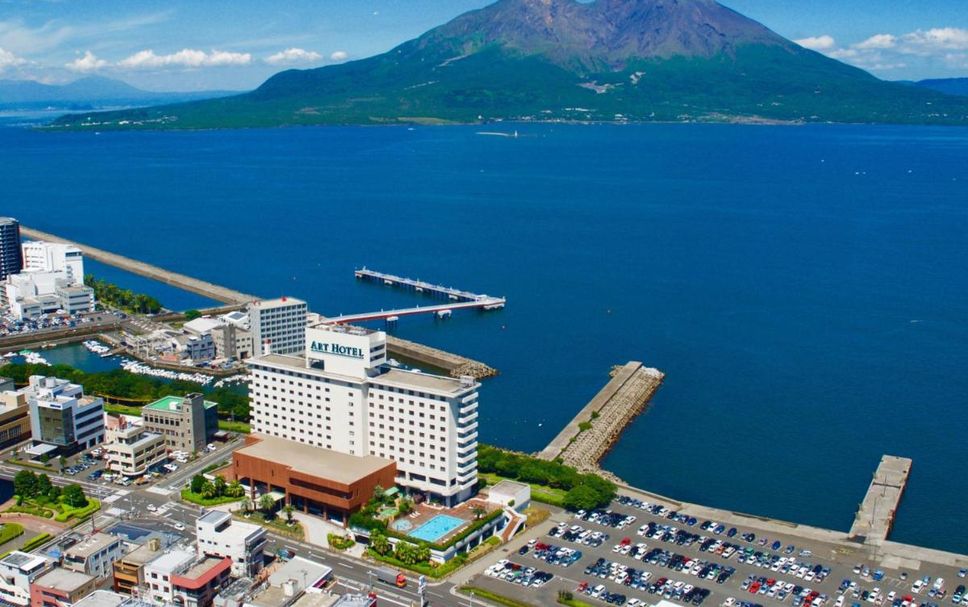
Kagoshima, located at the southern tip of Kyushu, enjoys a warm and humid subtropical climate with an annual average temperature of around 18°C. Strongly influenced by the North Pacific air mass, summers are hot and humid, with the rainy season beginning in June and typhoons frequently affecting the region from July through September. Winters are mild with temperatures rarely dropping below freezing, as January average highs sit around 13–14°C.
Annual rainfall is abundant and heavily concentrated in summer and early autumn, while clear and pleasant weather settles in from mid-October onward. This makes spring (March–May) and autumn (October–November) the most recommended seasons for travel. It’s also worth noting that Kagoshima Prefecture stretches approximately 600km from north to south, creating a noticeable climate contrast — the northern areas lean toward a temperate climate, while the southern islands fall into a subtropical zone.
Seasonal Weather in Kagoshima
Spring (March – May)
Spring in Kagoshima is mild and often sunny, making it one of the most enjoyable seasons for travel. March sees average highs of 17°C and lows of 7°C — slightly cool but perfectly manageable — and cherry blossoms begin to bloom from late March onward. April warms up to 22°C and brings comfortable, pleasant conditions throughout the day, while May approaches early summer with highs reaching 25°C. Rain is still fairly common during spring, falling on around 10 to 12 days per month, so a compact umbrella and layered outfit are always recommended.
Summer (June – August)
Summer in Kagoshima is hot, humid, and extremely wet — the rainiest season of the year. June marks the onset of the rainy season (tsuyu), bringing an average of 17 rainy days and rainfall close to 500mm in a single month. July and August push highs to 32–33°C with lows rarely dipping below 25°C, making tropical nights a regular occurrence. The latter half of summer also carries a high risk of typhoon activity, bringing sudden heavy rains and strong winds. Breathable clothing and an umbrella are absolute essentials for this period.
Autumn (September – November)
Autumn is Kagoshima’s travel highlight — the heat fades, skies clear up, and the city transforms into a pleasant, refreshing destination. September is still quite warm at around 30°C, but rainy days decrease as the typhoon season winds down. By October, temperatures settle to a comfortable 20–25°C during the day, and the monthly average of just 7 rainy days makes it the driest month of the year — ideal for outdoor sightseeing. November adds a touch of early-winter coolness with highs around 20°C and lows of 10°C, and the autumn foliage begins to paint the city in warm colors.
Winter (December – February)
Kagoshima winters are mild, though the damp chill can feel sharper than the thermometer suggests. January — the coldest month — averages a high of 13°C and a low of around 3°C. Light snowfall is possible a few times each month, and rainy days are common, but clear skies still appear frequently. The mild winter conditions make Kagoshima a popular destination for hot spring getaways — particularly the famous sand bath experience at Ibusuki. Layering is important due to the wide daily temperature range.
Best Time to Visit Kagoshima
The best times to visit Kagoshima are spring (March–April) and autumn (October–November), when mild temperatures, low rainfall, and beautiful natural scenery come together to create ideal travel conditions.
Spring (March–April) — Cherry Blossoms & Warm Sunshine
Spring is Kagoshima’s most popular travel season, as cherry blossoms burst into bloom from late March through April, covering the city in vibrant pinks and whites. Daytime temperatures of 17–22°C are perfectly comfortable for exploring outdoors all day — just a light jacket is all you need. Rain still falls on around 7 to 10 days per month, so pack a compact folding umbrella just in case.
Autumn (October–November) — Autumn Leaves & Clear Skies
From mid-October onward, the typhoons retreat and Kagoshima enjoys some of its clearest and most pleasant weather of the year. With daytime highs of 20–25°C and an average of just 7 rainy days per month, it’s the ideal time for all-day outdoor activities and cultural exploration. Late October to early November is especially recommended — travel costs tend to be lower, and visitors can enjoy both autumn foliage and hot spring bathing in the same trip.
Winter (December–February) — A Hot Spring Lover’s Paradise
Winter is a surprisingly appealing option for those seeking a peaceful getaway. With temperatures ranging from 5 to 15°C and more frequent sunny days, it’s the perfect season for Ibusuki’s famous black sand steam baths or a relaxing outdoor hot spring soak. Visitors from across Japan flock here specifically for the winter onsen experience.
Times to Avoid
Summer (June–August) combines oppressive heat above 32°C with frequent heavy downpours, making outdoor sightseeing quite challenging. July through September also carries a significant typhoon risk, which can disrupt travel plans without warning. If a summer visit is unavoidable, monitor weather forecasts closely and build flexibility into your itinerary.
Monthly Weather & What to Wear
January
January is the coldest month, with average highs around 10°C and lows near 2°C. Freezing temperatures are rare, but high humidity and overcast skies make the cold feel sharper, with average rainfall of about 75.9mm. The mild winter conditions are ideal for experiencing Ibusuki’s famous sand bath or a quiet outdoor onsen.
What to Wear: Windproof jacket, scarf, heavy coat or light down jacket with knit layering, and warm footwear.
February
February sees temperatures begin to creep upward, with average highs of 13°C and lows of 6°C — a hint of early spring starts to emerge. Rain probability averages around 37% per day, with rainfall of about 115.9mm. This is also the season when Japanese plum (ume) blossoms begin to appear.
What to Wear: Cardigan, light outer layer or quilted jacket, scarf, and waterproof shoes.
March
Spring officially arrives in March, with temperatures rising to average highs of 15°C and lows of 6°C. Cherry blossoms start to open from late March, while rainfall reaches about 169.5mm over around 12 rainy days. Early March still calls for a heavier jacket, but by late March a light layer is all you need on warmer afternoons.
What to Wear: Light coat or trench coat, knit sweater, a light puffer jacket for mornings and evenings, and a compact folding umbrella.
April
April is the peak of Kagoshima’s cherry blossom season, with temperatures climbing to average highs of 20°C and lows of 11°C. Rainfall sits at around 203.7mm, so showers are fairly frequent — always keep an umbrella handy. Early April is comfortable in a long-sleeve shirt, while late April can feel warm enough for short sleeves during the day.
What to Wear: Light shirt or jacket, cardigan or thin windbreaker for evenings, and a folding umbrella.
May
May brings a definite early-summer feel, with average highs of 23°C and lows of 17°C. Rainfall increases to about 236.1mm over roughly 11 days as pre-rainy season humidity builds. Daytime is comfortable in short sleeves, though evenings can be slightly cooler.
What to Wear: Short-sleeve t-shirt during the day, thin cardigan or light jacket for evenings, and an umbrella.
June
June marks the beginning of the rainy season — the wettest month of the year by far. Average rainfall reaches approximately 500.2mm, with rain falling on 17 days of the month. Despite highs of 25°C and lows of 19°C, the oppressive humidity makes the heat feel much worse. A waterproof outer layer is non-negotiable.
What to Wear: Breathable short-sleeve tops, waterproof windbreaker or rain poncho, waterproof umbrella, and moisture-resistant footwear.
July
July brings the full force of summer heat, with average highs of 29°C and lows of 22°C — tropical nights become common. Even after the official end of the rainy season, rainfall remains high at around 322.6mm, and the intense humidity pushes the heat index well above the actual temperature. UV protection is critical for any outdoor activity.
What to Wear: Quick-dry short-sleeve shirt and shorts, cap, sunglasses, sunscreen, and an umbrella for sudden downpours.
August
August is the hottest month, with average highs reaching 31°C and lows staying near 25°C. Typhoon activity increases, and while rainfall drops slightly to around 130mm, sudden intense showers remain common. The stark contrast between outdoor heat and heavily air-conditioned interiors makes temperature management important.
What to Wear: Breathable short-sleeve tops and shorts, hat, sunglasses, sunscreen, a thin cardigan for indoor spaces, and an umbrella.
September
September remains hot with average highs of 28°C, and is the month most affected by typhoons. Rainfall averages around 180mm, with a high risk of sudden heavy downpours and strong winds. Always check the weather forecast before heading out and keep your schedule flexible.
What to Wear: Short-sleeve t-shirt with a light long-sleeve layer, waterproof rain poncho or umbrella, and waterproof shoes.
October
October is Kagoshima’s travel sweet spot — average highs of 23°C and lows of 18°C make for ideal sightseeing conditions. With only around 7 rainy days, clear and sunny skies are the norm, and the first hints of autumn foliage begin to appear. A single long-sleeve layer is enough during the day, though mornings and evenings feel noticeably cooler.
What to Wear: Long-sleeve shirt or light knit sweater, a thin jacket or cardigan for cooler hours, and comfortable walking shoes.
November
November deepens into autumn, with average highs of 18°C and lows of 13°C — a pleasant chill settles in. Rainfall is low at around 60mm and clear days are frequent, making it perfect for autumn leaf viewing and hot spring travel. By late November, overnight lows can dip to around 8°C, giving it an early-winter feel.
What to Wear: Light down jacket or mid-length coat, knit sweater, warm trousers, and a scarf for cooler outings.
December
December kicks off winter with average highs of 13°C and lows near 9°C — cool but rarely cold enough to freeze. Rainfall is at its lowest of the year at around 50mm, and clear days are common, making this a wonderful time for Ibusuki’s sand bath experience and outdoor hot springs. Windchill can make it feel colder than it looks.
What to Wear: Knit sweater, light coat or quilted jacket, layered cardigan, scarf, and light gloves.
Monthly Climate Data at a Glance
| Month | Avg High | Avg Low | Rainfall | Rainy Days |
| January | 13°C | 5°C | 78mm | 9 days |
| February | 14°C | 6°C | 112mm | 8 days |
| March | 17°C | 8°C | 180mm | 12 days |
| April | 22°C | 13°C | 205mm | 10 days |
| May | 25°C | 17°C | 221mm | 11 days |
| June | 28°C | 21°C | 452mm | 17 days |
| July | 32°C | 25°C | 319mm | 12 days |
| August | 33°C | 26°C | 223mm | 11 days |
| September | 30°C | 23°C | 211mm | 10 days |
| October | 25°C | 18°C | 102mm | 7 days |
| November | 20°C | 12°C | 92mm | 7 days |
| December | 15°C | 7°C | 71mm | 8 days |