
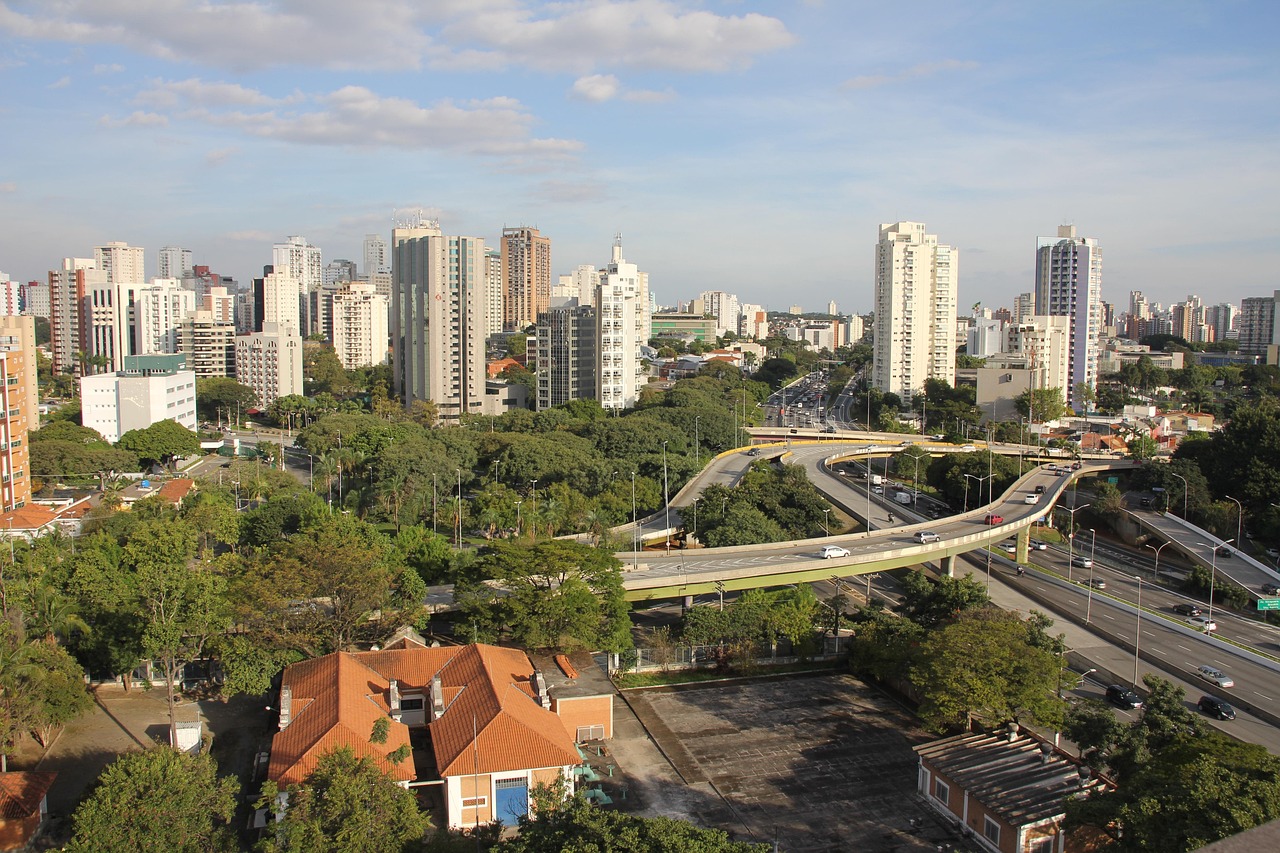
Located on a plateau roughly 760 meters above sea level, São Paulo enjoys a mild subtropical climate despite being in the tropics. The city’s annual average temperature hovers around 18–19°C, with daily highs and lows typically ranging between 13°C and 28°C. Since Brazil is in the Southern Hemisphere, the seasons are reversed compared to the Northern Hemisphere — summer runs from December to February (hot and humid with frequent afternoon downpours), while winter falls between June and August (dry and cool). Annual rainfall totals approximately 1,200mm, most of which falls during the summer months. Buildings rarely have heating, making the cold feel even sharper in winter. The best times to visit are April–May and September–October, when the weather is pleasant and rainfall is minimal.
São Paulo’s Seasonal Weather
☀️ Summer (December – February)
Summer is the hottest and most humid season in São Paulo. Daytime highs average 27–28°C, and even nighttime lows rarely dip below 18–19°C, creating tropical-night conditions throughout the season. Heavy afternoon downpours are practically a daily occurrence — January alone averages 24 rainy days. Overcast skies dominate more than 60% of the time, making extended outdoor activity uncomfortable. On the bright side, Brazil’s famous Carnival takes place in February–March, electrifying the entire city — though hotel and flight prices surge accordingly.
🍂 Autumn (March – May)
Autumn marks the gradual transition out of the rainy season as the heavy summer downpours begin to ease. Daytime temperatures remain warm at 25–27°C, but humidity drops noticeably. By May, highs cool to around 23°C and lows fall to roughly 13°C. Rainy days drop sharply — from about 11 days in April to just 5 in May — making for mostly clear, comfortable skies. April and May rank among the best months to visit São Paulo, offering ideal conditions for both outdoor exploration and city sightseeing.
❄️ Winter (June – August)
Winter is São Paulo’s driest and coolest season. Daytime highs reach only 22–23°C, while nights drop to 12–13°C. July averages just 3 rainy days — the driest month of the year. However, when Antarctic cold fronts push through, temperatures can plunge unexpectedly to as low as 4°C, and since most buildings in the city lack central heating, indoor spaces can feel just as cold as outside. Daily temperature swings of 10°C or more are common, so layering is essential.
🌸 Spring (September – November)
Spring serves as a bridge between the dry winter and the wet summer. September stands out as one of the finest months to visit — days are bright and clear, daytime temperatures climb back up to 27°C, and rain falls on only about 6 days. From October onward, rainfall picks up again, averaging around 16 rainy days per month, and by November the wet season is clearly underway with frequent afternoon showers. Despite the increasing rain, the warm temperatures and lush greenery make spring a fantastic time to enjoy São Paulo’s parks and outdoor spaces.
Best Time to Visit São Paulo
The best times to visit São Paulo are April–May (autumn) and September–October (spring).
April and May offer the perfect combination of stable weather, comfortable temperatures (23–26°C), and low rainfall (just 5–11 rainy days per month). Humidity is low, sunshine is plentiful, and crowds are manageable — making it easy to stroll through Ibirapuera Park, walk along Avenida Paulista, or spend a leisurely afternoon at MASP (Museum of Art of São Paulo). Flights and accommodation are also more affordable outside of peak tourist season.
September and October bring warm, energetic weather as the city awakens from winter. Daytime temperatures rise to 25–27°C, rainfall is still relatively light, and the city’s parks and green spaces look their very best. Do note that from late October, afternoon showers begin to pick up, so it’s wise to carry a compact umbrella or light rain jacket just in case.
By contrast, December through February (summer) is lively with Carnival and other festivals, but the relentless heat, oppressive humidity, and near-daily heavy rain can make outdoor activities exhausting — and peak-season prices apply throughout. June through August (winter) brings dry, sunny days and is pleasant for sightseeing, but surprise cold snaps can make it far colder than expected, especially since most buildings offer no heating.
In short, April–May and September–October offer the best balance of good weather, sightseeing comfort, and value — the golden windows for any São Paulo trip.
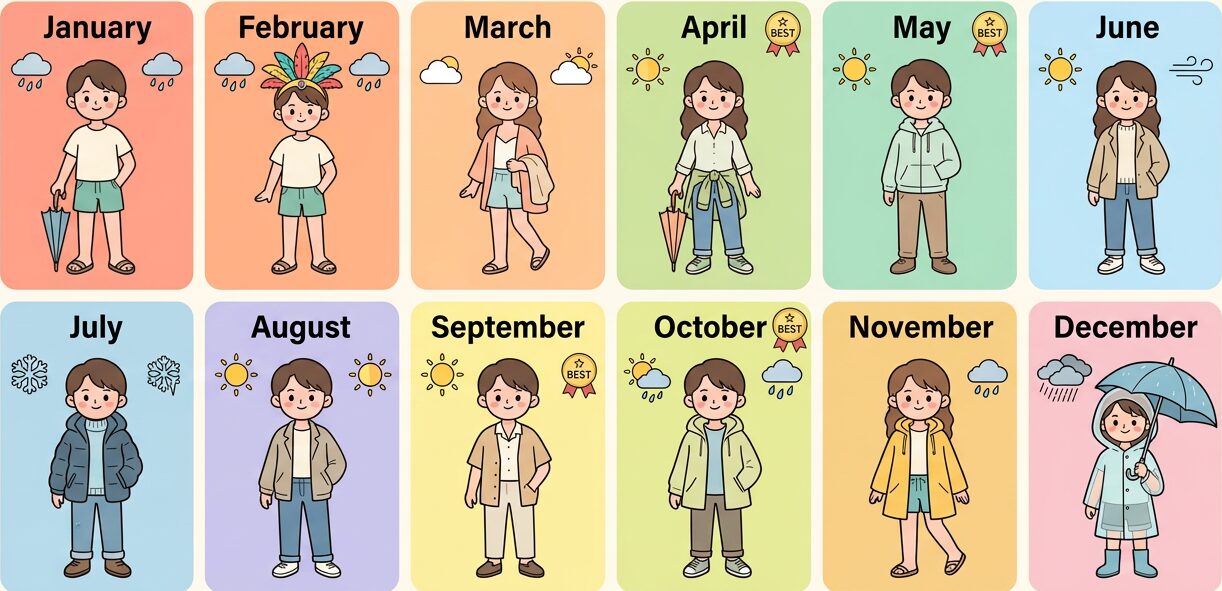
São Paulo Month-by-Month Weather & What to Wear
🌧️ January | High 27°C · Low 19°C · ~24 Rainy Days
January is the rainiest month of the year in São Paulo — it essentially rains every single day. Mornings may start clear, but powerful afternoon downpours strike with little warning and the heat and humidity persist all day long.
What to wear: Go as light as possible — short-sleeve t-shirts, shorts, and sandals. A compact folding umbrella and waterproof footwear are non-negotiable. UV rays are intense, so pack SPF 50+ sunscreen, sunglasses, and a wide-brimmed hat.
🎉 February | High 27°C · Low 18°C · ~20 Rainy Days
February is Carnival month, and the city pulses with color and energy around the clock. Weather-wise, it mirrors January — hot, humid, and rainy. Hotels and flights fill up fast during Carnival week, and streets get extremely crowded, so book everything well in advance.
What to wear: Light summer clothing (t-shirts and shorts), a waterproof jacket or poncho, a folding umbrella, and comfortable water-resistant sneakers.
🌤️ March | High 27°C · Low 18°C · ~16 Rainy Days
March signals the tail end of the wet season. Temperatures remain high, but rain becomes slightly less frequent. After afternoon showers, the air cools noticeably and evenings start to feel more comfortable.
What to wear: Short sleeves and shorts during the day, with a thin long-sleeve cardigan for the cooler evenings. Continue carrying an umbrella and a light waterproof layer.
🌸 April ⭐ BEST | High 25°C · Low 16°C · ~11 Rainy Days
April is one of the best months to visit São Paulo. Temperatures settle into a comfortable range, rainy days drop by more than half, and the city is easy and pleasant to explore. Evenings can be cool at around 16°C, so a light layer is helpful.
What to wear: T-shirt with light trousers during the day; add a thin jacket or cardigan in the evenings. A foldable umbrella is still worth having on hand.
☀️ May ⭐ BEST | High 23°C · Low 13°C · ~5 Rainy Days
May is one of the driest months of the year, with predominantly clear, sunny skies. Days are warm, but nights cool to around 13°C — a 10°C daily swing — so layering is key.
What to wear: A light t-shirt or thin long-sleeve during the day; a jacket or zip-up hoodie for mornings and evenings. An umbrella is rarely needed but handy to have.
🧥 June | High 22°C · Low 13°C · ~7 Rainy Days
June marks the start of the dry season proper. Days are pleasantly cool at 22°C, but mornings and evenings turn noticeably cold. Antarctic cold fronts can occasionally drive temperatures down sharply, and since most buildings have no heating, it can feel surprisingly cold indoors.
What to wear: Long-sleeve shirt or light sweater layered under a jacket. Bring a heavier coat for evenings — you may need it.
❄️ July | High 22°C · Low 12°C · ~3 Rainy Days
July is the driest month of the year with just around 3 rainy days. While afternoons are manageable at 22°C, mornings and nights drop to 12°C — the coldest lows of the year. During cold snaps, temperatures can fall to 4–5°C.
What to wear: A thick sweater or fleece plus a heavy coat or puffer jacket. Thermal underlayers will make a real difference. An umbrella is barely necessary.
🌬️ August | High 23°C · Low 12°C · ~5 Rainy Days
August closely resembles July — dry, clear, and cool. Afternoons warm up slightly to 23°C, but mornings remain cold. Toward the end of the month, a hint of spring starts creeping in.
What to wear: A long-sleeve shirt is enough for midday, but layer up with a jacket or sweater for mornings and evenings. The temperature gap between day and night remains significant, so dressing in layers is the smartest approach.
🌺 September ⭐ BEST | High 27°C · Low 15°C · ~6 Rainy Days
Spring arrives with a burst of warmth and sunshine. Daytime highs climb back to 27°C, and rain falls on just about 6 days. September and April are widely considered the two best months to visit São Paulo.
What to wear: Short-sleeve t-shirt with light trousers during the day; a thin cardigan or light jacket for mornings and evenings. A small umbrella rounds out the perfect day bag.
🌦️ October ⭐ BEST | High 25°C · Low 16°C · ~16 Rainy Days
October is still wonderful for sightseeing, though the rainy season begins making its return. Temperatures are pleasant at 25°C, but afternoon showers can strike unexpectedly — having an umbrella is important.
What to wear: Short-sleeve or thin long-sleeve top with a light waterproof jacket. Keep a compact umbrella with you at all times.
🌧️ November | High 26°C · Low 16°C · ~16 Rainy Days
November signals the true start of summer. Heat and humidity begin to rise again, and rainfall matches October levels. The combination of increasing warmth and humidity starts to feel uncomfortable for some visitors.
What to wear: Breathable short-sleeve t-shirts and shorts, paired with a waterproof jacket or rain poncho. Don’t forget sunscreen and sunglasses.
☔ December | High 27°C · Low 18°C · ~22 Rainy Days
December plunges São Paulo back into full summer — with 22 rainy days, it rivals January for the title of wettest month. Heavy afternoon downpours are the norm, and heat and humidity peak. The Christmas and New Year season adds extra buzz to the city, but tourist crowds grow accordingly.
What to wear: Keep it light with short sleeves and shorts, but treat a waterproof rain jacket or poncho as essential gear. Choose comfortable, water-resistant footwear to handle the wet streets.