
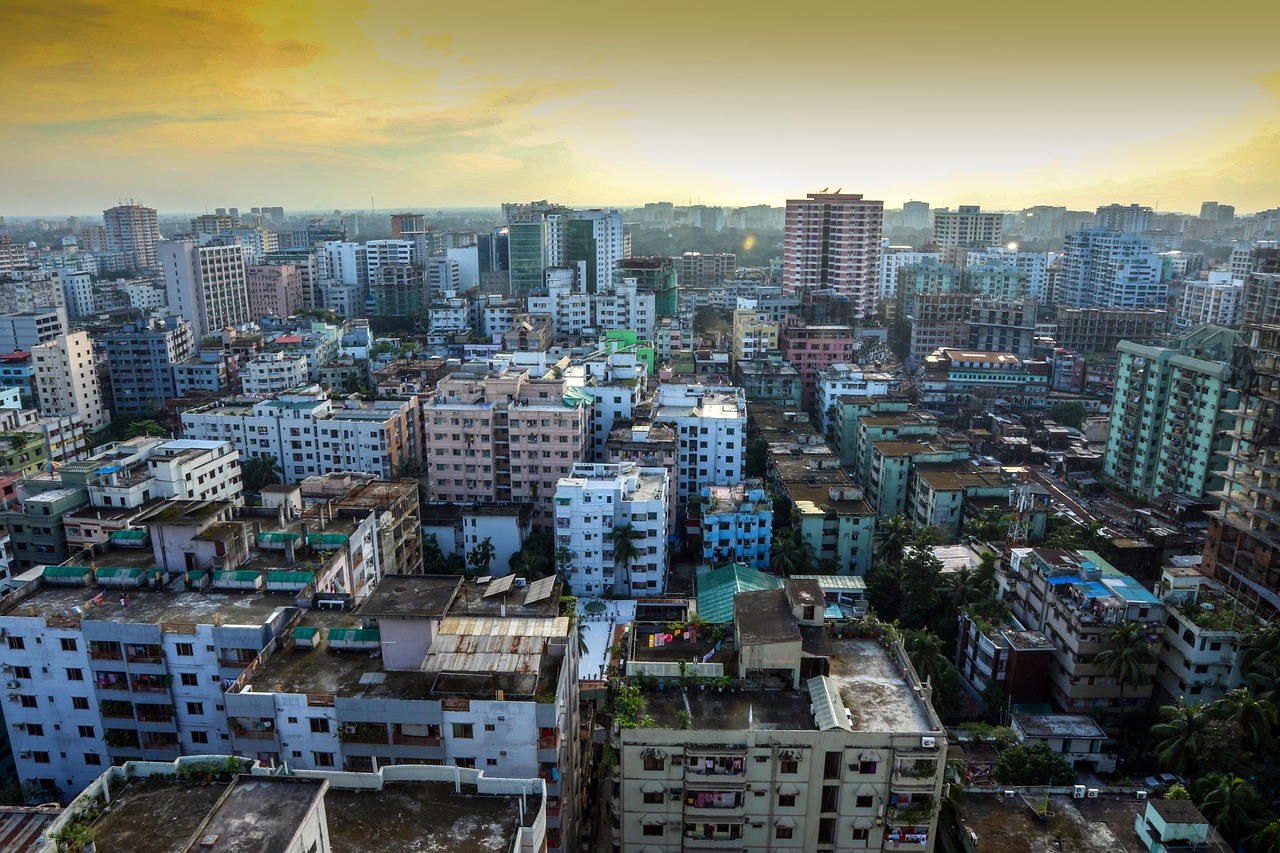
Dhaka has a tropical savanna climate, with an average annual temperature of around 25°C, making it a hot and humid city year-round. The year is broadly divided into a dry season (November–February) and a wet season (June–October). During the dry season, temperatures drop to a relatively mild low of around 14°C in January, while the wet summer months see temperatures soar above 32°C with a dramatic spike in rainfall — and in extreme cases, heat waves exceeding 40°C have been recorded.
Seasonal Weather in Dhaka
Winter (December – February)
This is the most comfortable and travel-friendly time of year in Dhaka. Average highs sit around 25°C, while January nights can dip to 11–14°C, giving mornings and evenings a noticeably cool feel. The chance of rain is extremely low — just 2% on a typical January day — and clear skies are the norm. That said, the dry conditions can lead to increased dust and air pollution, so wearing a mask outdoors is recommended. Light long sleeves or a thin jacket are all you need, and this is also the peak season for international tourists.
Spring / Early Summer (March – May)
Temperatures rise sharply during this period, with April recording the year’s highest highs. The average maximum reaches 36°C, and May holds steady around 34°C — with rising humidity making the heat feel even more intense. In recent years, climate change has pushed temperatures beyond 40°C in April and May, with documented heat-related incidents as a result. By May, rain frequency increases with a precipitation probability of around 37%, signaling the approaching monsoon season. Outdoor activity should be kept to a minimum during this time, and staying well hydrated is essential.
Monsoon Season (June – September)
This is the wettest period of the year, with the full monsoon arriving in June. Temperatures remain high at 31–34°C, and July sees a daily rain probability of around 87% — it essentially rains every day. Repeated heavy downpours frequently cause urban flooding, and low-lying areas are susceptible to serious inundation. Humidity peaks at its annual high, making the heat feel particularly oppressive, and overcast skies make outdoor sightseeing difficult. An umbrella and waterproof gear are non-negotiable, and this is firmly the off-season for tourism.
Autumn / Post-Monsoon (October – November)
Starting in October, rainfall gradually decreases and the weather begins to stabilize. Daytime temperatures ease to around 30°C, and cool breezes start to return in the mornings and evenings. The skies clear progressively, and as the lingering humidity from the monsoon dissipates, overall comfort improves significantly. By late November, the city crosses into the dry season threshold, transitioning naturally into the prime travel window of December through February.
Best Time to Visit Dhaka
The best time to visit Dhaka is during the dry season, from November to February. Rainfall is minimal, temperatures hover around a pleasant 25°C, and with a rain probability of just 2% in January, clear days are the standard. It’s the ideal period for exploring outdoor landmarks like Lalbagh Fort and Ahsan Manzil Palace, and city transport tends to run more smoothly. One caveat: the dry season brings thicker dust and air pollution, so pack a light layer for the temperature swing between day and evening, and keep a mask on hand.
If you want to catch tropical fruits and clear pre-monsoon skies, early March to early April is worth considering. Mangoes, guavas, and lychees are in season and available at low prices, and this window offers the last stretch of relatively clear weather before the rains arrive. Be aware, however, that temperatures begin to spike toward 36°C as April progresses — avoid heavy outdoor activity during midday and make sure to apply sunscreen and drink plenty of water. By contrast, the monsoon months of June through October — with rain probabilities approaching 87% and real risks of urban flooding — are best avoided for travel entirely.
Monthly Weather & What to Wear
January
The coolest month of the year, with average highs around 26°C and lows near 14°C. Minimal rainfall makes it ideal for outdoor sightseeing.
What to wear: A short-sleeve T-shirt or light cotton shirt during the day; a thin jacket or cardigan for mornings and evenings.
February
A transition from winter to spring, with daytime highs climbing to 28–30°C. Dry and mostly clear, with occasional morning fog.
What to wear: Short sleeves or a light cotton shirt with trousers; bring a thin sweater or cardigan for the evenings.
March
Temperatures rise quickly, with afternoon highs crossing 32°C. Humidity begins to build and the heat becomes more noticeable.
What to wear: Breathable short-sleeve tops with lightweight cotton bottoms; sunscreen and a hat are strongly recommended as UV levels rise.
April
The hottest month of the year. Average highs hit 36°C, and with climbing humidity, the feels-like temperature is even higher. Discomfort peaks from the morning onward.
What to wear: Moisture-wicking performance fabrics in short sleeves and shorts; sunglasses, a hat, and high-SPF sunscreen are essential.
May
Temperatures hold around 34°C as pre-monsoon showers become increasingly frequent. Rain probability climbs to about 37%, with sudden heavy downpours common.
What to wear: Lightweight breathable tops; carry a compact umbrella or rain poncho at all times, and opt for quick-dry fabrics.
June
The full monsoon arrives. Temperatures of 32–34°C combined with extreme humidity make for a very heavy, sticky feel. Heavy rain showers occur almost daily, often causing street flooding.
What to wear: Quick-dry short sleeves with waterproof sandals or water shoes; a waterproof backpack and rain poncho are must-haves.
July
Peak of the rainy season. Daily rain probability reaches 87%, and temperatures remain at 31–33°C with peak annual humidity.
What to wear: A waterproof rain jacket and waterproof footwear are non-negotiable; pack multiple sets of quick-dry clothing.
August
Similar to July — heavy rain, high heat, high humidity. Flood risk is elevated, especially in low-lying areas.
What to wear: Lightweight waterproof outerwear and waterproof shoes; always carry an umbrella and prioritize quick-dry fabrics.
September
The tail end of the monsoon. Rain frequency begins to drop but remains high, and temperatures stay around 32°C.
What to wear: Short-sleeve tops with light trousers; continue carrying an umbrella or rain poncho as a precaution.
October
A turning point — rainfall decreases noticeably, sunny days become more frequent, and humidity starts to lift. Daytime highs around 30°C, but with growing comfort.
What to wear: Light short-sleeve tops and cotton trousers; keep a compact umbrella for occasional showers.
November
The dry season begins. Temperatures gradually ease, with daytime highs of 29–31°C and a pleasant breeze returning to mornings and evenings.
What to wear: Short sleeves as a base layer, with a light long-sleeve shirt or cardigan for layering in the morning and evening; no umbrella needed.
December
One of the best months to visit, alongside January. Daytime highs around 26°C with clear skies; evenings can drop to 15–18°C and feel noticeably cool.
What to wear: Short sleeves or a light long-sleeve top during the day; a thin jacket or light knit for the evenings; bring a mask for air quality.