
Nara has a warm, humid subtropical climate with four distinct seasons and an annual average temperature of around 15°C.
Summers (June–August) are hot and humid, with daytime highs around 30°C and plenty of rain from both the rainy season (June–July) and passing typhoons around September.
Winters (December–February) are relatively cold, with daytime temperatures often stuck in the single digits, but overall snowfall is light and many days are clear and dry.
Spring (March–May) and autumn (October–November) bring mild temperatures and less rain than high summer, making them the best seasons to enjoy Nara’s cherry blossoms and autumn foliage.
Seasonal Weather in Nara
Spring (March–May)
Spring in Nara starts in early March, when temperatures slowly begin to rise, and by May daytime highs reach around 20°C.
March mornings and evenings can still drop to around 5°C, while daytime temperatures exceed 10°C, so the daily temperature range is large and layering is essential.
By April, temperatures stabilize around 15–20°C during the day and just under 10°C at night, which feels like “true spring” and coincides with peak cherry blossom season.
Rainfall increases compared to winter but is still far below the summer rainy season, so you’ll mainly see occasional cloudy or lightly rainy days that rarely derail travel plans.
Overall, the air feels fresh, humidity is comfortable, and it’s one of the best times for strolling Nara Park, visiting temples and gardens, and enjoying hanami under the blossoms.
Summer (June–August)
Summer in Nara is typical of inland Japan: hot, humid, and heavy, with July–August highs often reaching 30–33°C.
In midsummer, the “feels-like” temperature can be even higher than the actual reading, and tropical nights mean it often stays warm and muggy even after dark.
From mid-June to early July, the rainy season brings many wet days and some of the heaviest monthly rainfall of the year, making an umbrella and waterproof shoes essential.
By August, the rainy season has technically ended, but short, intense showers and localized downpours are common, so you need to prepare for both sudden rain and strong sun.
Because of the high humidity and powerful sunshine, activities such as walking around Nara Park or feeding the deer are far more comfortable early in the morning or around sunset.
Autumn (September–November)
In early September, late-summer heat still lingers, but toward the end of the month daytime highs drop to around 25°C and the air gradually turns cooler.
October brings daytime temperatures of about 18–22°C and nights around 10°C, which is perfect for wearing a mix of short and long sleeves and enjoying clearer views as the air becomes crisper.
Rainfall and the number of rainy days decrease significantly compared to summer, so there are more clear, dry days—this is often described as Nara’s best overall weather.
By November, mornings and evenings drop into single digits, but daytime highs still hover around 15°C, so a light coat or jacket is enough for most sightseeing.
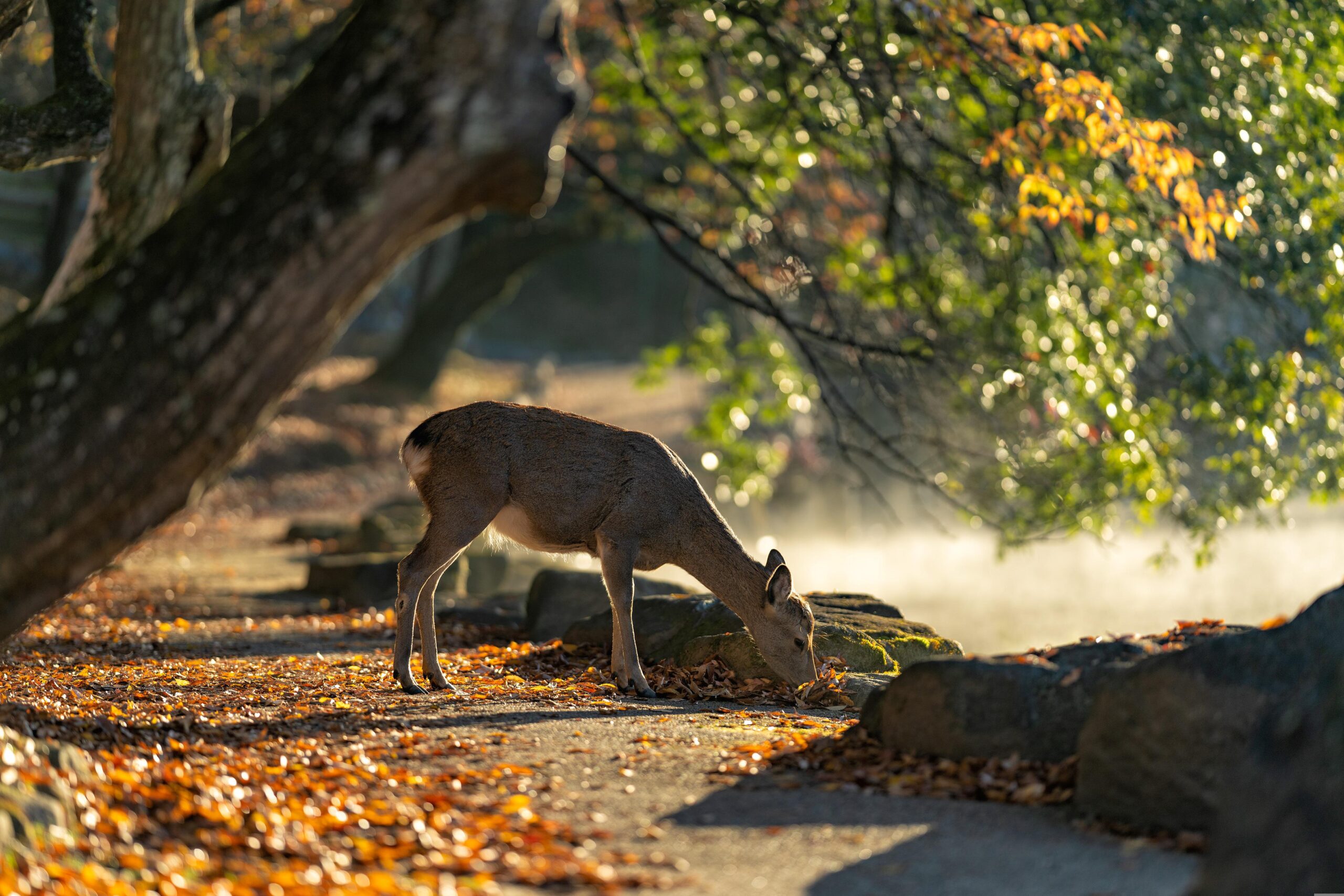
This is also peak foliage season: temple grounds and walking paths are flaming red and gold, drawing photographers and travelers who want to experience Nara’s autumn scenery with the deer.
Winter (December–February)
Winter in Nara isn’t as severe as Hokkaido or the Tohoku region, but with January averages around 3–5°C, it can feel quite chilly, especially with wind.
Daytime highs typically sit around 7–9°C, and nighttime temperatures sometimes drop to around 0°C, so your hands and feet can quickly become cold if you’re outdoors for long.
Overall precipitation is lower than in summer, but there are still occasional days of rain, sleet, or light snow, and on clear days a dry northwesterly wind can make it feel colder than the thermometer suggests.
Snow rarely accumulates for long in central Nara, yet the occasional snowfall that dusts the deer, temples, and forests creates a uniquely serene winter landscape.
If you pack a thick coat or padded jacket, knitwear, scarf, and gloves—roughly what you’d wear in late autumn to early winter in Korea—you can enjoy Nara comfortably even in midwinter.
Best Time to Visit Nara
The best times to visit Nara are generally spring (March–May) and autumn (October–November), when daytime temperatures sit around 15–25°C and humidity is comfortable.
During these seasons, you can walk around Nara Park with the deer and explore temples and gardens without fighting extreme heat or cold.
Spring offers cherry blossoms and fresh greenery, while autumn is all about blazing red and gold foliage, so the scenery is at its most beautiful in these months—but that also means crowds and higher accommodation prices during peak blossom (late March to early April) and foliage (late November) periods.
Summer (June–August) is hot, humid, and influenced by the rainy season and typhoons, so you need to accept heat and frequent showers; in return, you get lush green landscapes and lively seasonal festivals.
Winter (December–February) is cold but mostly clear and relatively quiet, making it a good option if you want to enjoy calm temple atmospheres and the occasional snow-covered Nara Park.
Nara Weather by Month (What It Feels Like & What to Wear)
January
January is the heart of winter in Nara, with average daytime highs around 7°C and nighttime lows dropping to about –2°C, so it feels properly cold.
There are around 19 days of rain or snow, but monthly precipitation is only about 48 mm, meaning more light rain and flurries than heavy storms.
Short daylight hours and roughly four hours of sunshine per day give the city a generally calm, subdued winter mood.
Pack thick coats or padded jackets, knits, thermal inner layers, and winter accessories like scarves, gloves, and beanies—essentially what you’d wear for a Korean winter city trip.
February
February continues winter conditions similar to January, with daytime highs still around 7°C and nighttime lows near –2°C.
Precipitation increases slightly to about 70 mm, and rainy days become more frequent, so cold and damp weather is common.
Because there are still only around four hours of sun per day, many days can feel rather bleak and wintry.
Plan on heavy outerwear, sweaters, and warm base layers, plus non‑slip sneakers or boots and an umbrella for wet streets and sidewalks.
March
March marks the transition into early spring, with daytime highs around 11°C and nights near 1°C, so temperatures slowly begin to ease.
Rainfall and the number of wet days increase noticeably compared to winter, making this a damp, “spring rain” month.
Large temperature swings mean that mornings and evenings can feel like winter, while midday can be surprisingly mild.
Layering is key: think trench coat or light padded jacket on top of thin knits or long-sleeve tees, and bring an umbrella and water‑resistant shoes for comfort in the rain.
April
April is full spring, with daytime highs around 18°C and nighttime lows near 7°C, giving pleasantly cool weather.
There are about 16 wet days in the month, with clear and rainy days alternating, but rain rarely persists all day.
This is cherry blossom and fresh‑green season, and temperatures and humidity are ideal for long walks through parks and temple grounds.
A light shirt or blouse, thin knit, and a trench coat or cardigan are usually enough, and a compact umbrella in your daypack is handy.
May
May feels like late spring heading into early summer, with daytime highs around 23°C and nighttime lows near 12°C.
Rain arrives more often, but not as persistently as in the rainy season, so as long as the timing works out, it’s excellent for outdoor sightseeing.
In the sun it can feel a bit warm, but in the shade it remains comfortably cool, making this one of the best months for walking and exploring.
Short-sleeve T‑shirts or light long sleeves, thin trousers or long skirts, and a lightweight outer layer are usually sufficient, paired with breathable sneakers or loafers and an umbrella.
June
June is the start of summer, with daytime highs around 26°C and nighttime lows around 16°C, so many days feel distinctly hot.
This is when the rainy season really sets in, bringing many wet days and some of the highest rainfall totals of the year—your umbrella will see a lot of use.
As both humidity and temperature climb, the air starts to feel sticky and heavy.
Light T‑shirts, airy shirts, and breathable pants or skirts made from quick‑dry fabrics are ideal, and sandals or well‑ventilated sneakers plus a raincoat or poncho will keep you more comfortable.
July
July is full-on midsummer, with daytime highs near 29°C and nighttime lows around 21°C, making for very hot and humid conditions.
Late rainy-season showers combine with afternoon downpours, so heavy but short-lived bursts of rain are common.
Even in the shade, the humid heat can feel overwhelming, and going out in the midday sun can be exhausting.
Pack tank tops or T‑shirts, shorts, and thin summer dresses, and choose moisture‑wicking fabrics that absorb sweat and dry quickly.
Don’t forget sun protection—hat, sunglasses, sunscreen—and bring a lightweight rain jacket or poncho for sudden showers.
August
August is just as hot as July, with daytime highs around 31°C and nighttime lows around 21°C.
There is slightly less rain overall but frequent short, intense showers; the sky can switch quickly from clear blue to dark grey.
Under direct sunlight, the real‑feel temperature can soar into the mid‑30s, so it’s best to avoid long stretches of outdoor activity in the middle of the day.
Breezy tank tops and T‑shirts, linen shirts, airy dresses, and wide‑leg pants help you stay as cool as possible.
Wear non‑slip sandals or sneakers and keep an umbrella and lightweight waterproof jacket handy to handle both sudden rain and heat.
September
September bridges late summer and early autumn, with daytime highs around 26°C and nighttime lows near 17°C—noticeably cooler than midsummer.
It’s still a fairly rainy month and can be affected by typhoons, which bring bursts of heavy rain and gusty winds.
Days can still feel warm, but mornings and evenings start to feel refreshingly cool, making the seasonal change easy to sense.
Short sleeves or thin shirts work well during the day, and a light cardigan or long-sleeve layer for the evening helps you adapt to changing temperatures.
Breathable sneakers are a good all‑round choice, and an umbrella and light waterproof jacket are still worth carrying.
October
October is peak autumn, with daytime highs around 20°C and nighttime lows around 11°C, creating fresh, crisp weather.
Rainfall drops significantly compared to summer, so many days are sunny and dry—conditions that are close to ideal for travel.
Autumn colors begin to appear around temples, parks, and walking paths, making it a great time for photography.
Pack thin knits or sweatshirts, long‑sleeve shirts, jeans or trousers, and a light jacket for cooler mornings and evenings.
Comfortable sneakers or loafers are perfect for walking, and a thin scarf can be useful if you get cold easily.
November
November feels like late autumn sliding into early winter, with daytime highs around 15°C and nighttime lows around 5°C.
Rainfall isn’t particularly high and most days are relatively dry and stable.
This is the height of foliage season, when Nara Park and the temple forests are drenched in red and yellow leaves and the scenery is at its most dramatic.
Thin sweaters, long‑sleeve tops, and shirts layered under trench coats or wool coats are ideal at this time of year.
Evening temperatures drop quickly, so wearing socks with sneakers or loafers and adding a light scarf or gloves will help you stay warm.
December
December marks the beginning of true winter, with daytime highs around 10°C and nighttime lows near 0°C.
Although total precipitation isn’t high, there are occasional days of rain mixed with sleet or light snow, and the air feels cold and slightly damp.
Short days and early sunsets mean that temperatures fall quickly in the late afternoon and evening.
Sweaters or knits with a thick coat or lightweight padded jacket work well, and you may want to add thermal inner layers similar to what you’d wear in late autumn or early winter in Korea.
If you tend to get cold easily, bring gloves, a hat, thick socks, and ankle‑covering shoes so you can enjoy Nara comfortably even in midwinter.
Nara Monthly Climate at a Glance
For quick reference, here is a summary of Nara’s monthly climate averages (approximate values):